Table of Contents
This updated guide examines How to Open Bin Files and organizes the essential facts, background, and practical takeaways in clear American English.
Method 1of 3:
Burning the BIN File
 Find your files. If you are trying to burn the BIN file to a CD or DVD, you will also need the CUE file to go with it. If you have the BIN file but can't find the CUE file, you can create one.
 Create a CUE file (if you don't have one). Open Notepad and enter the following lines:
- Changefilename.binto the name of the BIN file you are trying to burn. Keep the quotation marks.
- Save the file to the same folder as the BIN file. The CUE file should be named exactly the same as the BIN file, except with the. CUE extension. Click File → Save As. Click the "Save as type" drop-down menu and select "All Files". Give the file a. CUE extension.
 Open your burning program. As BIN is an outdated format, only older programs fully support it, especially when it comes to multitrack BIN files. Popular programs include CDRWIN, Alcohol 120%, and Nero.
 Load the image file. Depending on the program, you may need to load the CUE file or it may ask for the BIN file. Once the image file is loaded, you should see a readout showing how much space the image will take on the disc.
 Start burning. Once you've verified that the image has loaded correctly, insert a blank disc and start burning. The time it takes to burn will depend on the size of the image, your burner's speed, and your computer performance.
 Test the disc. Once the burn is complete, test the disc by inserting it into the device you burned it for. Ensure that everything loads correctly, and that any tracks are in the right spot.[1]XResearch source
Method 2of 3:
Mounting the Image
 Install virtual drive software. A virtual drive will emulate a physical optical drive in your computer, and will allow you to "mount" the image file in it. This tricks your computer into thinking a disc has been inserted, and the image is loaded just as if it was running from a disc.
- There are several virtual drive options available. WinCDEmu is one of the most popular ones available for free. Be careful when installing it, as there are several times where it tries to install browser toolbars and extra software you probably don't need.
- Mounting the image will only work if the image is designed to run on a computer. For example, mounting an image of an old console game will not load anything, because the disc originally only works on that console.
- Windows 8 and OS X have built-in virtual drive software, but the BIN file will need to be converted to an ISO file first.
 Mount the image. Programs such as WinCDEmu will place an icon in your System Tray. Right-click on this icon, hover over one of the fake drives, and then select Mount Image.
- Browse the CUE file on your hard drive. Remember that the BIN and CUE files need to be in the same folder. Once you've found the CUE file, load it to mount the image.
 Open the disc. Once the image is mounted, your computer will act as if a physical disc has just been inserted. This means Autoplay might open, or you might be asked what you want to do with the disc. The messages you receive depend on the contents of the disc as well as your system settings.
- Use the image file just as you would a CD or DVD that you inserted in your computer.[2]XResearch source
Method 3of 3:
Converting a BIN File to ISO Format
 Download a conversion program. You will need a conversion program to change the BIN file to an ISO file. Once you change it to an ISO file, you will be able to mount or burn the file with many more programs.
- One of the most popular free conversion programs is MagicISO.
 Open the converter tool. Start MagicISO and click the Tools menu. Select "BIN to ISO".
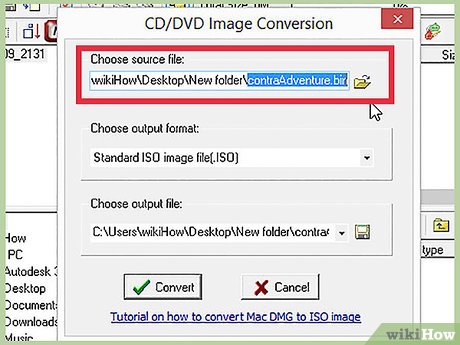 Browse for your BIN file.
 Choose the name for the new ISO file.
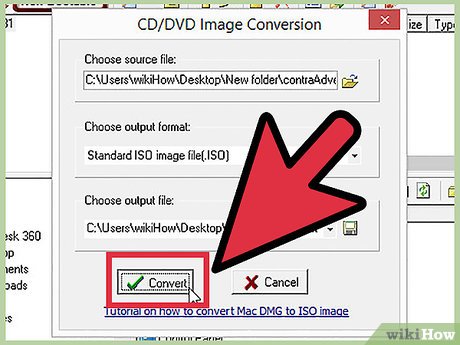 Convert the file. ClickConvertto convert the BIN file to an ISO file. This may take a few minutes.
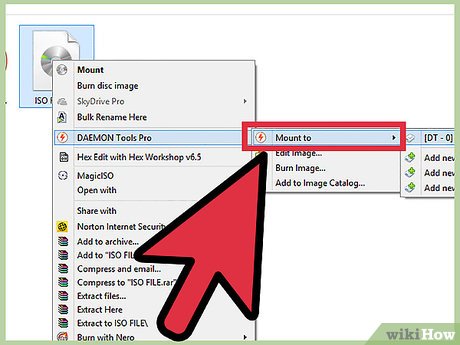 Mount the ISO file. Once the file has been converted, you can mount it using a virtual drive. If you are using Windows 8 or OS X, right-click on the ISO file and select "Mount".
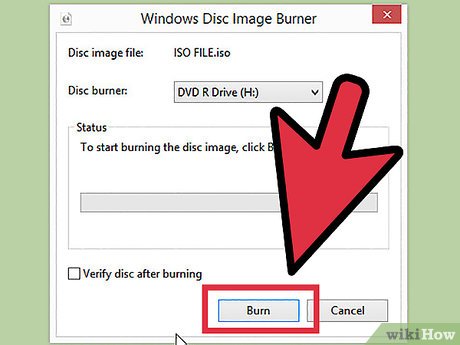 Burn the ISO file. You can burn ISO files to discs using most burning programs. See this guide for more details.
 Explore the ISO file. You can use programs like MagicISO to explore the contents of the ISO file, allowing you to copy specific files from within the archive.
FAQ
What is How to Open Bin Files about?
It provides a structured overview of file, explains the main context, and highlights practical takeaways for readers.
Why does this topic matter?
Understanding the main concepts helps readers evaluate the issue, avoid common mistakes, and make better-informed decisions.
How should readers use this information?
Use the guidance as a practical starting point, confirm details that may have changed, and follow current product, safety, or security recommendations.
Related Articles
 How to Open SWF Files: Clear Instructions6 minutes read
 How to Open RAR Files on Android Phones: Practical Guide5 minutes read
 How to Open Rar Files10 minutes read
 What Is a DAT File? How to Open DAT Files, How to Read DAT12 minutes read
 How to Open DAT Files: Practical Guide10 minutes read
 How to Fix Photoshop Error Can't Open RAW Files3 minutes read
Reader Comments 0
Sign in with email or Google to join the discussion.