Table of Contents
This updated guide examines How to Install Xampp on Linux and organizes the essential facts, background, and practical takeaways in clear American English.
Part 1of 2:
Installing XAMPP
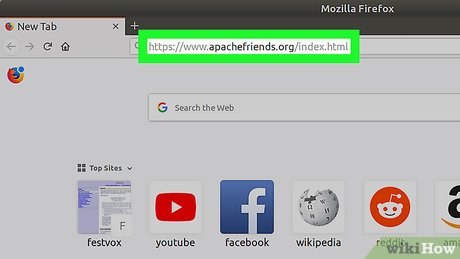 Open the XAMPP download page. Go to https://www.apachefriends.org/index.html in your computer's web browser. This is the official download site for XAMPP.
 ClickXAMPP for Linux. It's in the middle of the page. This will prompt the XAMPP setup file to begin downloading onto your computer.
- You may have to click Save File or select the "Downloads" folder as your save location before proceeding.
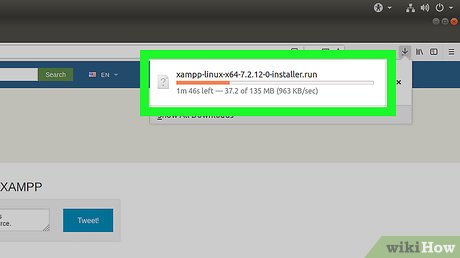 Allow the download to complete. Once XAMPP's installation file finishes downloading onto your computer, you can proceed.
 Open Terminal. Click the Terminal app icon, which resembles a black box with a white ">_" inside of it.
- You can also just pressAlt+Ctrl+Tto open a new Terminal window.
 Change over to the "Downloads" directory. Type incd Downloadsand press↵Enter.
- Make sure you capitalize "Downloads".
- If your default downloads location is in a different folder, you'll have to change the directory to that folder.
 Make the downloaded file executable. Type inchmod +x xampp-linux-x64-7.2.9-0-installer.runand press↵Enter.[1]
- If you download a different version of XAMPP (e.g., version 5.9.3), you'll replace "7.2.9" with your XAMPP version's number.
 Enter the installation command. Type insudo./xampp-linux-x64-7.2.9-0-installer.runand press↵Enter.
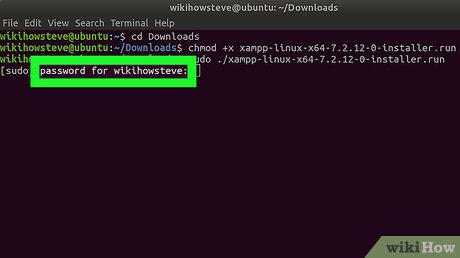 Enter your password when prompted. Type in the password you use to log into your computer, then press↵Enter. The installation window will pop up.
- You won't see the characters appear in Terminal when you type.
 Follow the installation prompts. Once the installation window appears, do the following:
- Click Next three times.
- Uncheck the "Learn more about Bitnami for XAMPP" box.
- Click Next , then click Next again to begin installing XAMPP.
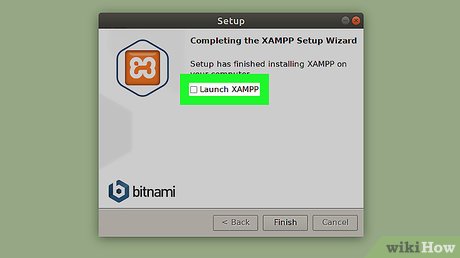 Uncheck the "Launch XAMPP" box. It's in the middle of the final installation window.
- Since XAMPP needs a few extra steps to actually run on Linux, you'll need to finish the installation without automatically running XAMPP.
 ClickFinish. This option is at the bottom of the window. Doing so will close the installation window. At this point, you're ready to run XAMPP.
Part 2of 2:
Running XAMPP
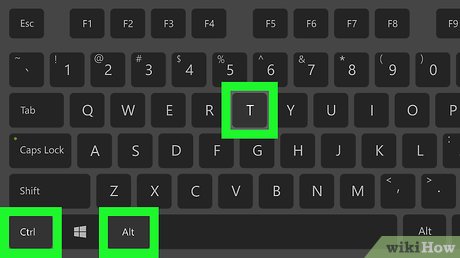 Re-open Terminal if necessary. If you closed the Terminal window that you used to install XAMPP, re-open Terminal.
- XAMPP doesn't have any desktop files, so you'll need to launch it from within its installation directory via Terminal each time you want to run it.
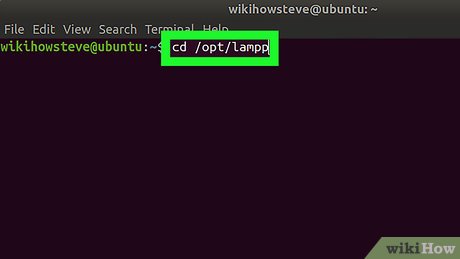 Switch to the XAMPP installation directory. Type incd /opt/lamppand press↵Enter.[2]
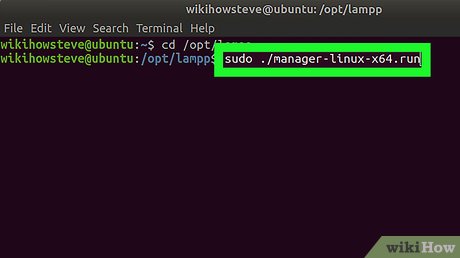 Enter the "Open" command. Type insudo./manager-linux-x64.runand press↵Enter.
 Enter your password when prompted. Type in the password you usually use to log into your computer, then press↵Enter.
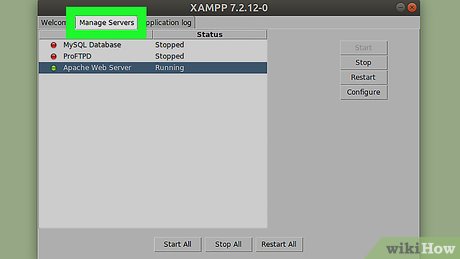 Click theManage Serverstab. This option is at the top of the window.
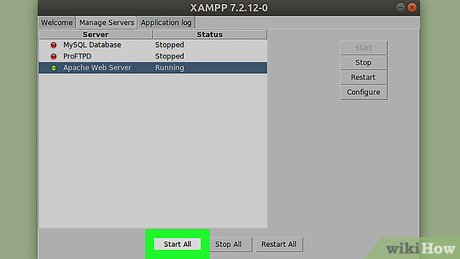 ClickStart All. It's at the bottom of the window. Doing so prompts any active components of XAMPP to begin running.
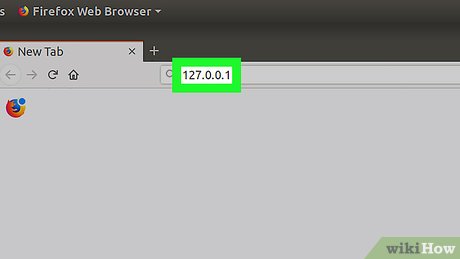 Open your computer's localhost page. Go to 127.0.0.1 in your computer's web browser. You should see the XAMPP dashboard here; at this point, you're able to begin using XAMPP as you please.
FAQ
What is How to Install Xampp on Linux about?
It provides a structured overview of xampp, explains the main context, and highlights practical takeaways for readers.
Why does this topic matter?
Understanding the main concepts helps readers evaluate the issue, avoid common mistakes, and make better-informed decisions.
How should readers use this information?
Use the guidance as a practical starting point, confirm details that may have changed, and follow current product, safety, or security recommendations.
Related Articles
 How to Install XAMPP on Linux: Complete Guide5 minutes read
 How to Install XAMPP, How to Configure XAMPP on Windows 107 minutes read
 Instructions on How to Install Xampp Software on Windows 105 minutes read
 9 Steps to Install SSL for Xampp in Most Detail7 minutes read
 Download XAMPP 8.0.2: Free Local Web Server4 minutes read
 Instructions for Installing Wordpress on Localhost - Part 22 minutes read
Reader Comments 0
Sign in with email or Google to join the discussion.