Table of Contents
Instructions for Installing Wordpress on Localhost - Part 2 covers the essential facts behind the topic, including what changed, why it mattered, and how it affected users.
- See part 1 of the tutorial on installing WordPress on localhost
Install Wordpress on Localhost:
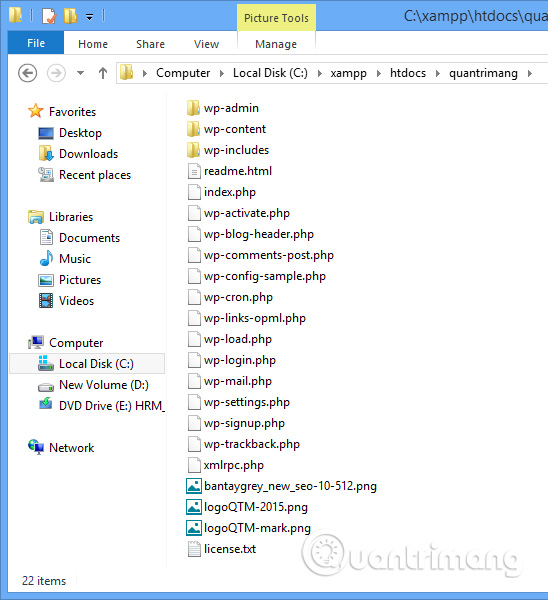
After downloading the WordPress installer to your computer as a compressed file, you can extract and copy all WordPress files into the C: xampphtdocsTipsMakefolder:
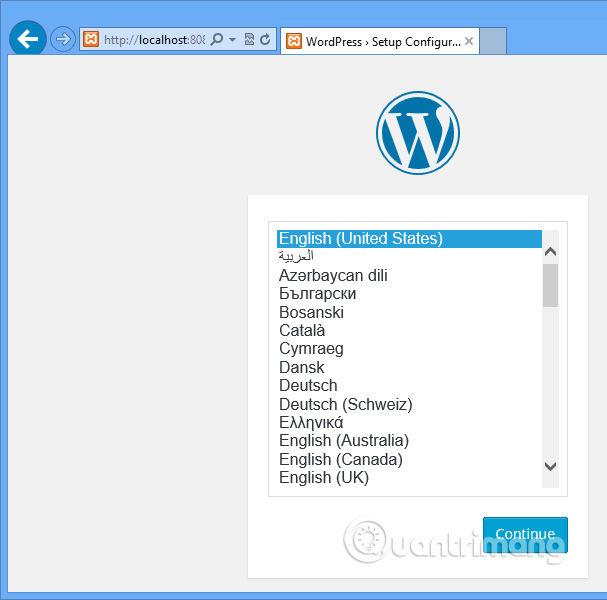
Then open http:/// localhost: 8080 / TipsMaketo start installing WordPress. Select the language and click Continue to continue:
Some information is prompted by WordPress before installing, you notice at the database creation section and then press Let's go! At the bottom left corner:

Enter database information as shown below, click Submit to continue:

Once done, just click Run the install:

Enter some administrative information as follows:
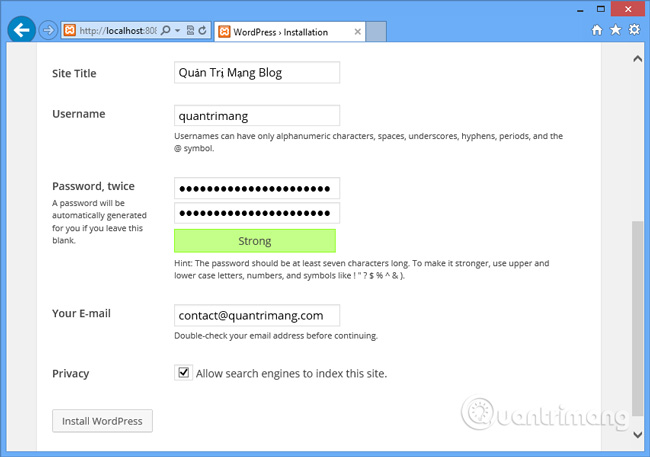
Click Install WordPress. As shown below, the WordPress installation process is complete:
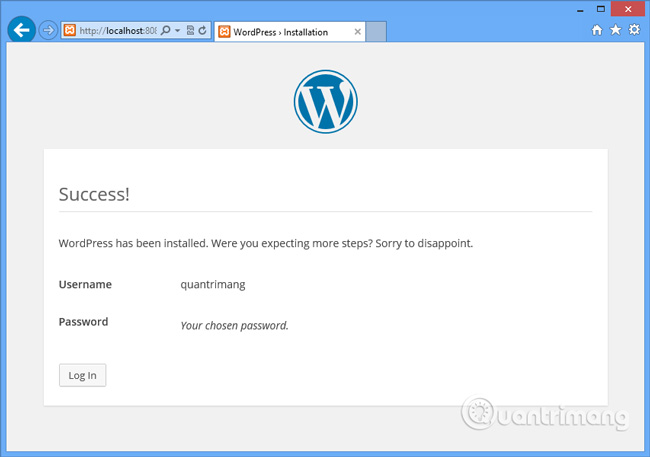
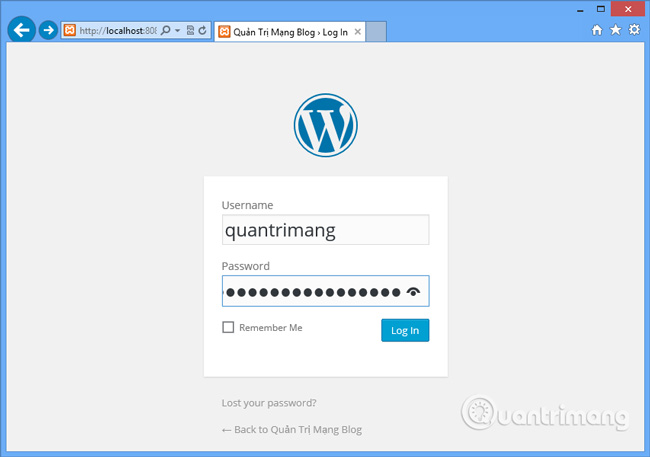
Login to any WordPress admin account:
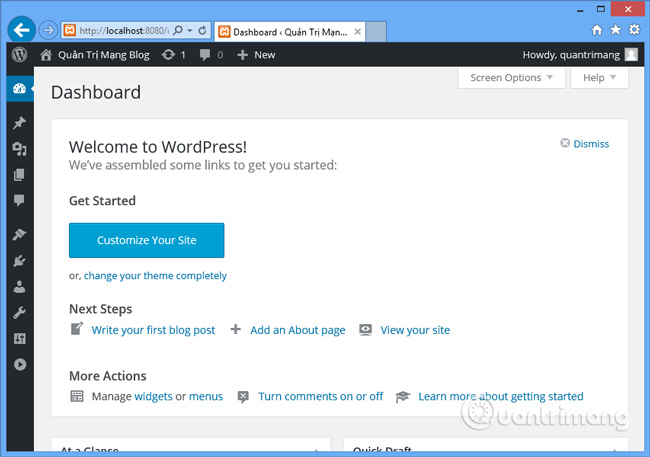
OK then:
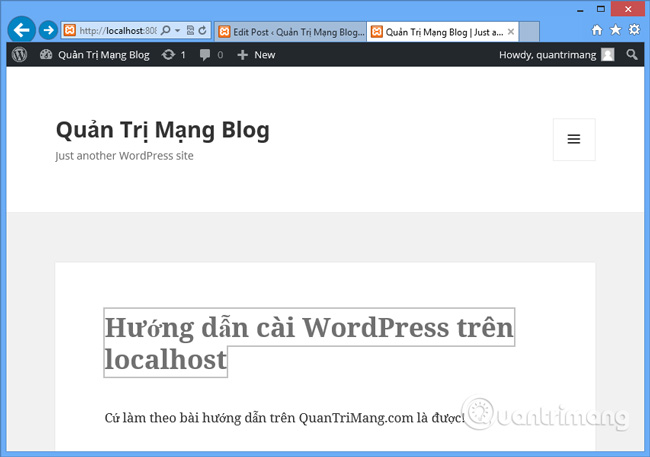
External interface of WordPress on localhost:
Good luck!
FAQ
What is the main topic of Instructions for Installing Wordpress on Localhost - Part 2?
Instructions for Installing Wordpress on Localhost - Part 2 covers the essential facts behind the topic, including what changed, why it mattered, and how it affected users.
Why is WordPress important?
See part 1 of the tutorial on installing WordPress on localhost Install Wordpress on Localhost: After downloading the WordPress installer to your computer as a compressed file, you can extract and copy all WordPress files into the C: xampphtdocstipsmake.
What should readers remember about WordPress?
Select the language and click Continue to continue: Some information is prompted by WordPress before installing, you notice at the database creation section and then press Let's go!.
Related Articles
 Instructions for Installing Wordpress on Localhost - Part 16 minutes read
 How to Change the Font in Wordpress3 minutes read
 Instructions for Creating Web Pages in Wordpress from a to Z (Part10 minutes read
 What Is Localhost?3 minutes read
 Instructions for Installing Wordpress on the Vitual Server with4 minutes read
 Instructions for Installing WordPress on Bluehost11 minutes read
Reader Comments 0
Sign in with email or Google to join the discussion.