Table of Contents
This updated guide examines How to Install Tor on Linux and organizes the essential facts, background, and practical takeaways in clear American English.
Part 1of 2:
Downloading the Tor Package
 Open the Tor website. Go to https://www.torproject.org/projects/torbrowser.html in your web browser. This is where you'll download the Tor setup file.
 Click theDownloadtab. It's in the upper-right corner of the page. Doing so takes you to the Tor download page.
 ClickDOWNLOAD. This purple button is on the far-left side of the page.
- This button should have "Linux 64-bit" written at the bottom of it. If you see another operating system's name (e.g., "Windows"), first click the Linux link to the right of the button.
- If asked what to do with the setup file, make sure that you select the "Save" or "Download" option before proceeding.
 Wait for the setup file to download. This should only take a few seconds.
 Note the setup file's name. You should see the setup file's name somewhere in the window; you'll need to know the language and version for the Tor setup file to install it.
- For example, downloading the U. S. English version of Tor would result in the file name "tor-browser-linux64-7.5.2_en-US.tar.xz" for the most recent 64-bit version of Tor.
- If you can't find the file's name, you'll be able to review it in the Downloads folder on your computer.
Part 2of 2:
Installing Tor
 Open
Open Terminal. Click the Terminal app icon, which resembles a black box with white text in it, to do so. You'll usually find the Terminal icon in the Dock or on the Desktop.
- Some versions of Linux require you to open the Menu and then select Terminal from the list of apps.
- You can also just pressAlt+Ctrl+Tto open the Terminal window.
 Switch to the Downloads directory. Type incd Downloadsand press↵Enter. This will shift the Terminal's focus into the Downloads folder, which is where your downloaded Tor setup file should be.
- If you downloaded the Tor setup file into a different folder, you'll have to change to that folder's directory instead.
 Extract the Tor setup file's contents. Type intar -xvJf tor-browser-linux64-7.5.2_ language-region .tar.xzand make sure to substitute the file name's language (e.g.,en-US) for the language-region section, then press↵Enter.[1]
- For example, to extract the U. S. English version of Tor, you'd type intar -xvJf tor-browser-linux64-7.5.2_en-US.tar.xzand press↵Enter.
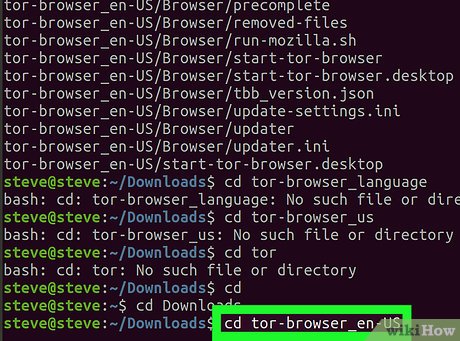 Open the Tor browser's directory. Type incd tor-browser_ language where language is the language tag for your selected version of Tor, then press↵Enter.
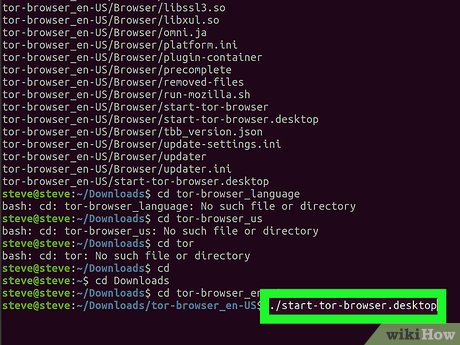 Run the Tor setup. Type in./start-tor-browser.desktopand press↵Enter, then wait for Tor's setup window to open.
 ClickConnect. It's in the lower-left side of the window. Doing so will connect you to the Tor network and, once the connection is successful, open the Tor browser. You should now be able to browse using Tor.
FAQ
What is How to Install Tor on Linux about?
It provides a structured overview of tor, explains the main context, and highlights practical takeaways for readers.
Why does this topic matter?
Understanding the main concepts helps readers evaluate the issue, avoid common mistakes, and make better-informed decisions.
How should readers use this information?
Use the guidance as a practical starting point, confirm details that may have changed, and follow current product, safety, or security recommendations.
Related Articles
 How to Install and Use Kali Linux on Vmware Virtual Machine10 minutes read
 How to Install Solus Linux7 minutes read
 5 Reasons to Install Linux on Old Computers6 minutes read
 Install Linux Linux on Mac: How to Install Kali Linux on macOS12 minutes read
 How to Install NVIDIA Drivers on Kali Linux6 minutes read
 Steps to Install Webex for Linux4 minutes read
Reader Comments 0
Sign in with email or Google to join the discussion.