Table of Contents
Learning how to fix task manager not working in windows doesn't have to be complicated. This updated guide presents a clear workflow, practical checks, and troubleshooting advice you can use while completing the process.
Key Takeaways
- Review run the command to repair system files and images.
- Learn how to disable the remove task manager policy.
- Understand virus scan.
1. Run the Command to Repair System Files and Images
Many users have confirmed that running the system file and image repair command can fix Task Manager not working. So it is one of the first things you should try to fix Task Manager when it won't open.
You will need to enter separate Command Prompt commands to run the DISM (Deployment Image Servicing and Management) and SFC (System File Checker) tools. This helps you apply this potential solution. The SFC tool repairs system files and the DISM service repairs the Windows image.

2. Disable the Remove Task Manager Policy
The Group Policy Editor includes an option to disable Task Manager. The option is probably enabled if you see an error message saying Task Manager is disabled. Even if you don't see an error message, you should still check for the Remove Task Manager policy if you can access the Group Policy Editor on your PC. Here's how you can disable the Remove Task Manager policy:
- Open Local Group Policy Editor on your Windows PC. You'll first need to learn how to access Local Group Policy Editor on Windows Home if you're using Windows Home.
- Double-click User Configuration > Administrative Templates > System > Ctrl + Alt + Del Options in the Group Policy Editor sidebar.

- Next, double-click Remove Task Manager to see that policy configuration window.
- Select Disabled or Not Configured if you see this policy enabled.
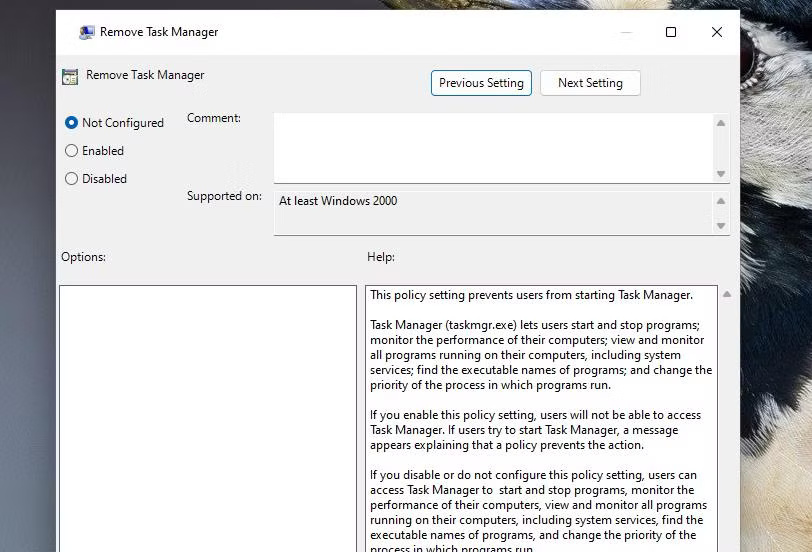
- Click Apply to set the new Task Manager enable option.
- Then, close the Remove Task Manager window by clicking OK.
Try enabling and disabling it if this policy is not enabled. Click Enabled > Apply to enable the policy. Then, select Disabled / Not configured to disable the policy.
3. Virus Scan
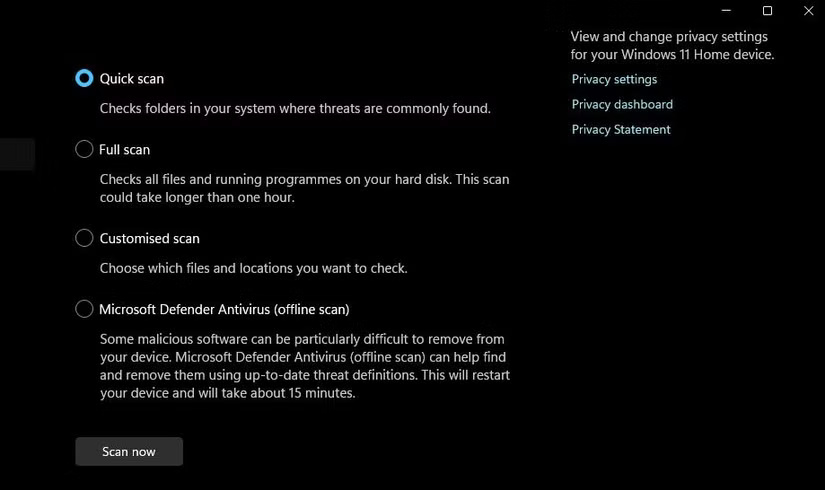
Sometimes, malware can be the reason why Task Manager is not working. Task Manager is a target for malware because it is an important system utility. So, run an antivirus scan using Windows Security or a third-party security software to check for and remove malware from your PC. Choose the most comprehensive antivirus scan option from whichever option you use.
4. Edit the Policies Key
Note that running an antivirus scan can only remove the cause of this problem. It is possible that the virus disabled Task Manager in the Registry. You will still need to re-enable Task Manager after removing the malware that disabled it. You can re-enable Task Manager by editing the Policies registry key as follows:
- Press the Windows + S key combination, type the keyword regedit and select the matching result displayed in the search tool. This helps you access Registry Editor.
- Next, open the Policies key by entering this path into the Registry address bar:
HKEY_CURRENT_USERSoftwareMicrosoftWindowsCurrentVersionPolicies- Skip step 7 if you can see the System subkey. Right-click Policies and select New > Key if you don't see it.
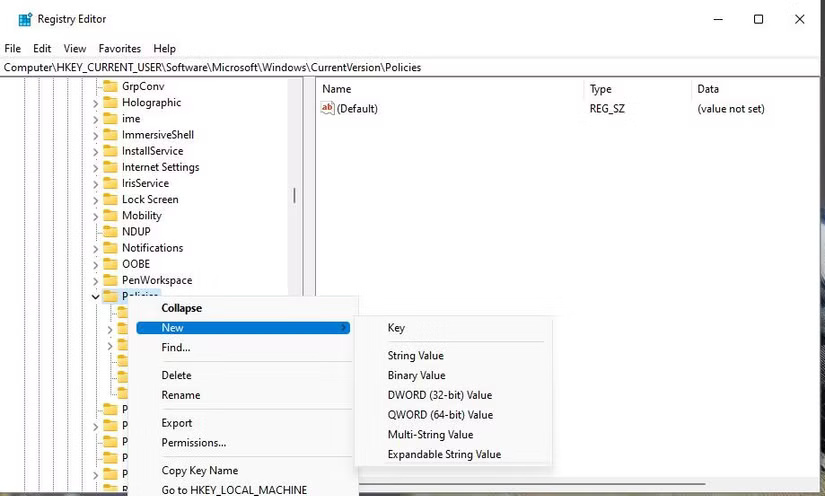
- Enter System into the text box of the new key.
- Right-click System and select New > DWORD.
- Type DisableTaskMgr into the DWORD text box.
- Double-click the DWORD DisableTaskMgr in the System key.
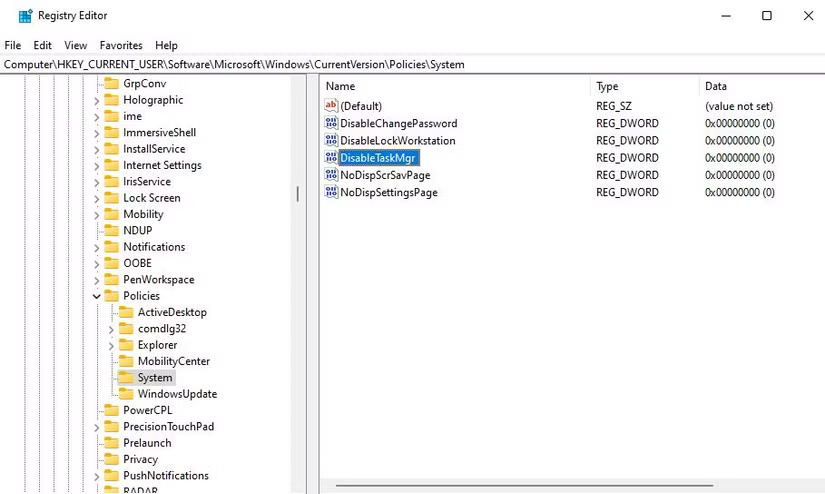
- The value for DWORD DisableTaskMrg must be 0. Delete the number in the Value box and type 0 if it is set differently.
- Click OK to set the DisableTaskMgr value.
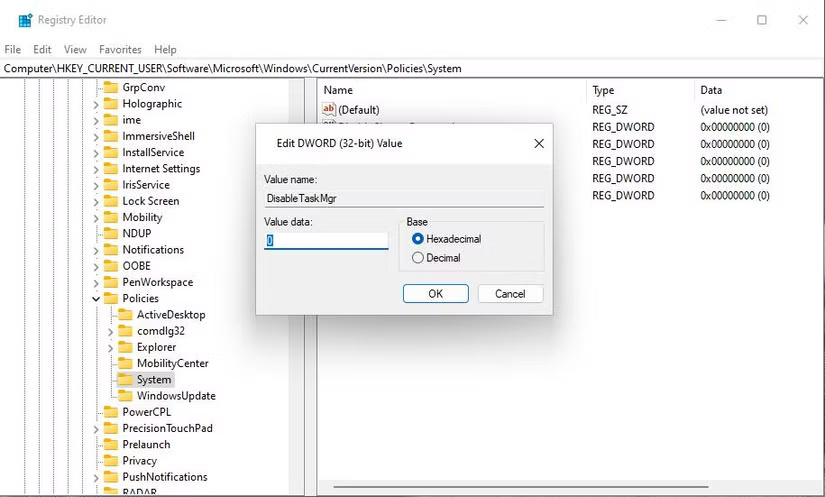
- Now close Registry Editor. Restart your Windows PC after editing the Registry. This helps you ensure the changes take effect.
5. Run PowerShell Command to Re-register the Application
Some users have reported that they have fixed Task Manager by running a PowerShell command to reinstall and register built-in Windows 11/10 apps. It may have fixed the Task Manager not working issue on your PC if that worked for them. Here's how you can run that PowerShell command:
- Activate the Type here to search box using the Windows + S keyboard shortcut.
- Type PowerShell into the file search box.
- Click Run as administrator to get the appropriate PowerShell application search results.
- Enter this command:
Get-AppXPackage | Foreach {Add-AppxPackage -DisableDevelopmentMode -Register "$($_.InstallLocation)AppXManifest.xml"}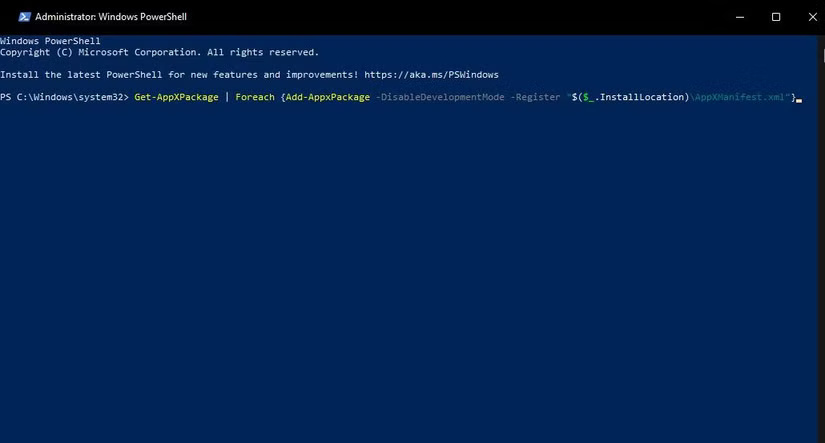
- Press Enter to execute the command and wait for the command to complete before exiting PowerShell.
6. Change User Account
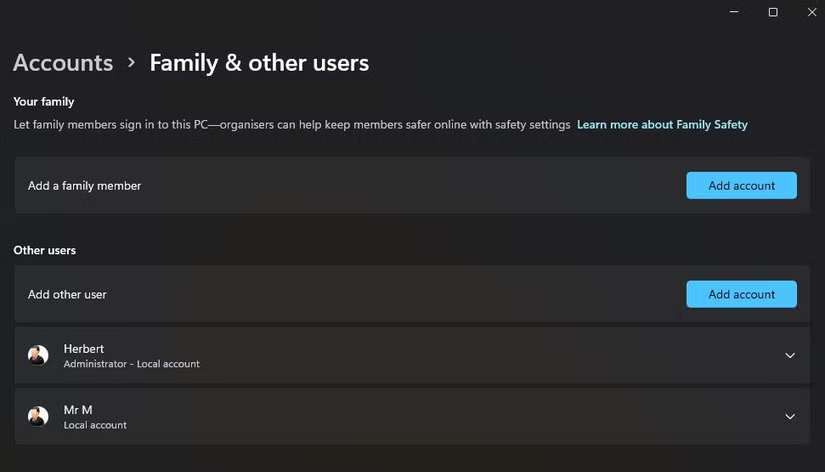
Windows user account issues can also cause Task Manager to stop working. For instance, your user account may be corrupted in some way. In this case, you can try repairing the corrupted user account or setting up a completely new account. Task Manager may work fine in the new user account.
First, set up a new user account and log in to it to see if Task Manager works there. If it does, transfer all user files from the old Windows account to the new account.
7. Restore Windows to an Earlier Time
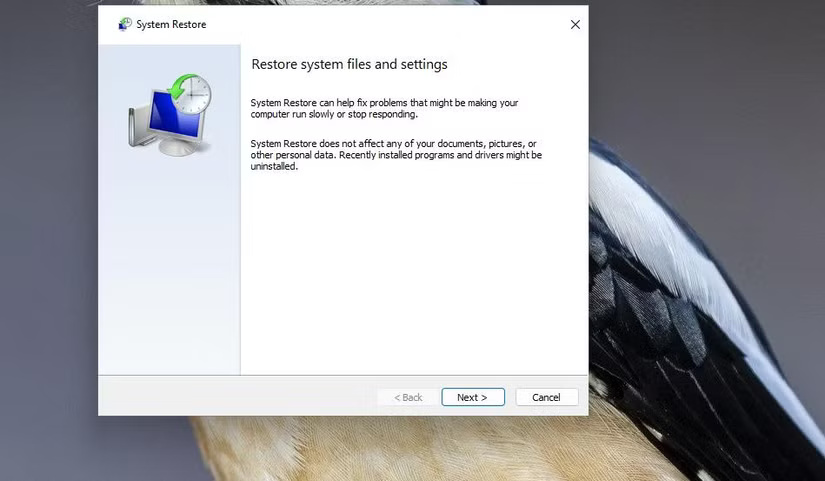
System Restore can resolve a number of potential causes of Task Manager not working if you have it enabled. Much depends on whether you can select a restore point to return Windows to a time when Task Manager worked properly. Try returning Windows to an earlier point in time when other potential solutions have failed if possible.
This guide.com's article on how to use System Restore on Windows will show you how to apply this potential fix. Select a restore point to restore Windows to a time when you could use Task Manager without problems. You will need to reinstall software and desktop applications that were installed after the selected restore point.
8. Reset Windows PC
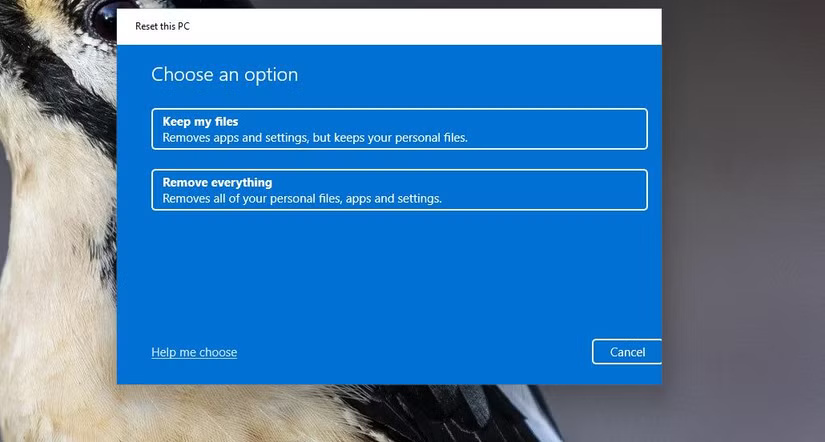
This final solution for Task Manager not working is the most extreme of the lot. Resetting Windows 11/10 will restore the platform to its factory default settings by reinstalling it, which will remove malware and repair system file issues. This solution is recommended as a last resort because resetting Windows will wipe out any software you have installed.
Most you can't do without Task Manager. Fortunately, the potential solutions in this guide will likely solve many Task Manager problems that prevent users from opening and using the utility. There's at least one way to launch Task Manager on your PC, allowing you to use the tool again when you need it.
Final Thoughts
The most reliable way to handle fix task manager not working in windows is to follow the process in order, verify each important setting, and test the result before moving on. Use the guidance above as a practical reference, then adjust the details for your device, software version, or specific goal.
FAQ
What should I check before I fix task manager not working in windows?
Use the latest available software, confirm that your device meets the requirements, and make sure you have the necessary permissions, account access, or backup before changing anything.
Why might I be unable to fix task manager not working in windows?
Common causes include outdated software, missing permissions, incompatible settings, incomplete setup steps, or a temporary network problem. Recheck the process from the beginning and restart the app or device if needed.
Is it safe to fix task manager not working in windows?
It is generally safe when you use official tools, review every permission, and back up important data before making system-level or account-level changes.
Related Articles
 All Problems About Using Task Manager6 minutes read
 Ways to Enable Task Manager in Windows 113 minutes read
 New Task Manager: Complete Guide3 minutes read
 7 Simple Ways to Open Task Manager on Macbook, Windows 10,117 minutes read
 Preparing for a New Task Manager on Windows 113 minutes read
 Instructions to Fix Task Manager Has Been Disabled by Your4 minutes read
Reader Comments 0
Sign in with email or Google to join the discussion.