Table of Contents
This guide explains how to open Task Manager, Introduce the Functions in Task Manager, with clear steps, practical tips, and important checks before you begin.
1. How to open the Task Manager window
There are many ways to open the Task Manager window, but the two fastest ways we usually use is to press Ctrl + Shift + Esc or right-click on the Taskbar and select Task Manager
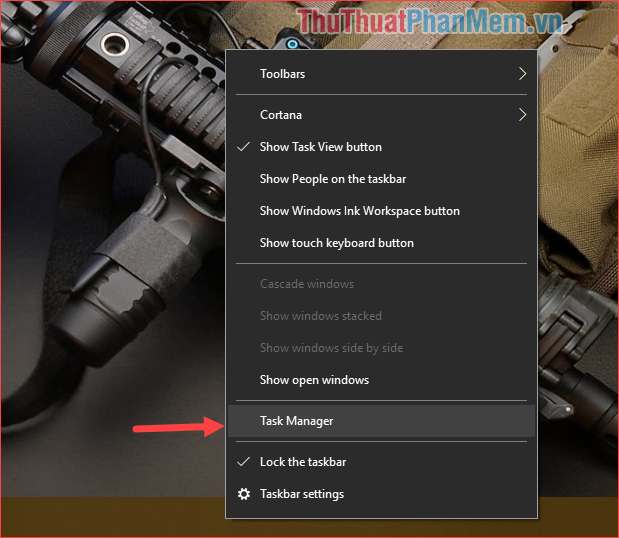
Also in case you can not use the other two ways, you can press Ctrl + Alt + Delete and then select Task Manager .
2. Main function way of Task Manager
When the Task Manager window appears, you will see a list of active applications and an End Task button to turn off an active application.
Most people open Task Manager to use the ability to turn off unresponsive applications, applications cannot be turned off in the normal way due to freezing. Very simple, you just need to select the application you want to disable and click End task .

But this is not all, click on the More details button and the expanded features of Task Manager will appear.
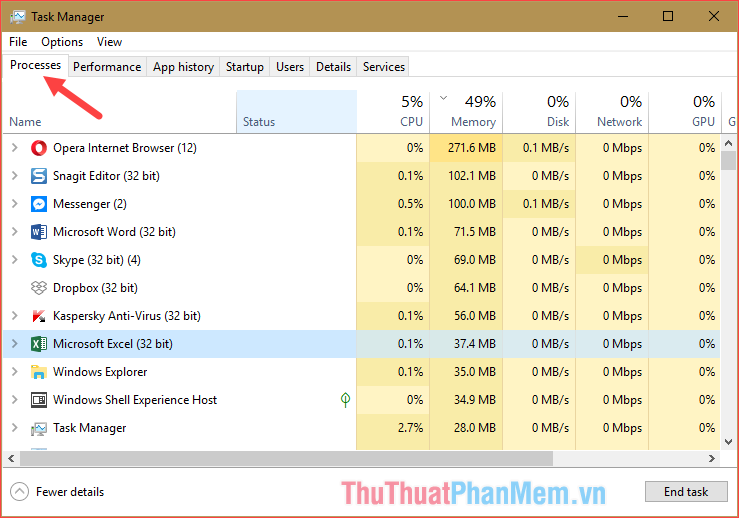
Processes tab
This tab is still where the active application appears in the list, but it lists additional services that are active in windows. Also we can monitor the hardware resource usage of any application or service.
For example , you can see how much RAM is used by your web browser, CPU, hard drive or even network speed.
Tab Perfomance
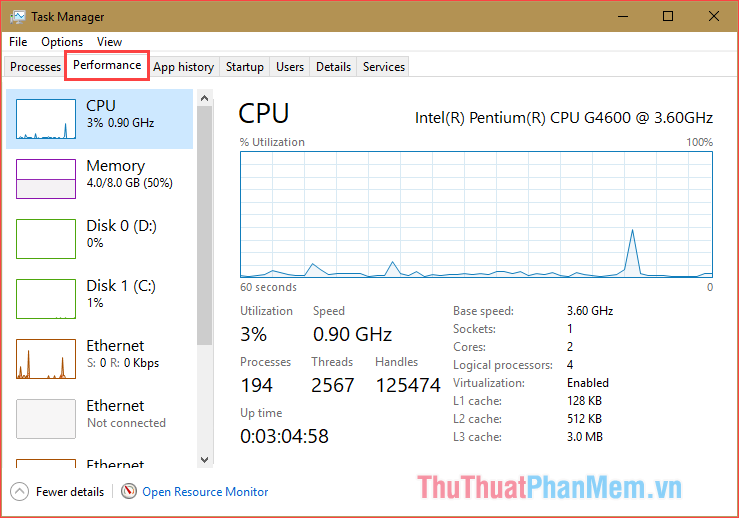
This is the place to tell us about the performance of computer hardware.
You can see the performance level of the CPU, RAM, GPU (Graphics Card), Hard Drive, network speed in detail.
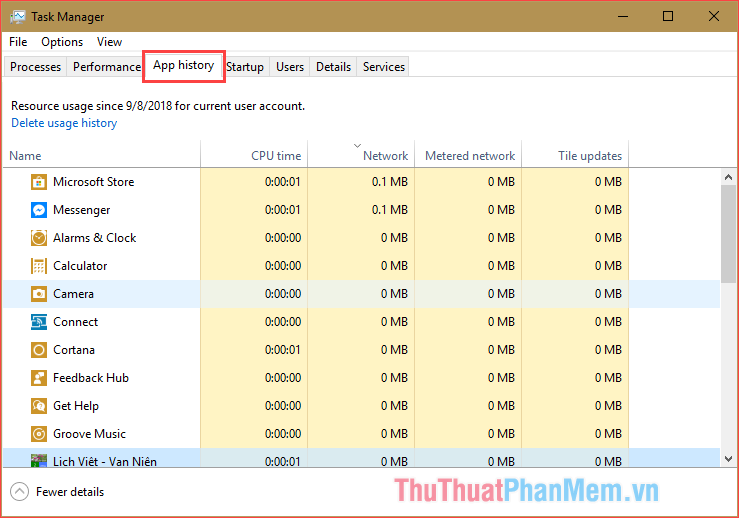
App history tab (windows 10)
This is where you can see the uptime of Universal apps (apps downloaded on the Windows 10 app store).
Startup tab
This is an item that is used quite a lot by users, here you can know which applications are having the state of startup with windows.
The applications that start with windows are those that start automatically when you turn on your computer. If there are too many applications that start with windows, it may slow down the computer boot speed.

What applications are in Enabled state is the application that is started with windows, the application in the Disable state is turned off to start with windows. To turn off the application that starts with windows, right-click on the application and select Disable .
The Startup tab is only available on windows 8 and 10.
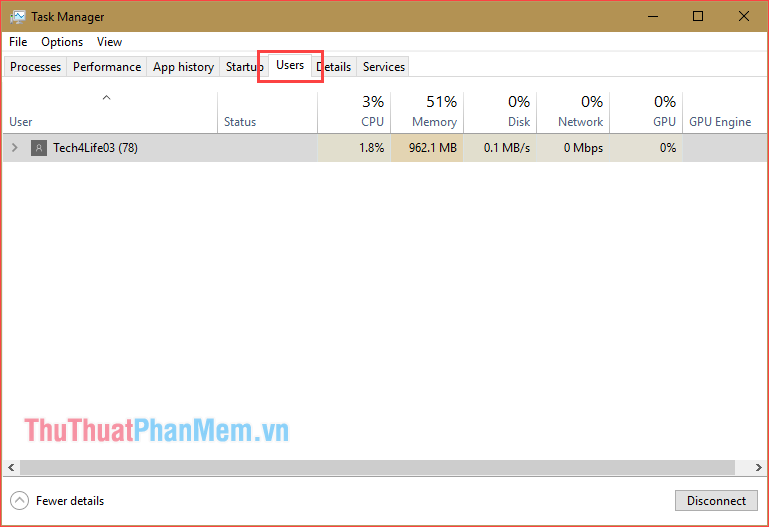
Users tab
A place to provide us information about the operating status of the User in the computer. If it is a personal computer, usually only 1 Users will be active. However, if your computer has multiple Users accounts, then look here you will know which account is active and using how much% of hardware resources.
You can log out any User by clicking on that User and selecting Disconnect.
Details tab
The Details tab shows each individual process running - there are no program groups, common names, or other displays here.
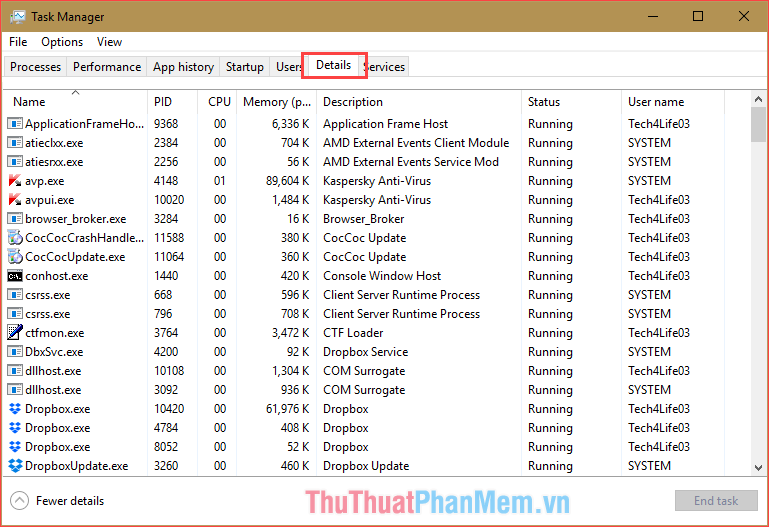
The Details tab is useful in the case of advanced troubleshooting when users need to find something as easy as pinpointing the location of the executable file, PID, or some other information that the user has. not found in Task Manager.
The Details tab is available on Task Manager on Windows 10 and Windows 8, and this tab is similar to the Processes tab on previous versions of Windows.
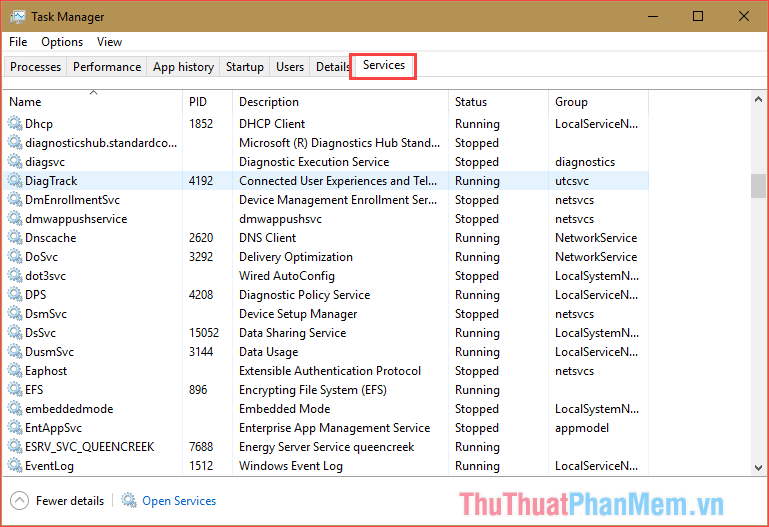
Services tab
Services is the place to tell us about services running in the background. Most of these programs are programs that automatically run when the computer is turned on. These services include those of windows and the applications you install on your computer.
The article How to open Task Manager and the functions of the above Task Manager of TipsMake. com has helped you to know how to use and understand the nature of the task manager available on these Windows operating systems. Through it, you can manage and stop processes that are harmful to the system. Thank you for watching.
FAQ
What should I know about Open Task Manager, Introduce the Functions in Task Manager?
Focus on the key features, requirements, limitations, and practical use cases explained in this guide.
How do I get the best results with Open Task Manager, Introduce the Functions in Task Manager?
Follow the recommended steps, use current software or information, confirm compatibility, and review settings before major changes.
Are there any risks or limitations?
Potential limitations depend on compatibility, data quality, cost, privacy, support, and how the product or method is used.
Related Articles
 7 Simple Ways to Open Task Manager on Macbook, Windows 10,117 minutes read
 4 How to Open Task Manager Windows 114 minutes read
 All Problems About Using Task Manager6 minutes read
 Ways to Enable Task Manager in Windows 113 minutes read
 Ways to Open Task Manager on Windows 103 minutes read
 Instructions to Fix Task Manager Has Been Disabled by Your4 minutes read
Reader Comments 0
Sign in with email or Google to join the discussion.