Table of Contents
This guide explains how to resolve File or Directory Errors Is Corrupted and Unreadable, starting with the most likely causes and moving through practical troubleshooting steps.

1. Handling errors with CMD
Step 1: You proceed to open CMD on the computer by entering CMD in the search window.

Step 2: When the CMD window appears, enter the following command:
Chkdsk G: / FInside:
- Chkdsk: Error handling code
- G: Hard drive needs troubleshooting
- / F: Error handling command
In this article, the Software Tips need to handle errors on the G: drive is the main USB of the Software Tips. Depending on the name you USB / hard drive that you enter the correct name.

After entering the command, you press Enter will receive the code as shown in the image. So you have resolved the error File or directory is corrupted and unreadable finished for your USB.
2. Handling errors by software
There is a tool specifically developed to handle File or directory is corrupted and unreadable errors on peripheral devices. In addition to handling the File or directory is corrupted and unreadable software error, it also handles a lot of different errors related to USB.
Download link: http://down. easeus. com/product/epm_trial
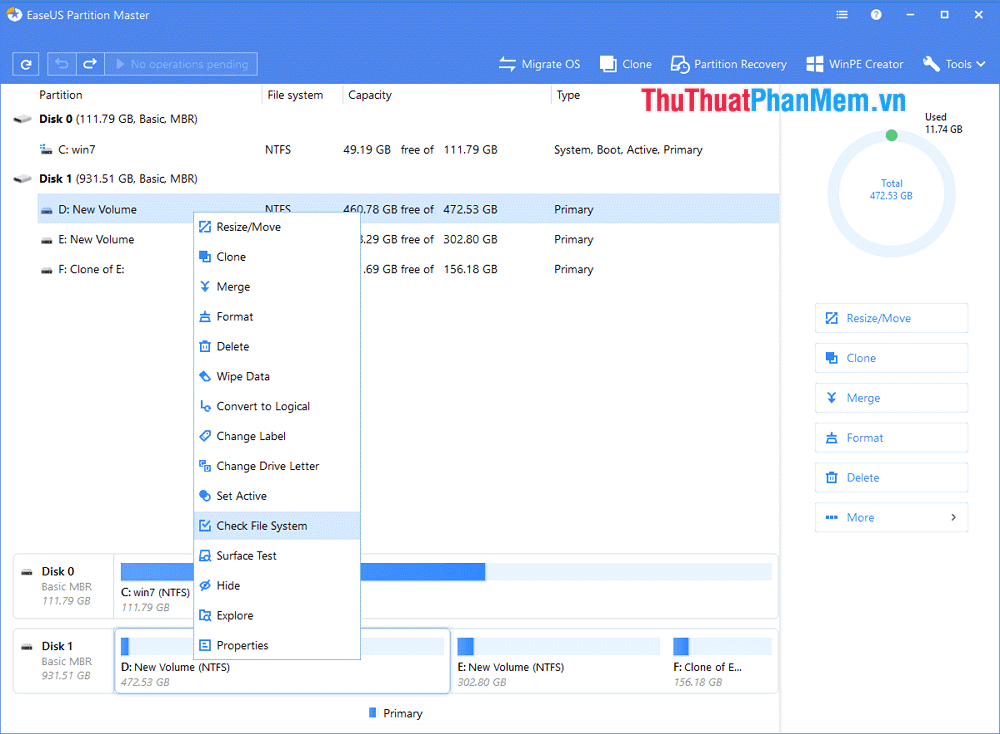
Step 1: You proceed to install the software and launch it to use. Then you Right-click the drive to fix errors and select Check File System .
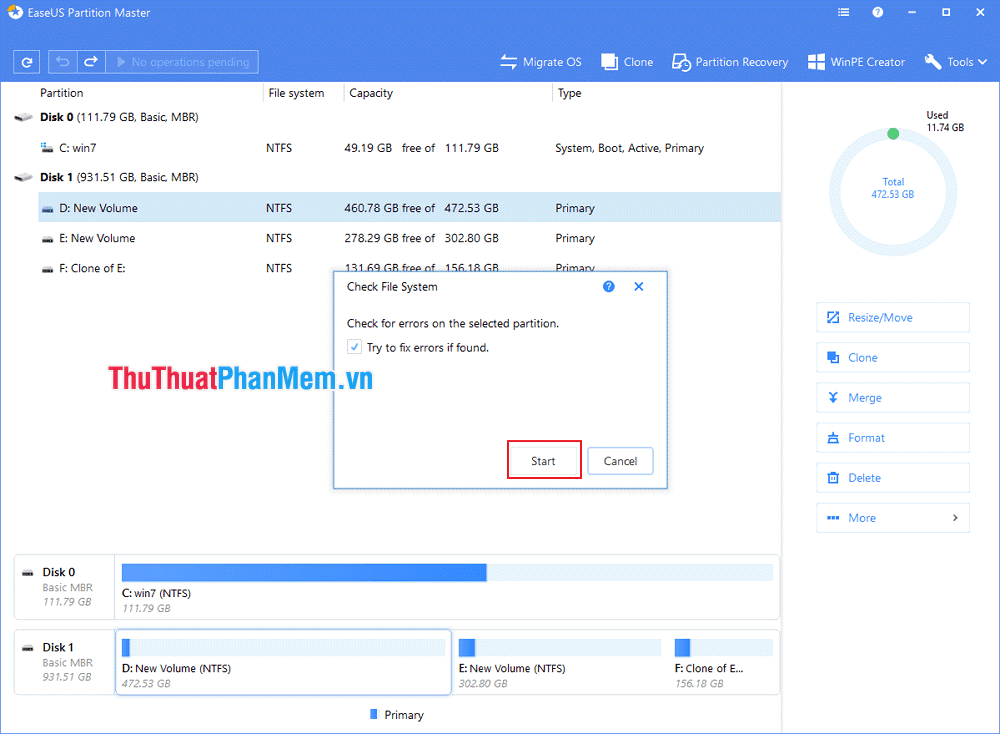
Step 2: Now there will be an active notification window for you. Click Start to continue.
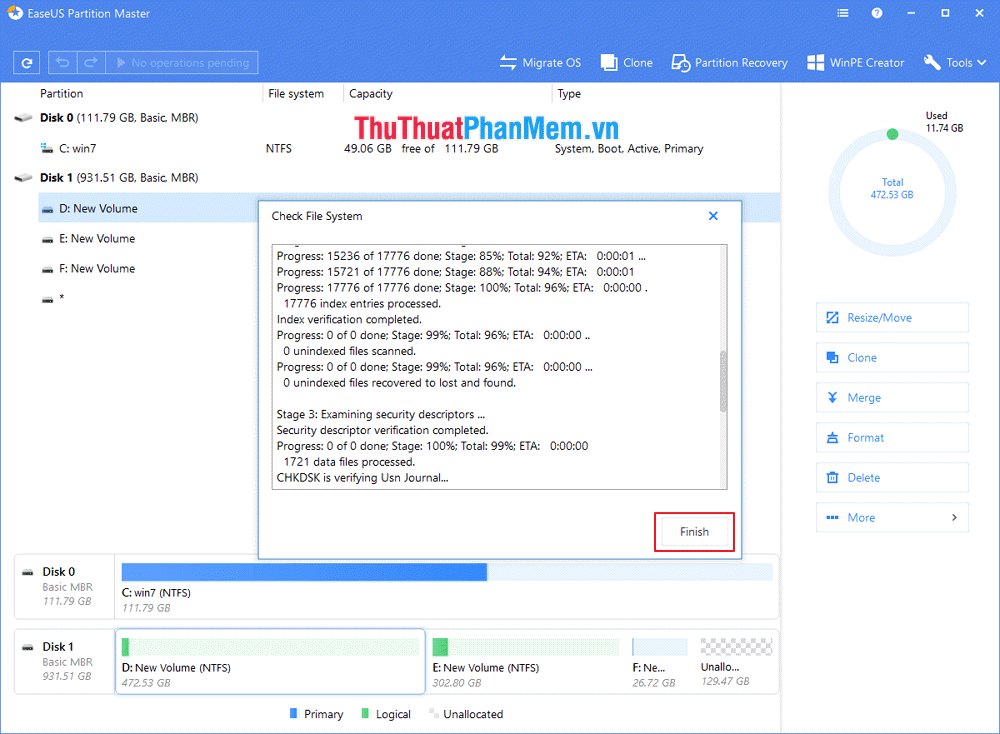
Step 3: Then the software will automatically run and fix the error for you, you can access the USB normally.
Thus, the Software Tips have shown you How to fix errors "File or directory is corrupted and unreadable" fastest and most accurate. Good luck!
FAQ
What usually causes File or Directory Errors Is Corrupted and Unreadable?
The cause may involve incorrect settings, outdated software, damaged files, permission problems, device compatibility, or a temporary system issue.
What should I try first to resolve File or Directory Errors Is Corrupted and Unreadable?
Restart the affected app or device, install pending updates, verify settings and connections, and follow the troubleshooting steps in order.
How can I prevent the issue from returning?
Keep software updated, maintain backups, avoid interrupted installations, and review system or device settings after major changes.
Related Articles
 How to Fix 'the File or Directory Is Corrupted and Unreadable' Error4 minutes read
 What Is Lost + Found Folder on Linux and macOS?7 minutes read
 Repair, Decompress, Restore Data in Corrupted Rar Archives, Errors in 34 minutes read
 Ways to Fix ''word Found Unreadable Content'' Error6 minutes read
 How to Repair or Restore Corrupted PDF Files6 minutes read
 How to Fix Broken Data on PS46 minutes read
Reader Comments 0
Sign in with email or Google to join the discussion.