Table of Contents
This guide explains how to check the Computer Configuration with CPU-Z, View Computer Hardware, with clear steps, practical tips, and important checks before you begin.
- Before you can see the computer configuration information, hardware information you need to download the software and install it. To download the software click on the link:
https://www. cpuid. com/
- After downloading, you need to install -> software interface:
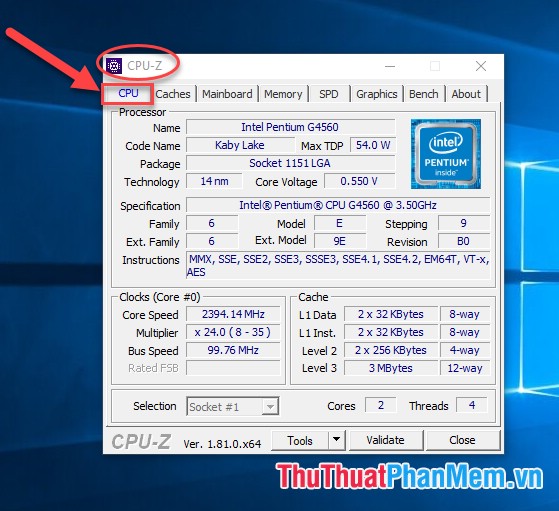
1. CPU card
- With the CPU card you can view all information about the processor (CPU):
+ Name: Brand of CPU on your device.
+ Code Name: Code name of the CPU on your computer.
+ Packpage: The type of CPU socket or socket - this is a very important parameter when you want to upgrade your CPU
+ Technology: The size of the CPU core, for example here the CPU core size is 14nm, note the smaller the core size, the cooler the CPU runs -> your computer works better.
+ Core Voltage: Voltage raising CPU.
+ Specification: Full name of the CPU on your device.
+ Stepping: The information of these chip types is released to the market, the higher the value, the more likely it is that your version has been fixed.
+ Revision: Is the version information of the chip.
+ Instructions: The instruction is the processor chip support.
+ Core Speed: CPU processing speed, this speed may not be equal to the default speed of the CPU because this speed changes to save power. Only when using many programs that need a lot of resources, the CPU pushes up to the maximum speed.
+ Multiplier: As a multiplier, changing this multiplier helps the CPU to adjust the processing speed accordingly to save power without impact from the user.
+ Bus Speed: With CPU z you can think of Bus Speed as BLCK ( Base Clock).
+ Level 2: Memory parameters, the higher this parameter, the better the CPU works to avoid congestion. Here the Pentium G456 chip should have more level 3 memory which will help the CPU work better.
2. Memory Caches
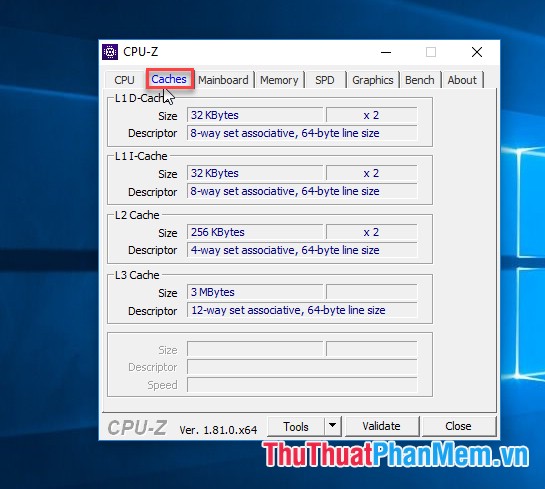
- In this Card Caches lets you check the system's cache for capacity and level, properties:
+ L1D- Cache, L1 I-Cache, L2 Cache, L3 Cache: the L1, L2, L3 bandwidth of the CPU, of which the larger the L2 and L3 the faster the CPU operates.
3. Information about the mainboard of the computer
- Click to switch to Mainboard tab to see information about the Mainboard of the computer:

+ Manufacturer: Name of the mainboard manufacturer .
+ Model: Mainboard type name .
+ Chiset: Name of chipset on main.
+ Southbridge : southbridge chip name, some mainboard lines later no longer this chipset.
4. View information about Ram memory
- To view information about RAM, click to the memory tab :

With Memory card, you only need to consider the following parameters:
+ Type: The type of RAM or the computer RAM model being used.
+ Size: The amount of RAM in use on your computer.
+ Channel: The amount of RAM plugged in can be Single (one ram) or Dual (2 ram) or triple (3 ram).
+ DRAM Frequency: This is the standard RAM speed, this parameter helps you calculate the RAM bus by the formula: Bus Ram = Dram Frequency x 2
5. Check how many Ram slots
To check the number of individual slots, click the SPD tab:

With this result, the ram on your computer is plugged in the 1st slot. With the SPD you are interested in the following parameters:
+ Slot #: Click the drop down arrow will show the number of ram slots on your computer, usually the machine will have 2 to 4 ram slots. DDR4 value is the lifetime of RAM on the computer.
+ Module Size: The amount of Ram in the slot is showing.
+ Max Bandwidth: Maximum bandwidth speed.
+ Manufacturer: Name of ram manufacturer.
6. View information about graphics cards
- Click to switch to the Graphics tab and take care of the following parameters:
+ Display Device Selection: shows the number of display cards, if there are multiple video cards it will light up and you can select the corresponding card, if only 1 card this part will be dimmed as the picture.
+ Name: Name of the graphics chip company.
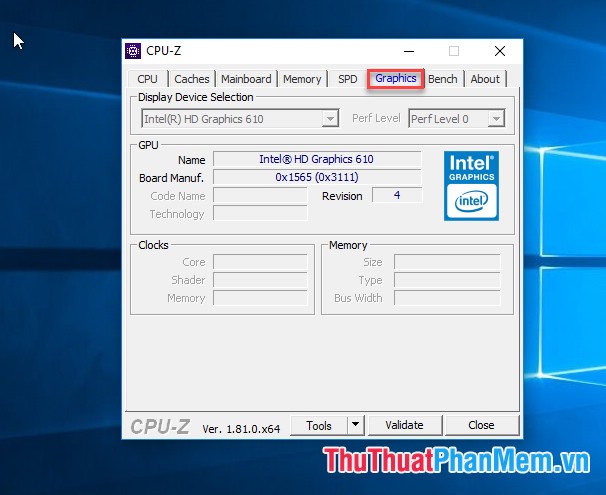
There are also a number of tabs like Bench, About that contain software developer information.
The above is a detailed guide on how to check the computer configuration with CPU-Z, See computer hardware information using CPU-Z. Good luck!

FAQ
What should I know about Check the Computer Configuration with CPU-Z, View Computer Hardware?
Focus on the key features, requirements, limitations, and practical use cases explained in this guide.
How do I get the best results with Check the Computer Configuration with CPU-Z, View Computer Hardware?
Follow the recommended steps, use current software or information, confirm compatibility, and review settings before major changes.
Are there any risks or limitations?
Potential limitations depend on compatibility, data quality, cost, privacy, support, and how the product or method is used.
Related Articles
 View iPhone Configuration, Check iPhone Hardware Information5 minutes read
 4 Simple Ways to Check the Configuration and Hardware Information7 minutes read
 Guide 3 Ways to Check Configuration, Computer Information Fast and Simple4 minutes read
 How to View Computer ID, Check Hardware ID3 minutes read
 How to Check Computer Configuration: Step-by-Step Guide6 minutes read
 3 Ways to Check Computer Specs Without Extra Software4 minutes read
Reader Comments 0
Sign in with email or Google to join the discussion.