Table of Contents
The following guide provides a clear overview of Flash, with the most relevant background, details, and practical takeaways.
Flash Overview
1. Create a file with the parameters shown in Figure 1:
 Figure 1
2. Rename the layer to the background and create a new layer named square
 Figure 2
3 Using the Rectangle Tool, adjust the fill color to green, remove the border color and draw a square
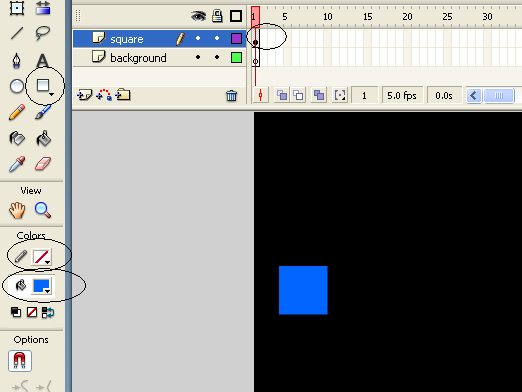 Figure 3
4 Using the Selection Tool, drag the rectangles that are right above the blue rectangle and press the Delete key
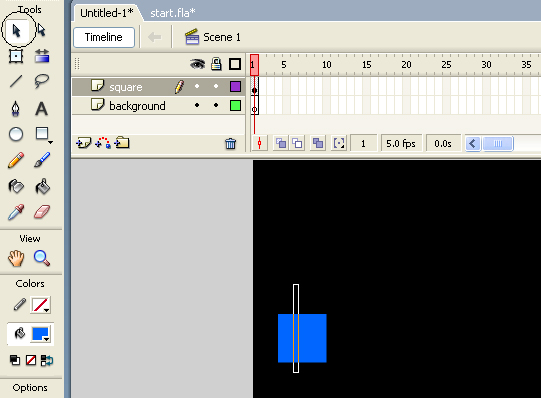 Figure 4a
(Results obtained after pressing Delete)
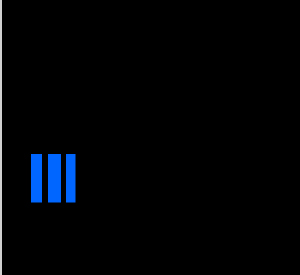 Figure 4b
5. Right-click Frame 15 (of the square layer) and select Insert KeyFrame
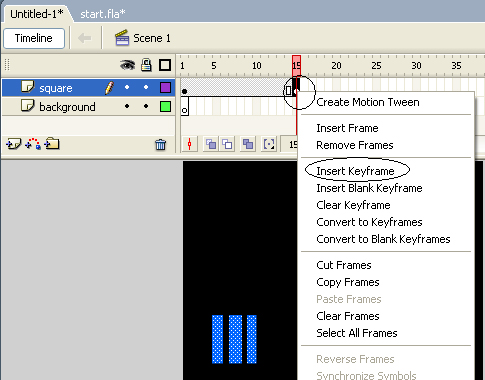 Figure 5
6. Use the mouse to drag the square to the right
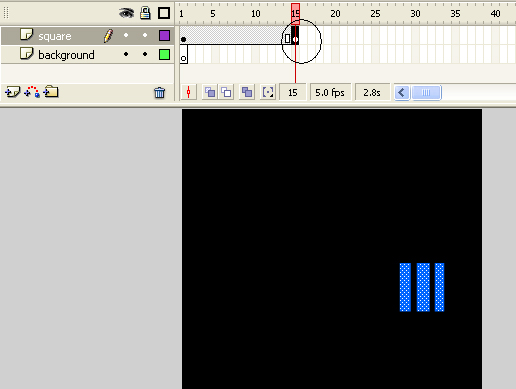 Figure 6
7. Right-click any location between Frame 1 and Frame 15 and select Create Motion Tween
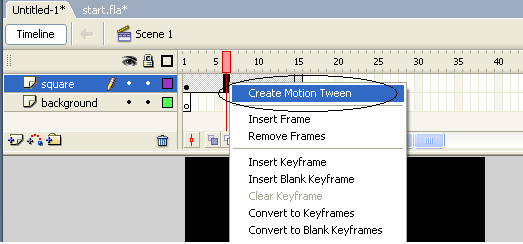 Figure 7
8. Lock 2 available layers again and create a new layer called rectangle (see Figure 8).
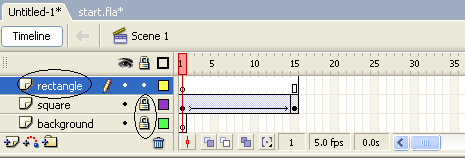 Figure 8
9. Click Frame 1 of this layer and use the RectangleTool tool (adjust the fill color to white, remove the border color) to draw a rectangle.
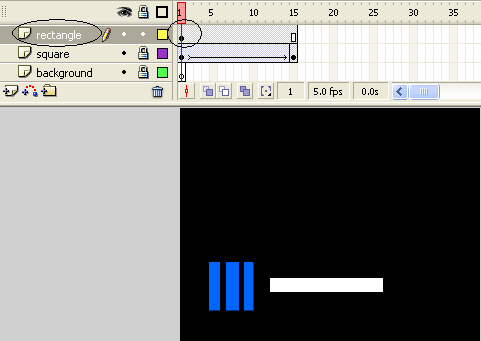 Figure 9
10 Lock the rectangle layer and create a new layer named frame
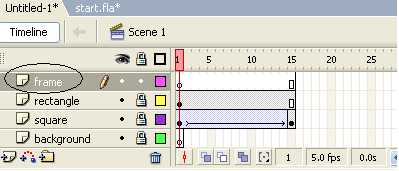 Figure 10
11 Using the Rectangle Tool (remove the fill color, set the border to white, adjust the Stroke height to 3 ) draw a rectangular frame around the rectangle of the rectangle (see Figure 11 temporarily hiding the rectangle for you. See results)
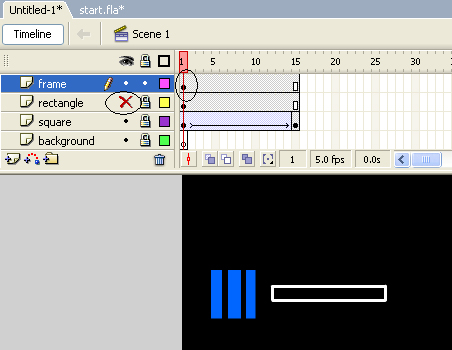 Figure 11
12. Lock the frame layer again and create a new layer named text. At Frame 1 of the text layer, select the Text Tool to create the text
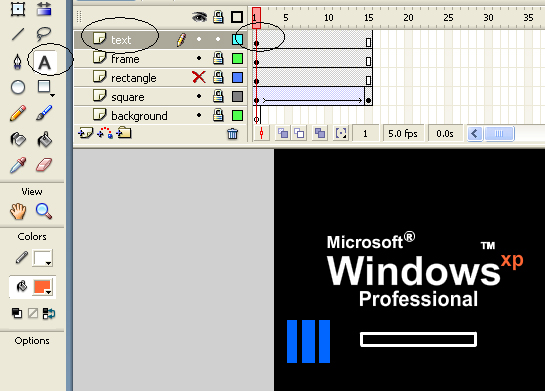 Figure 12
13. Lock the text layer and create a new layer called flag, use the Rectangle Tool to draw the flag
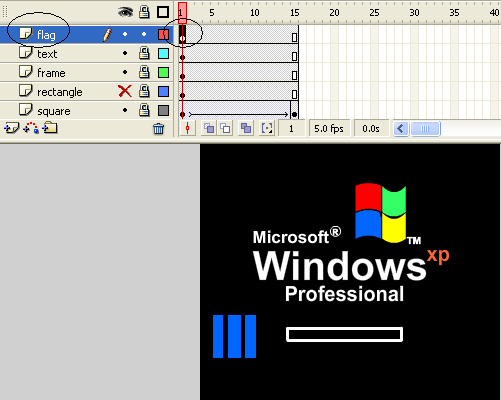 Figure 13
14. Right-click on rectangle layer and select Mask
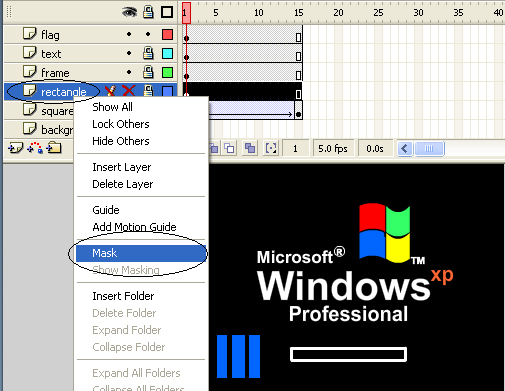 Figure 14
15. Press Ctrl + Enter to see the result and download the source file here.
FAQ
What is the main topic of Flash - Simulation of Windows Boot Process (P2)?
The following guide provides a clear overview of Flash, with the most relevant background, details, and practical takeaways.
Why is Flash important?
Create a file with the parameters shown in Figure 1: Figure 1 2.
What should readers remember about Flash?
Rename the layer to the background and create a new layer named square Figure 2 3 Using the Rectangle Tool, adjust the fill color to green, remove the border color and draw a square Figure 3 4 Using the Selection Tool, drag the rectangles that are right above.
Related Articles
 Flash - Simulates the Windows Boot Process: Macromedia Flash3 minutes read
 Flash - Simulating the Windows Startup Process (P3)4 minutes read
 Winsetupfromusb - a Simple Way to Install Windows XP from a USB4 minutes read
 How Does Windows 10 Start Up?3 minutes read
 How to Boot Linux from USB on Windows 109 minutes read
 How to Boot from USB on Windows 7: Complete Guide9 minutes read
Reader Comments 0
Sign in with email or Google to join the discussion.