Table of Contents
Start with the exact message in the cell. A row of hashes usually points to a display problem. An error such as #REF! or #VALUE! points to a formula or its inputs. Select the cell and read the formula bar before you change anything.
Find the cause by error message
| What you see | Likely cause | What to check |
|---|---|---|
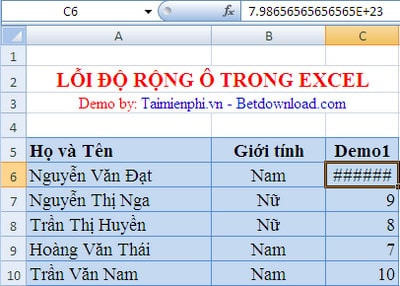
##### | The column is too narrow, or a date or time result is negative. | Double-click the right edge of the column header to AutoFit. If the hashes remain on a date or time, check the order of the subtraction and the number format. |
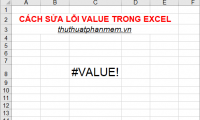
#VALUE! | A formula received an unexpected data type, such as text in arithmetic. | Check the referenced cells for spaces, text, or imported numbers. Convert genuine numeric text using Excel's VALUE function where appropriate. |
#NULL! | A space between ranges requests their intersection, but they do not overlap. | Use : for a continuous range such as A1:A5. To pass separate ranges to a function, use your regional argument separator. |
#NUM! | The input or result is outside the function's numeric domain, or an iterative function cannot find a result. | Check the allowed inputs. For instance, =SQRT(-1) yields #NUM! in ordinary real-number calculations. |
#REF! | A formula points to an invalid reference, often after cells were deleted. | Undo the deletion if appropriate or replace the broken reference with the intended cell or range. |
#N/A | A lookup cannot find the requested value. | Confirm the value exists and check that both sides use the same type. A numeric ID and an ID stored as text can look identical in the sheet. |
#DIV/0! | The denominator is zero or is a blank cell. | Check whether the input is missing or legitimately zero. Handle that case explicitly if the sheet will regularly contain incomplete rows. |
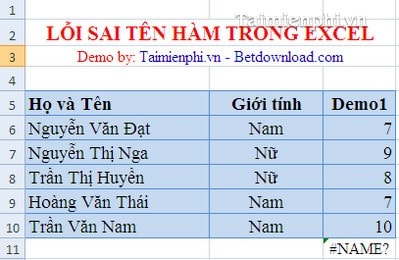
#NAME? | Excel cannot recognize a function, named range, or unquoted text. | Check spelling and function availability in your version. Put literal text in double quotes, as in =IF(A1>0,"Yes","No"). |
Trace the first failing formula
When several cells show the same error, follow the references back to the first failing input. Where available, use Formulas > Evaluate Formula to step through a calculation. If the error appeared after copying a formula, compare the source and destination references. The basic formulas lesson shows how relative and absolute references behave when copied.
Use an error-handling formula only once you know which condition it should handle. For example, if a ratio should stay blank while a denominator is missing or zero, =IF(B2=0,"",A2/B2) handles that case without suppressing unrelated errors.




Reader Comments 0
Sign in with email or Google to join the discussion.