Table of Contents
Boot and Install Windows 7 from the USB Drive is easier to understand when the core ideas are paired with practical examples. The sections below explain the topic clearly, highlight useful steps, and point out details that can prevent common errors.
Network administration - Windows 7 beta has been released in the past. If you want to test this new operating system in your system but don't want to burn to a DVD, here's how to create a bootable USB to install Windows 7 on your system.
Format the USB drive in NTFS format
(Windows XP only. Vista users can format their USB drive directly into NTFS format). In Windows, go to Control panel -> system -> hardware -> Device manager . In the disk drives section, right-click your USB storage device and select Properties .

Go to the Policies tab, select optimize performance. Click OK .

Open Windows Explorer, you will see the USB storage device in the listing. Right-click and select Format . Select NTFS from the drop-down bar. Click Start .
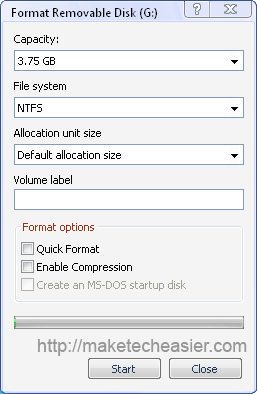
With Windows XP
Download MBRWizard. Unpack the compressed files to your workstation. Open the command prompt ( Start -> Program -> Accessories -> Command Prompt ).
cd Desktop / MBRWiz2.0 / MBRWiz / list
Write down the disk number of the USB (the part marked with the red rectangle in the picture below)
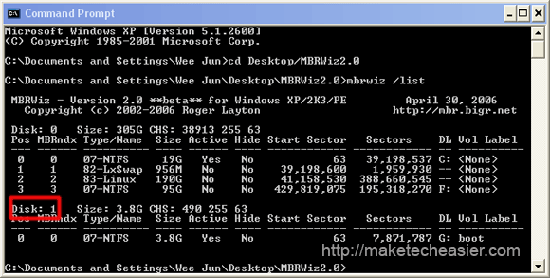
Activate USB
mbrwiz / disk = X / active = X (X is the drive number of the USB device)
With Windows Vista
On the Start menu, locate the command prompt. Right-click and select Run as administrator .
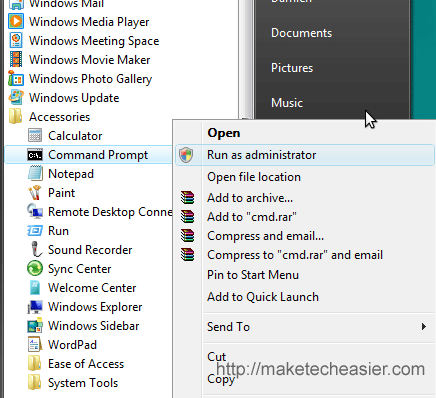
To hit
diskpart list disk
Write the drive number of the USB device (red rectangular section)
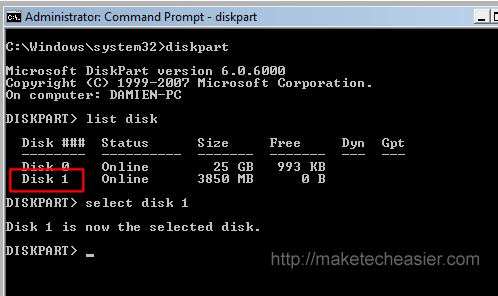
Select USB drive
chọn đĩa X (X số thứ tự ổ đĩa của ổ đĩa USB)
List the current partition. Write down the partition number.
list partition
Select the current partition to activate it
chọn Y phân vùng (Y là số phân vùng của ổ đĩa USB) active
(Y is the number of USB partitions)

Create bootable USB
Download and install WinRAR.
Right-click the Windows 7 iso file and select Extract files. Extract files into a folder (you can name this folder with any name if you want, but for demonstration purposes, we set it to win-7 ) in the computer.
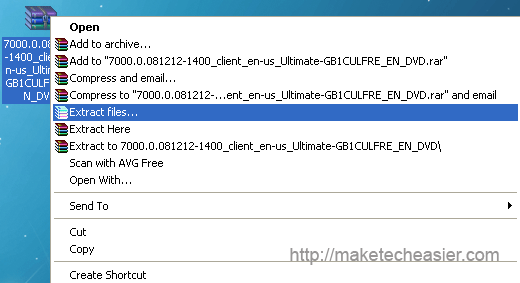
In the command prompt, use the cd command to enter the Windows 7 folder.
cd Desktop / win-7 (Change destination to the folder you extracted) cd boot bootsect / nt60 X: (X is the USB drive letter)

Now copy all the files from the Windows 7 folder to the USB drive
Restart the computer. Remember to change the boot order of the device to boot from the USB in the BIOS and you can completely boot Windows 7 from the USB drive.
FAQ
What is Boot and Install Windows 7 from the USB Drive?
Damien Network administration - Windows 7 beta has been released in the past.
Why is Boot and Install Windows 7 from the USB Drive important?
A clear understanding of Boot and Install Windows 7 from the USB Drive helps you make informed decisions, avoid common mistakes, and use the relevant tools or techniques more effectively.
How should beginners approach Boot and Install Windows 7 from the USB Drive?
Start with the fundamental concepts, follow the examples step by step, and test each change in a safe environment before applying it to important systems or data.
Related Articles
 Winsetupfromusb - a Simple Way to Install Windows XP from a USB4 minutes read
 How to Boot Linux from USB on Windows 109 minutes read
 Instructions to Install Windows by USB, Create USB Boot, USB3 minutes read
 Install Win 7 Using USB: How to Install Windows 7 from USB7 minutes read
 How to Create a Bootable Windows 7 or Vista USB Drive7 minutes read
 How to Set Up BIOS to Boot from USB // CD // DVD, External Hard5 minutes read
Reader Comments 0
Sign in with email or Google to join the discussion.