Table of Contents
A useful Google Drive system makes it clear where new files go, how names are formed and how to find shared work. Start with a small folder structure, a consistent naming pattern and a few saved navigation habits. You do not need to reorganize everything at once.
1. Give new files an inbox
Create a few top-level folders suited to your work, such as Work, Personal, Resources and Archive. Add an Inbox for files that need sorting, and choose a regular time to clear it.
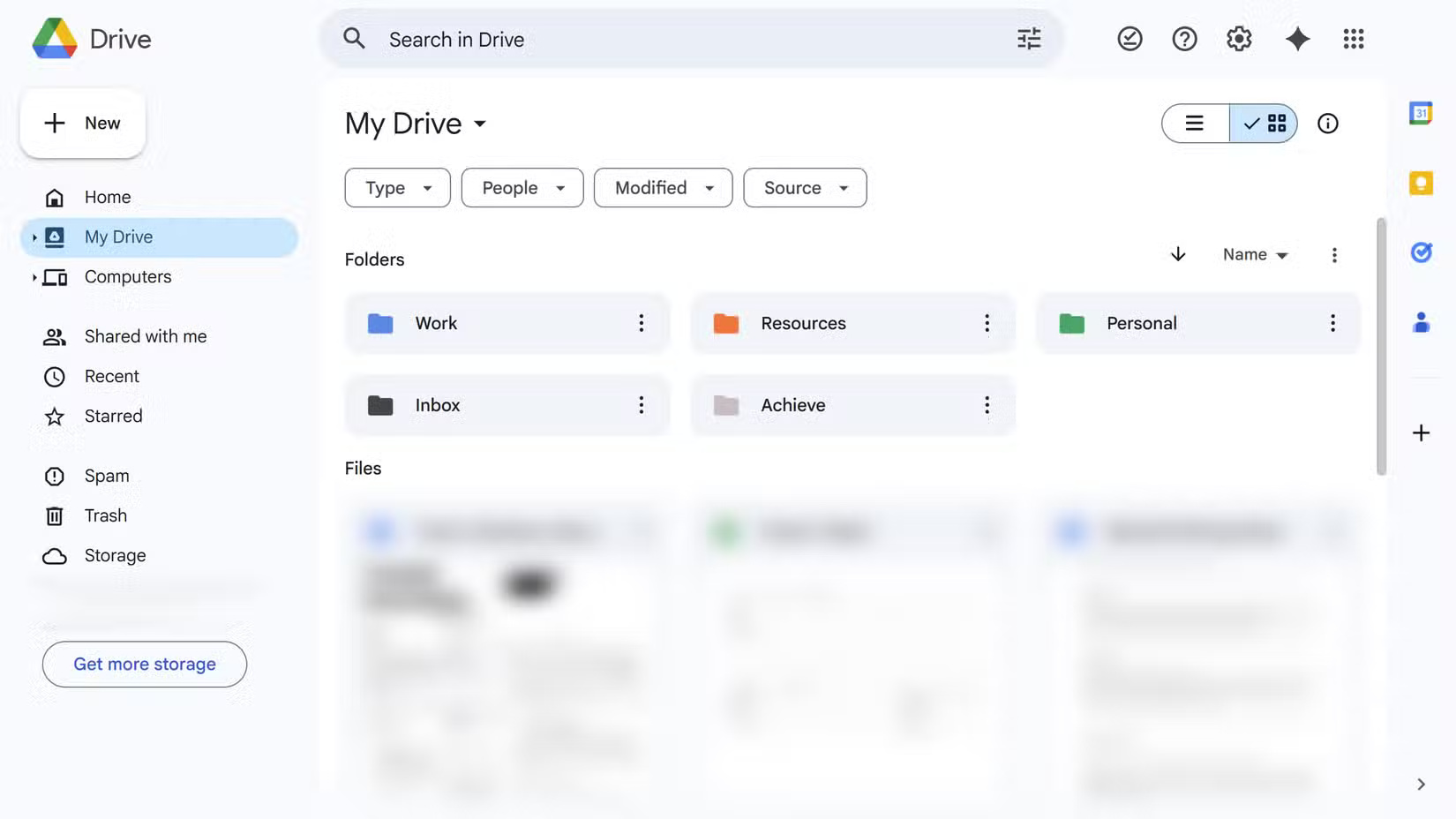
For active work, organize by project or responsibility before adding many nested subfolders. An archive holds completed material you still need; it is not a substitute for deleting unnecessary duplicates after checking them.
Be careful with shared items: moving a file can affect how collaborators find it and may depend on your permissions. Use a shortcut when you need another route to a shared file rather than making an uncontrolled duplicate.
2. Use names that identify the content
Choose a pattern and apply it consistently. For example:
ProjectX_2026-11-13_Meeting-Notes
ProjectX_Budget_Draft
Team_Expense-Report_Template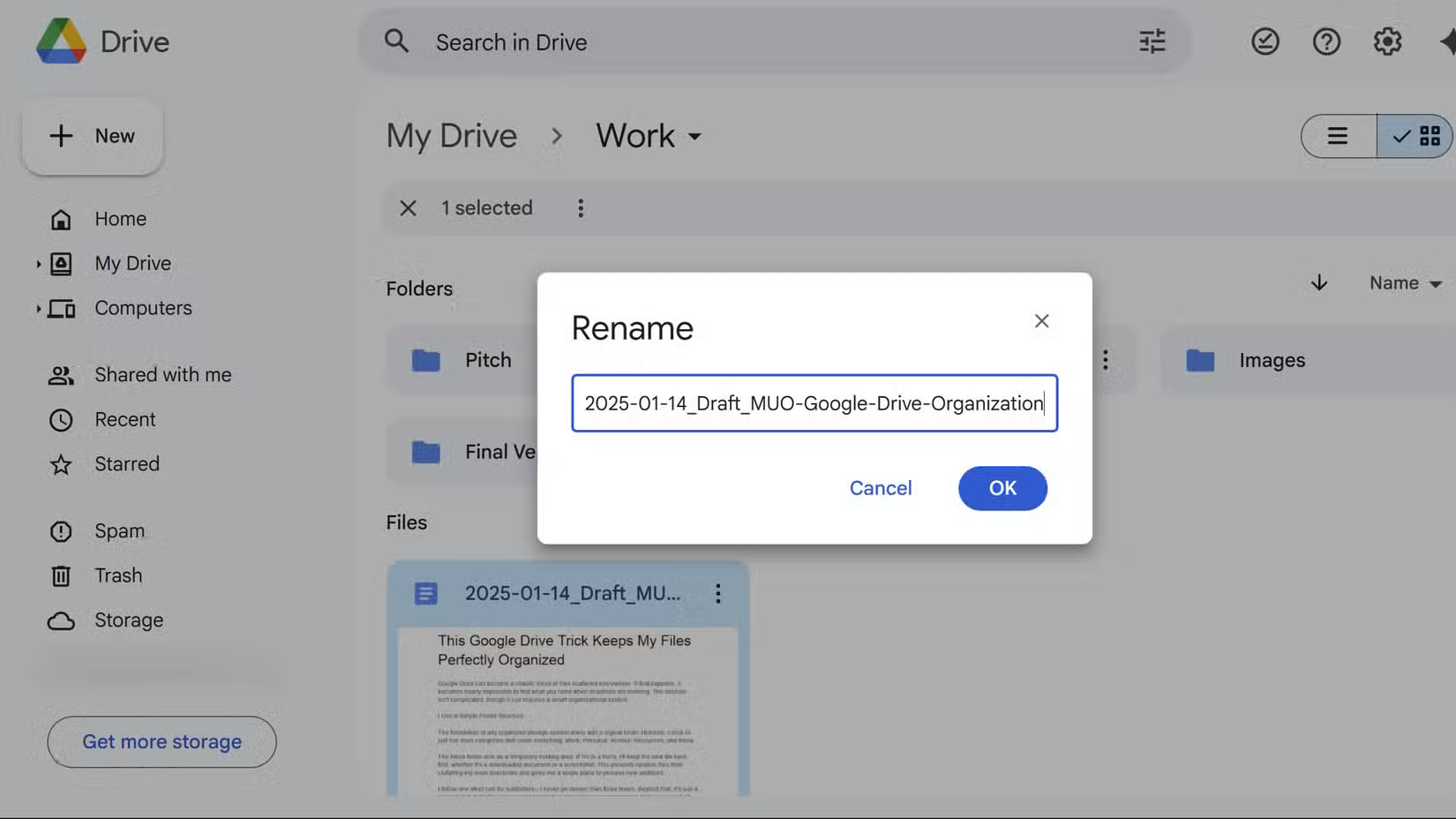
Put the project first if that is how you search, or a YYYY-MM-DD date first if chronological browsing matters more. A date in the name should have an agreed meaning, such as meeting date; it does not automatically prove when the file was created.
Use status words sparingly and update them when the status changes. Avoid a chain of files called Final, Final2 and Final-Really-Final. For collaborative documents, maintain one agreed working copy when possible.
3. Search by owner, type and phrase
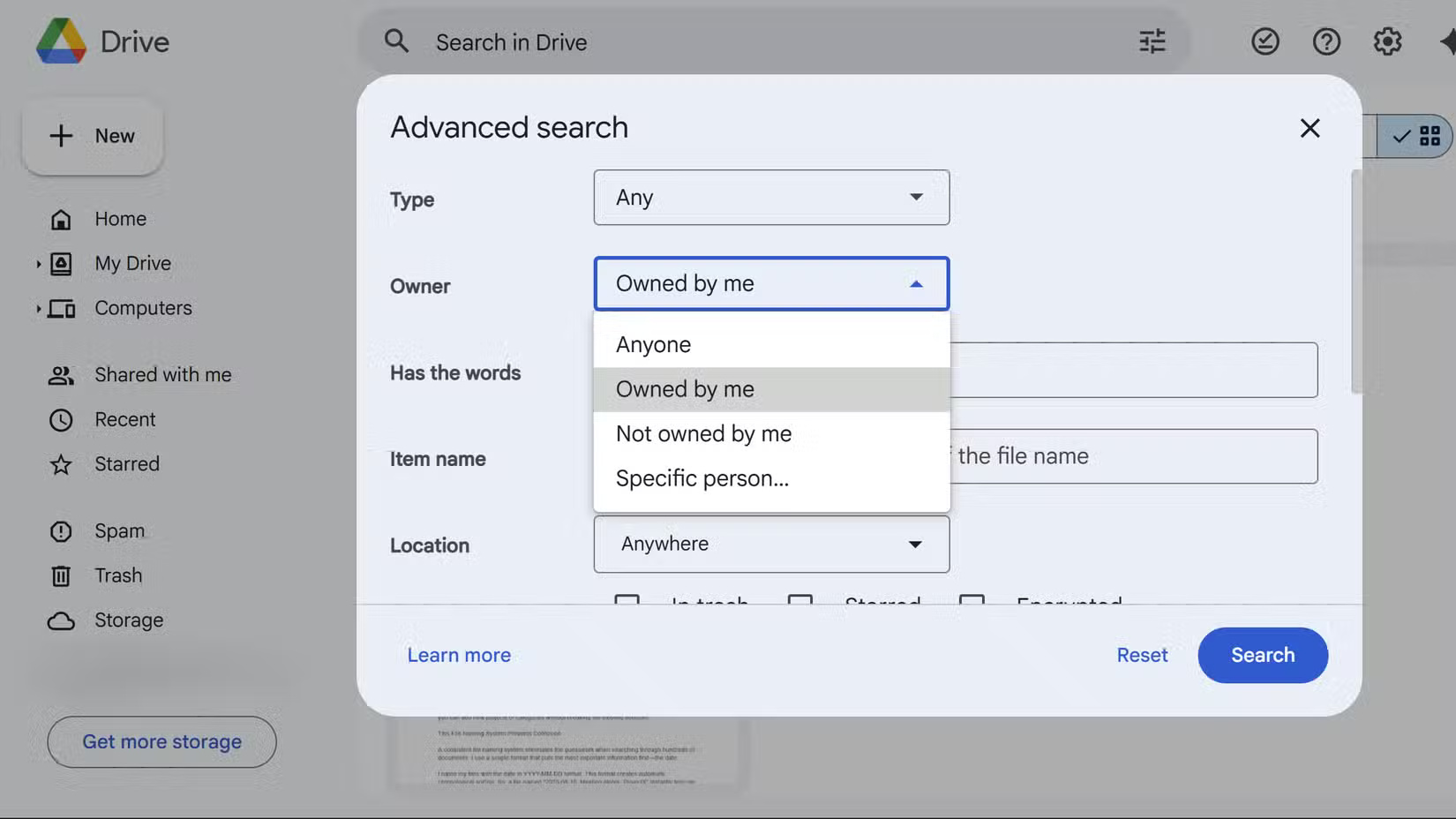
Use the search bar's filter controls when you are unsure of an operator. Combine the clues you remember rather than browsing every folder.
| Search | Purpose |
|---|---|
owner:alex@example.com | Items owned by that account that you can access |
from:alex@example.com | Items shared by that person |
type:pdf | PDF files |
type:spreadsheet | Spreadsheets |
"quarterly budget review" | The quoted phrase |
is:starred | Items you have starred |
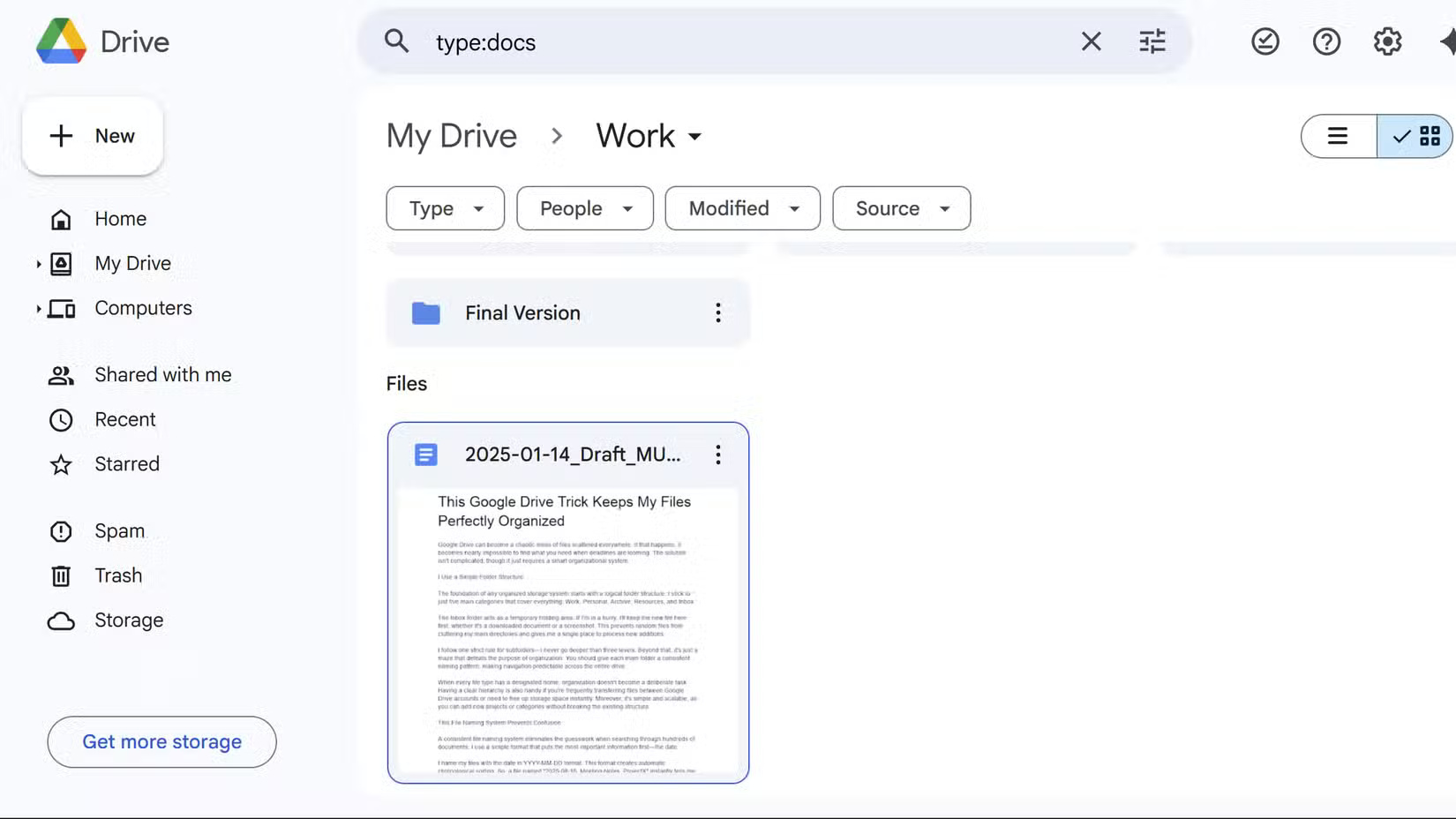
Replace the example address with the actual account. Ownership and sharing are different: a person may share a file they do not own. Search can return only material you have permission to access.
Google's Drive search reference lists supported operators. For more examples, see Drive file-search tips.
4. Use stars and colors selectively
Right-click an item and look under Organize > Add to starred. Keep stars for files or folders you need frequently, then remove them when the work is complete. Use folder colors for a small number of categories, while keeping names meaningful without color.
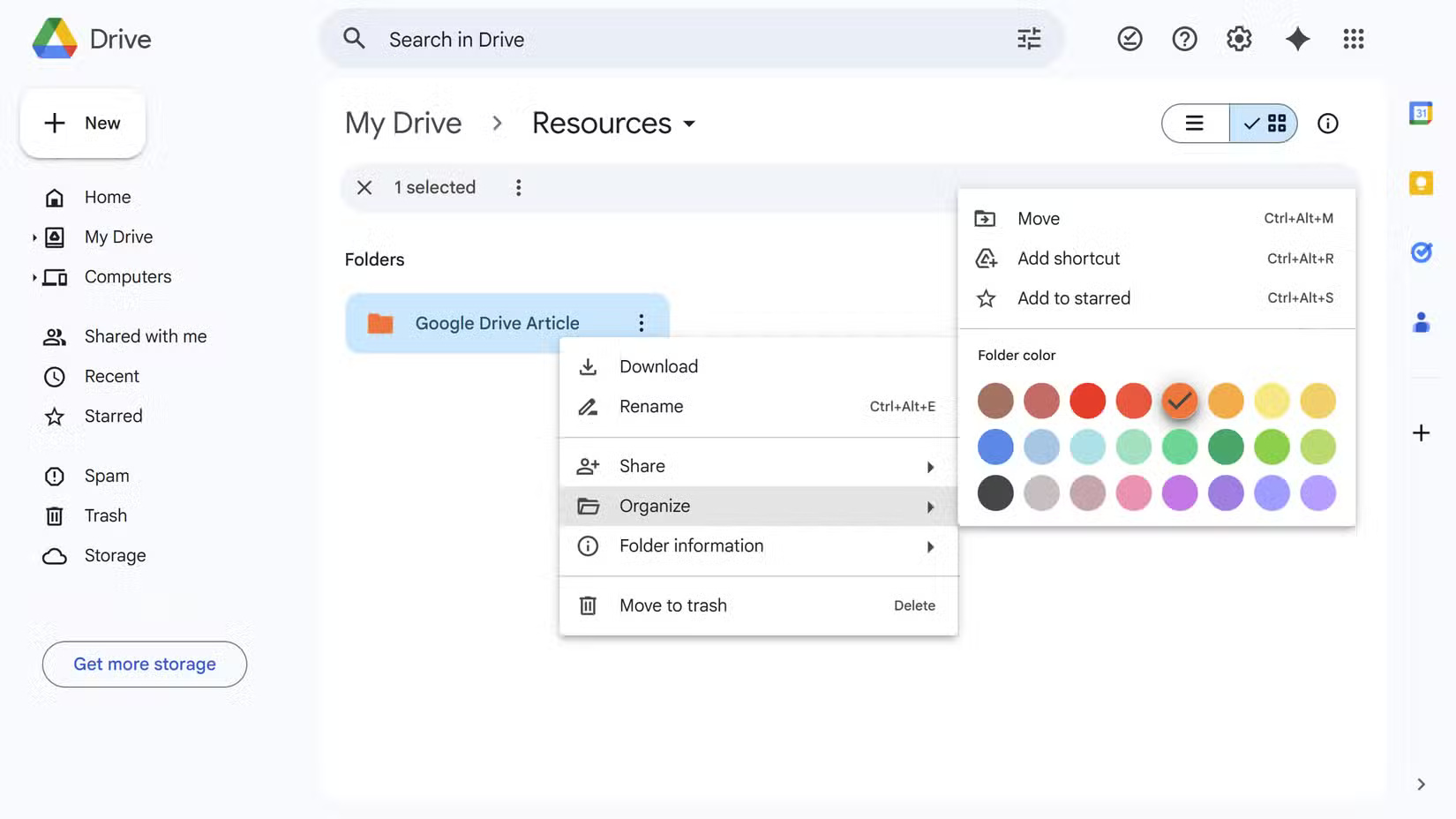
Google's organization guide covers these controls. Prefer the visible menu if a keyboard shortcut differs on your platform; Drive's shortcut-help panel shows the current keys.
5. Treat an AI connector as optional search assistance
If your Claude account and organization allow it, a Google Drive connector can help with a contextual request such as finding a document about a decision. Check the connector directory and its permissions rather than assuming a particular paid plan or old menu guarantees access.
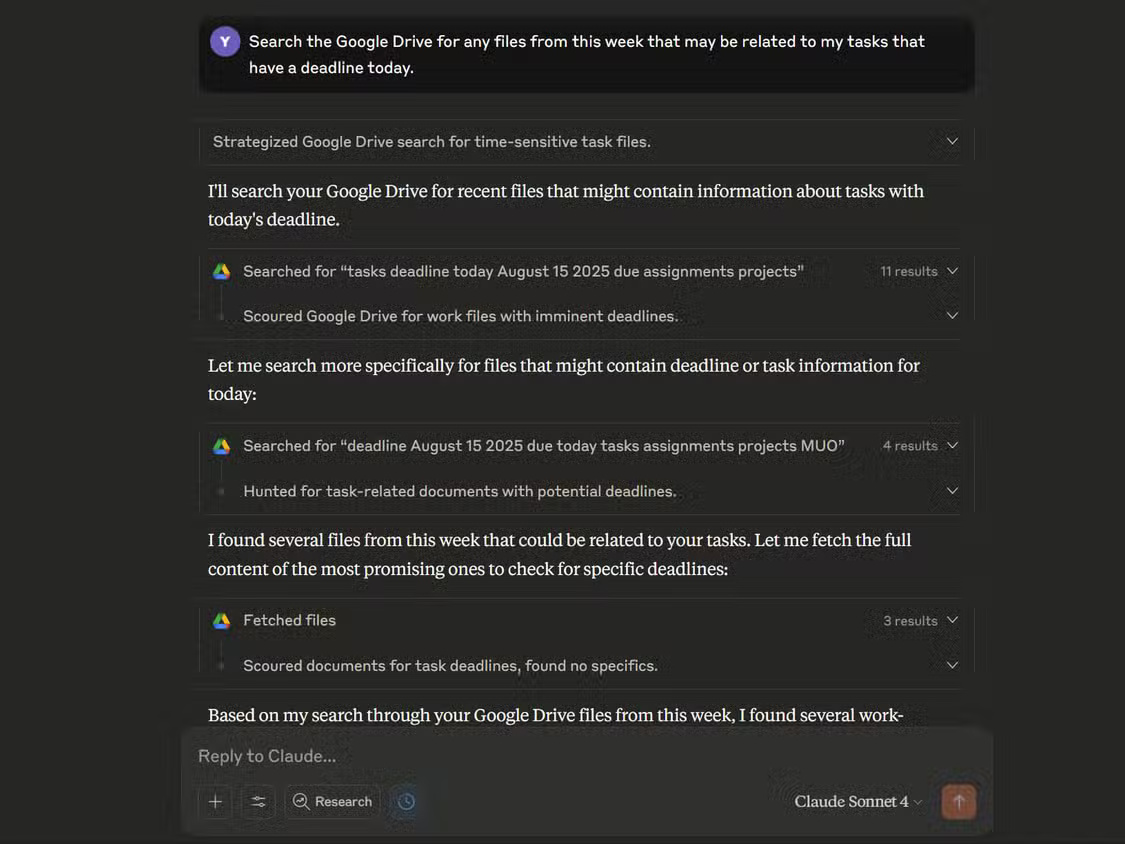
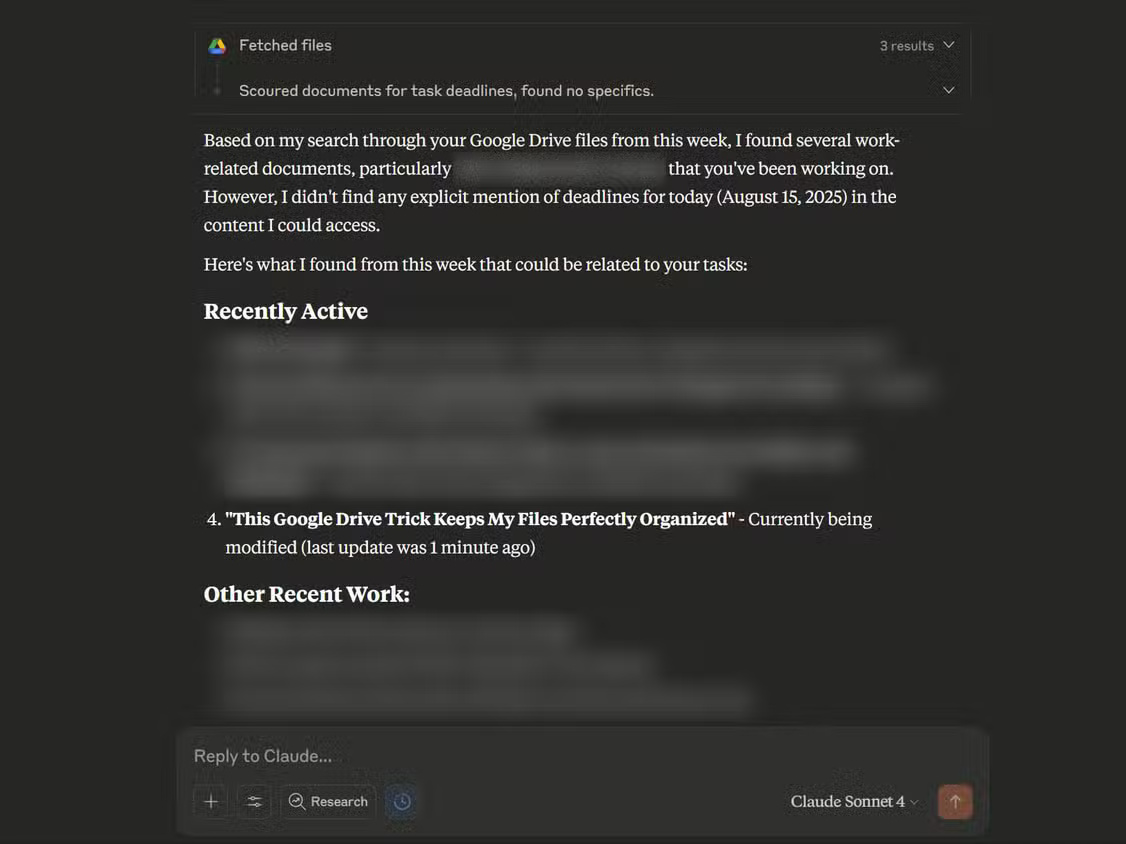
The images show an example connection flow. Before connecting, review the account, requested read or write access and your organization's policy. For finding files, request only search and retrieval, then open the returned source to verify it is the right document.
Claude's Google Workspace connector guidance describes current requirements. An AI connector cannot compensate for missing file permissions or guarantee that its first result is correct.
Keep a routine of sorting Inbox, retiring outdated shortcuts and checking shared access. For quick navigation, see the Drive keyboard-shortcut guide.
Related Articles
 7 Tips for Better File Searching on Google Drive
 Don't miss these 9 useful Google Drive tricks!
 Trick to search on Google Drive
 Download files and websites directly from Google Drive in Chrome browser
 Google Drive launches a new feature to help users organize files more easily
 How to fix errors do not upload files to Google Drive
Reader Comments 0
Sign in with email or Google to join the discussion.