Table of Contents
This guide provides a clear overview of turn off suspended applications on windows 11, including Use Task Manager to Turn Off the Suspended Application, Use the Command to Turn Off the Application That Crashes on Win 11. Use it to understand the topic, compare the available options, and make a more informed decision.
Currently on Win 11 there will be 3 ways to help you turn off suspended applications. Consists of:
Use Task Manager to Turn Off the Suspended Application
Task Manager is an extremely useful tool to help you quickly get rid of a frozen, unresponsive device. You just need to follow few steps below.
- Press Ctrl + Shift + Esc to open Task Manager . Or you can also right-click the Windows icon on the desktop and select Task Manager.
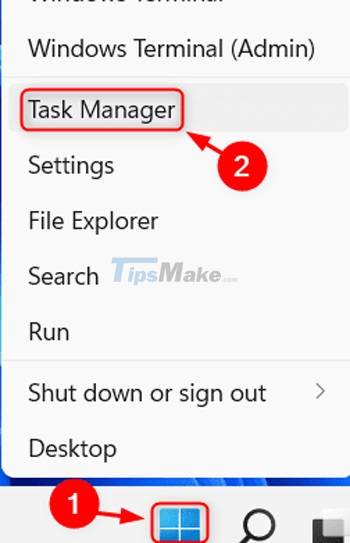
- Select the Process tab and find the software and application you want to close.
- Right-click the program you want to close and select n End Task in the new dialog box that appears. Alternatively, you can also click the End Task button at the bottom of the dialog box.
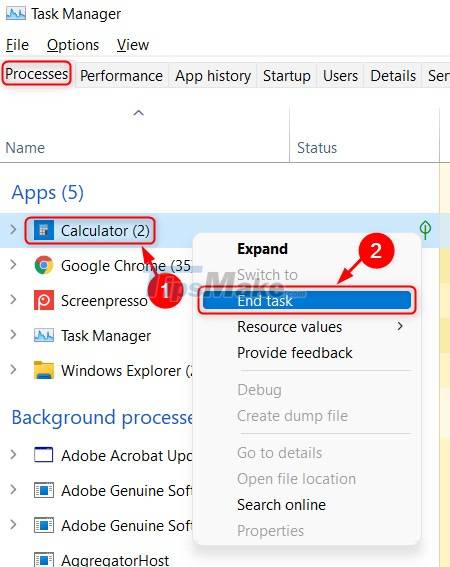
This will force your suspended application to close. If you want to continue using it, you can reopen the application that has just been suspended and use it as usual.
Use the Command to Turn Off the Application That Crashes on Win 11
Another way to help you deal with application crashes is through command. The steps are as follows:
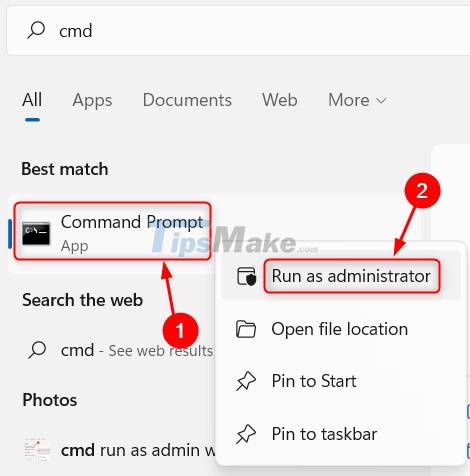
- Click on the Windows icon and type cmd.
- Right-click on the Command Prompt software and select Run as administrator, a dialog box appears, click the Yes button.
- Enter the tasklist command and press Enter.
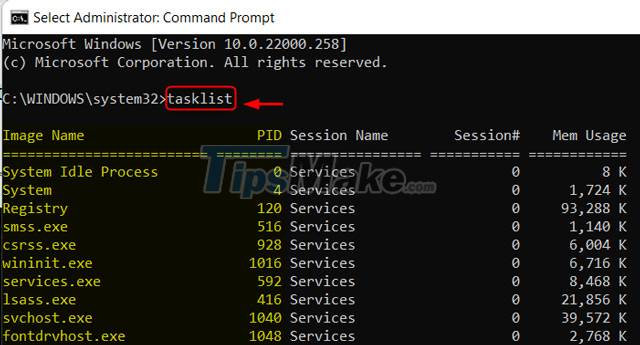
- Search for the program you want to close and enter the command taskkill /im ProgramName.exe /t /f. In which, ProgamName is the program that you want to close.
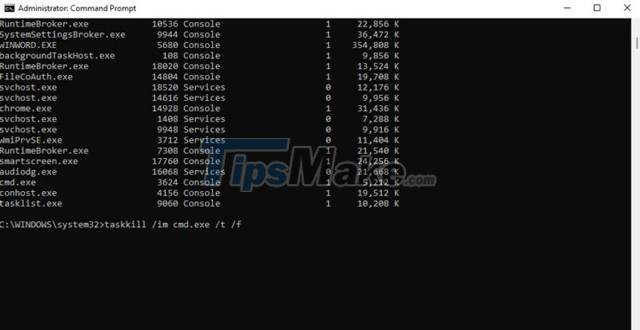
So you have completed the process of closing the suspended application on Windows 11 via command.
Turn Off Suspended Applications on Windows 11 with Desktop Shortcut
An interesting way to help you deal with software applications that hang is to use Desktop Shortcut.
- You need to return to the Desktop screen, you can quickly press the Windows + D key combination to return to the main screen.
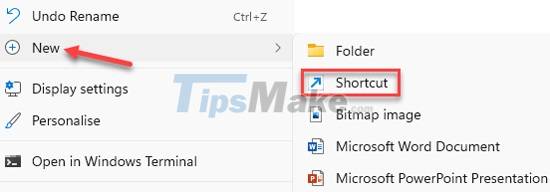
- Right-click on the Desktop, select New > Shortcut to proceed to create a new Shortcut.
- In the Type the location of the item section you will need to copy and enter the link below into the dialog box and then click Next .
taskkill /f /fi "status eq not responding" 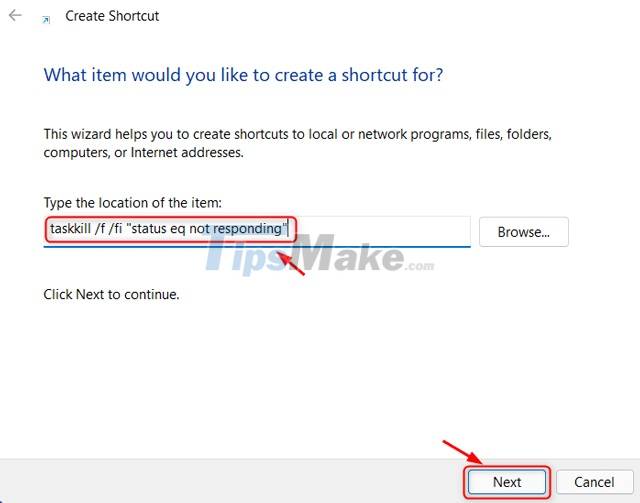
- Enter a name for your Shortcut in the Type a name for this shortcut section and then click Finish to complete the Shortcut creation process.
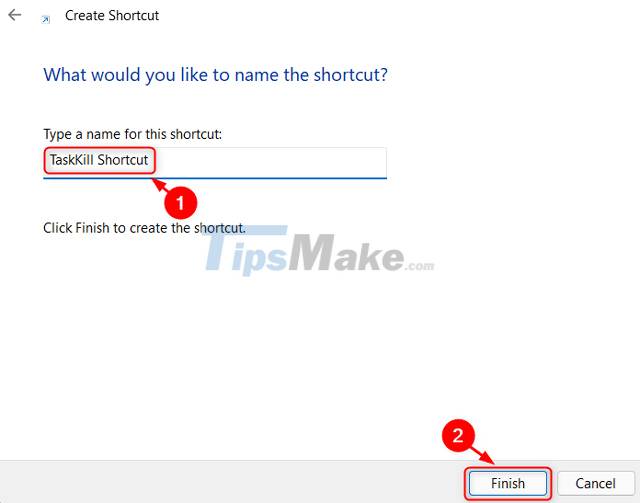
So from now on, every time an application or software on Windows 11 crashes, you just need to double-click on the newly created icon to quickly turn off the suspended software.
The whole content above is 3 ways to turn off suspended applications on Windows 11 that Tipsmake wants to introduce to you. Good luck.
Conclusion
Understanding Turn Off Suspended Applications on Windows 11 makes it easier to compare options, avoid common mistakes, and apply the information in this guide more effectively. Review the relevant requirements before making changes or choosing a solution.
FAQ
What is Turn Off Suspended Applications on Windows 11?
Consists of: Use Task Manager to Turn Off the Suspended Application Task Manager is an extremely useful tool to help you quickly get rid of a frozen, unresponsive device.
Why is Turn Off Suspended Applications on Windows 11 important?
Understanding Turn Off Suspended Applications on Windows 11 helps you evaluate features, compatibility, performance, and potential limitations before you choose a product or follow a procedure.
What should you consider when using or choosing Turn Off Suspended Applications on Windows 11?
Consider your specific goal, compatibility requirements, available features, cost, security, and the practical recommendations described in this guide.
Related Articles
 3 Ways to Disable Applications That Are Hanging on Windows6 minutes read
 Outlook 2016 Crashes on Startup, This Is a Fix3 minutes read
 How to Rename a Magic Mouse on Mac6 minutes read
 7 Ways to Turn Off Background Applications in Windows 10 on PC7 minutes read
 Ways to Turn Off Hanging Applications on Windows 1110 minutes read
 Is your Copilot account temporarily suspended? Here's how4 minutes read
Reader Comments 0
Sign in with email or Google to join the discussion.