Table of Contents
Type cal.new into your browser's address bar to open a new Google Calendar event draft. Add the details and save it when ready. Opening the shortcut alone does not save an event or send invitations.
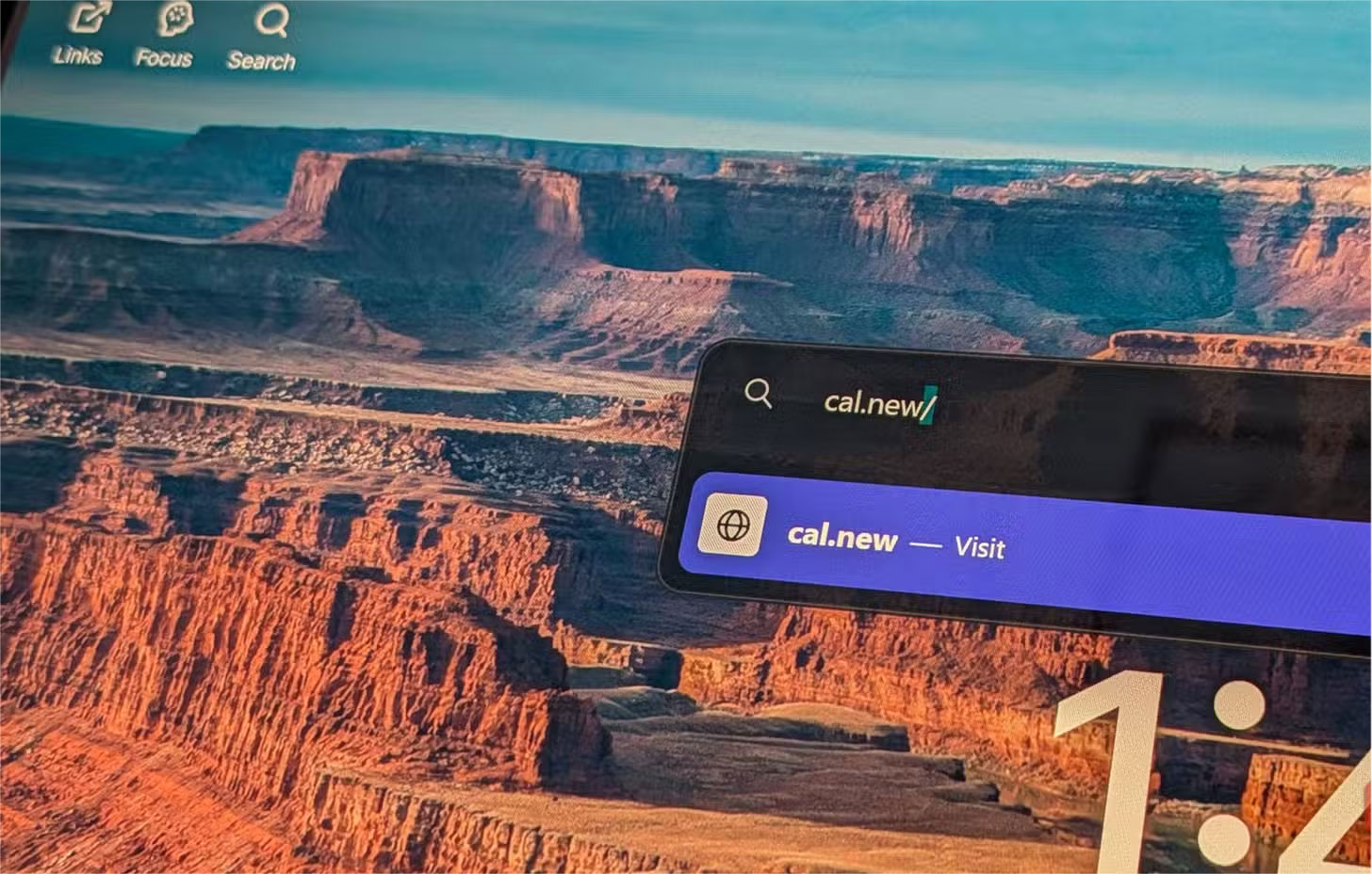
Create an event with cal.new
- Open cal.new in your browser.
- Sign in if asked, then check the Google account and destination calendar.
- Enter the title, date, start and end times, location, and any description.
- Review time zone, guests, meeting link, and notifications before saving.
Bookmark the shortcut if you use it frequently. Account order can change when several Google accounts are signed in, so check the account in the editor each time. Separate browser profiles can make work and personal scheduling easier to distinguish.
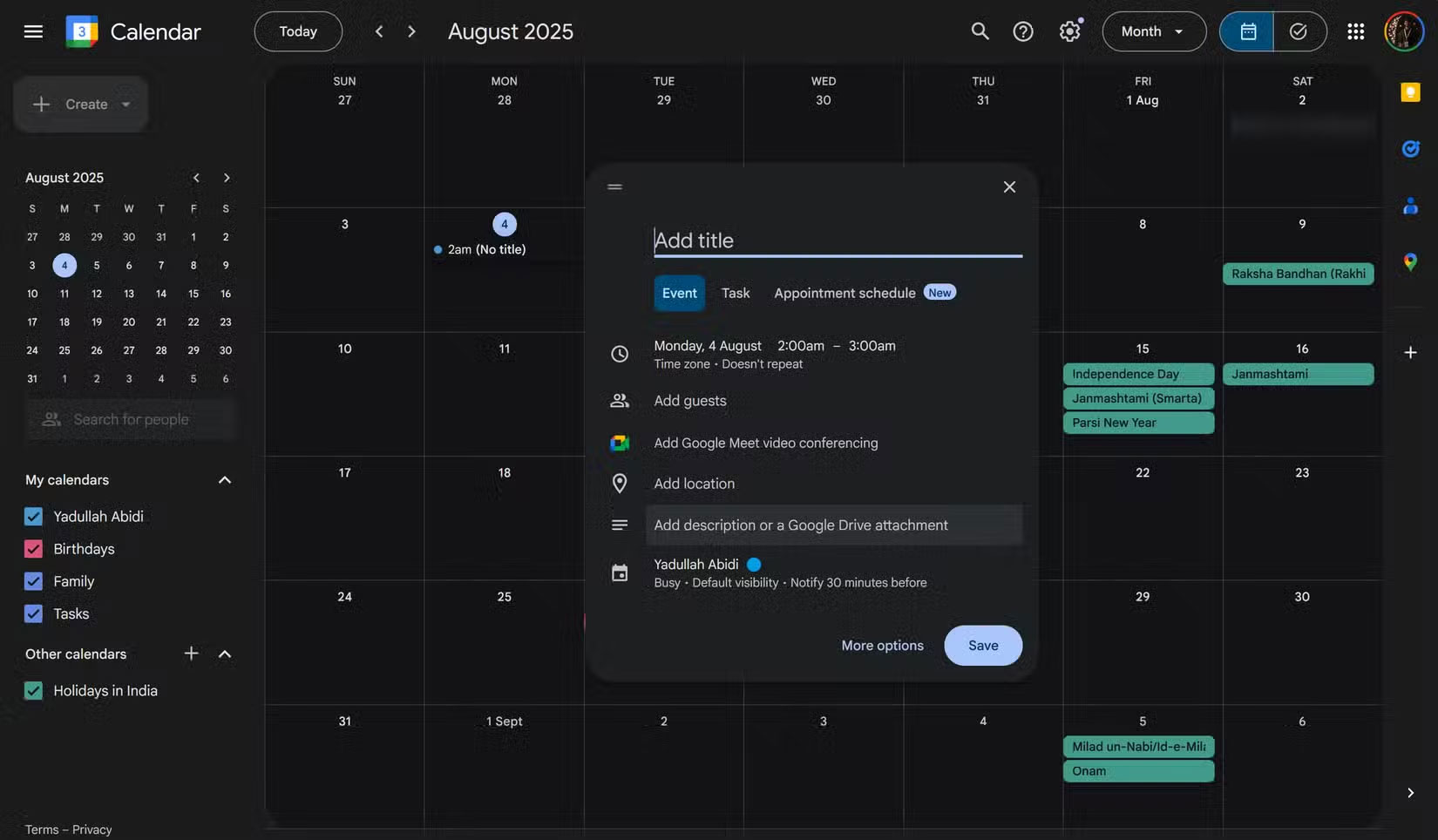
Prefill a draft with an event link
A Calendar template URL can supply draft fields. For example, this sample opens a one-hour event at 09:00 UTC on August 10, 2025; change the dates before using it:
https://calendar.google.com/calendar/r/eventedit?action=TEMPLATE&text=Event%20Name&dates=20250810T090000Z%2F20250810T100000Z&location=Meeting%20Room&details=Discussion%20notesUse URL encoding for spaces and reserved characters in titles, locations, and descriptions. Do not leave literal spaces or unescaped ampersands inside parameter values.
Understand the UTC timestamp
|
Parameters |
Describe |
|---|---|
|
YYYY |
Year |
|
MM |
Months 1 to 12 |
|
DD |
Days of the month from 01 to 31 |
|
T |
Separate date from time |
|
HHMMSS |
Time in 24 hour format |
|
Z |
UTC time zone indicator |
In this example, Z means UTC, not your local time. The editor may display a converted time in your calendar's time zone. Always check the displayed date and times, especially around midnight or daylight-saving changes.
A shortcut is not an automation API
Neither a GET request to cal.new nor opening a prefilled event URL silently schedules an event. These links open an interactive draft that must be reviewed and saved. For unattended scheduling, use an authorized Calendar integration or the Google Calendar API, with appropriate authentication and duplicate-handling logic.
For other efficient controls, see Google Calendar keyboard shortcuts. For repeating classes and reminder settings, see scheduling classes in Google Calendar.
Related Articles
 List of shortcuts for Google Calendar
 How to use Google Calendar from A->Z
 Instructions for adding color to the calendar on Google Calendar
 Making Google Calendar more useful with these free calendar applications
 Instructions for using Calendar with Google Calendar in Windows 10
 Guide to managing jobs with Google Calendar in Gmail
Reader Comments 0
Sign in with email or Google to join the discussion.