Table of Contents
3D printing, also called additive manufacturing, makes a physical object from a digital 3D model by adding material in successive layers. It is widely used for prototypes, custom tools, production parts, models, medical devices, jewelry, and many other objects. However, what a printer can make depends on its process, material, build size, and required level of accuracy.
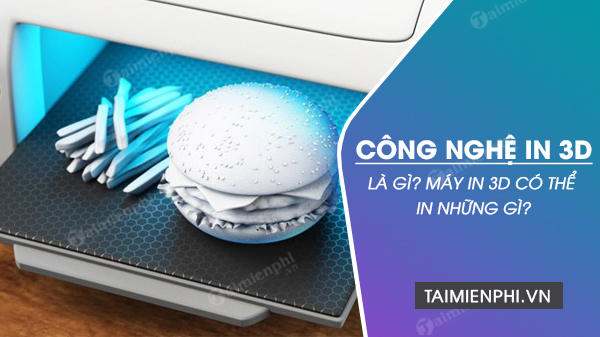
How 3D printing works
A 3D printer does not simply copy any object placed in front of it. It needs a printable digital model, created in CAD software, downloaded from a trusted model library, or produced with a 3D scanner. Slicing software divides that model into thin horizontal layers and generates the instructions that control the machine.
- Create or obtain the model: Design the part in suitable 3D modeling software, scan an existing object, or use a ready-made file whose license permits printing.
- Prepare the file: Check the model for gaps and other geometry problems, choose its orientation, and add supports if needed.
- Slice the model: Select layer height, material settings, infill, speed, and other parameters for the printer and material.
- Print the object: The machine deposits, cures, binds, or fuses material according to the generated toolpath.
- Finish and inspect it: Remove supports and perform any required washing, curing, sanding, heat treatment, machining, or dimensional inspection.
File conversion is sometimes part of this workflow. For example, TipsMake explains how to convert an STL mesh to STEP for CAD work.
Common 3D printing processes and materials
| Process | How it forms a part | Typical materials and uses |
|---|---|---|
| Material extrusion | Pushes softened material through a nozzle | Thermoplastic filament for prototypes, enclosures, fixtures, and hobby projects |
| Vat photopolymerization | Uses light to cure liquid resin | Detailed models, dental applications, patterns, and small precise parts |
| Powder-bed fusion | Fuses selected areas of a powder bed | Polymer or metal parts, including complex industrial components |
| Binder jetting | Deposits a binding agent into powder | Metal, sand, ceramic, or full-color model applications, followed by process-specific finishing |
| Material jetting | Places droplets of build material and cures them | Detailed visual models and parts that combine multiple colors or material properties |
Specialized systems can also work with ceramics, composites, concrete-like mixtures, or edible pastes. A desktop filament printer cannot use all of these materials; the feedstock and process must match the machine.
What can a 3D printer make?
Prototypes, tools, and production parts
Designers use 3D printing to check a part's fit, shape, and ergonomics before investing in conventional tooling. Manufacturers also print jigs, fixtures, replacement parts, casting patterns, and low-volume end-use components. Complex internal channels and lightweight structures may be practical with some processes, but a printed part is not automatically stronger or cheaper than a machined or molded one.
Medical and dental products
Professional systems can make anatomical models, surgical guides, dental restorations, prosthetic components, and certain implants. These applications require validated materials, controlled manufacturing, inspection, and any applicable regulatory approval. A consumer printer should not be used to make a medical device simply because a model file is available.
Jewelry, fashion, and custom products
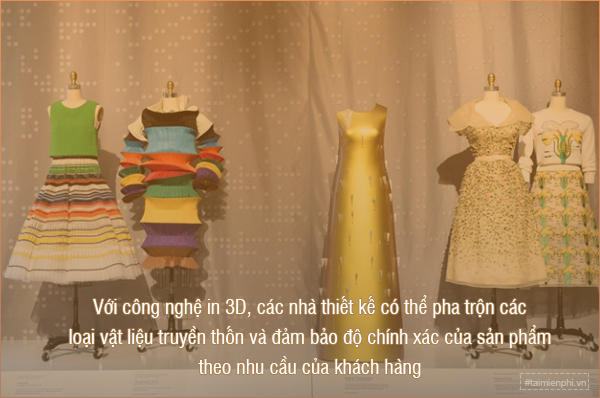
3D printing is useful for jewelry patterns, eyewear frames, footwear components, accessories, and experimental garments. Its main advantage is customization: dimensions and decorative details can be changed in the model without creating a new mold for every variation.
Architecture and construction
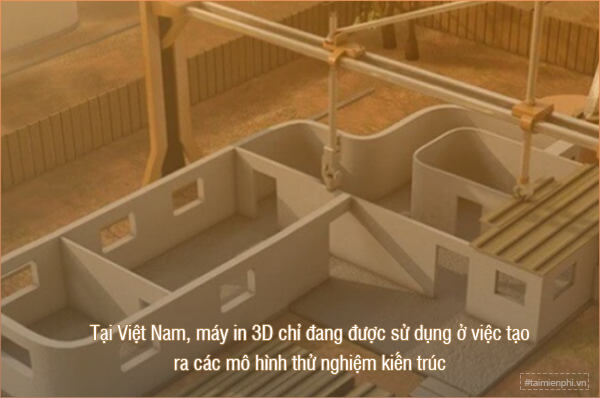
Architects can print scale models to review massing and spatial relationships. Larger machines can deposit concrete-like materials to form selected building components or wall systems. The finished structure still depends on engineering design, reinforcement, services, site work, building codes, and quality control; printing a wall is not the same as completing a safe building.
Food and education
Purpose-built food printers can shape ingredients such as chocolate, dough, or pastes. They mainly control form and portioning; they do not make unsuitable ingredients safe or remove the need for food-hygiene controls. In schools and workshops, conventional 3D printers are also useful for teaching design, engineering, and iterative problem-solving.
Limits to consider before printing
- Strength can vary by direction: Layer bonding, orientation, material, and process settings affect mechanical performance.
- Accuracy is process-dependent: Holes, mating surfaces, and thin walls may need design allowances or post-machining.
- Supports and finishing add work: A print may require cleanup, curing, sanding, coating, or heat treatment.
- Build volume is limited: Large objects may need to be divided into sections and assembled.
- Cost and speed are not universal advantages: Printing can be efficient for customization and low volumes, while molding or machining may be better for other parts and quantities.
- A printable file is not proof of fitness: Load-bearing, heat-exposed, food-contact, electrical, or safety-critical parts require appropriate materials and testing.
Use a 3D printer safely
Follow the printer manufacturer's instructions and the material safety data sheet. Keep hands away from hot nozzles, heated beds, lasers, and moving components. Provide appropriate ventilation, particularly when melting plastics or working with resins. Uncured resin can irritate skin and eyes, while fine powders require equipment and procedures designed to control inhalation, fire, and explosion risks.
Before buying a machine, define the largest part you need, acceptable tolerances, material properties, finishing requirements, and expected print volume. A short product roundup such as TipsMake's overview of 3D printer types and models can introduce the market, but current specifications and material compatibility should always be confirmed with the manufacturer.
Related Articles
 MS PowerPoint - Lesson 10: Print PowerPoint 2003 Presentations6 minutes read
 Why the Printer Cannot Print and How to Fix It9 minutes read
 Steps to Fix iPad Won't Print or Can't Find Printer7 minutes read
 Inkjet (Inkjet) and Laser Printers: Which Type Is Right for You?13 minutes read
 Create Your Own Wireless Printer with Raspberry Pi10 minutes read
 The Printer Prints Slowly - Causes and Effective and Quick6 minutes read
Reader Comments 0
Sign in with email or Google to join the discussion.