Table of Contents
A motherboard is the main circuit board that connects a computer's processor, memory, storage, expansion cards, and external devices. Its layout and features vary by model, so use the board's manual to identify connectors and check component compatibility.
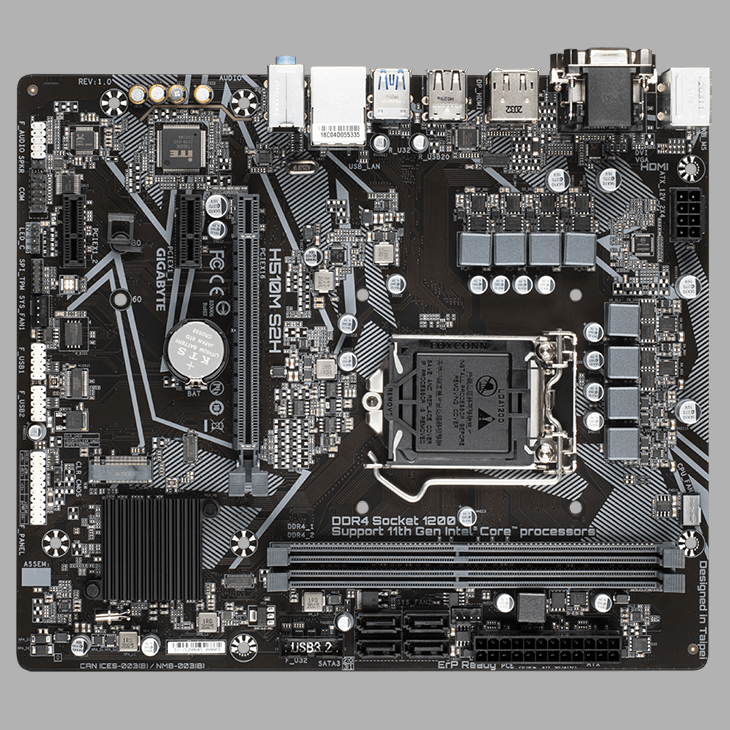

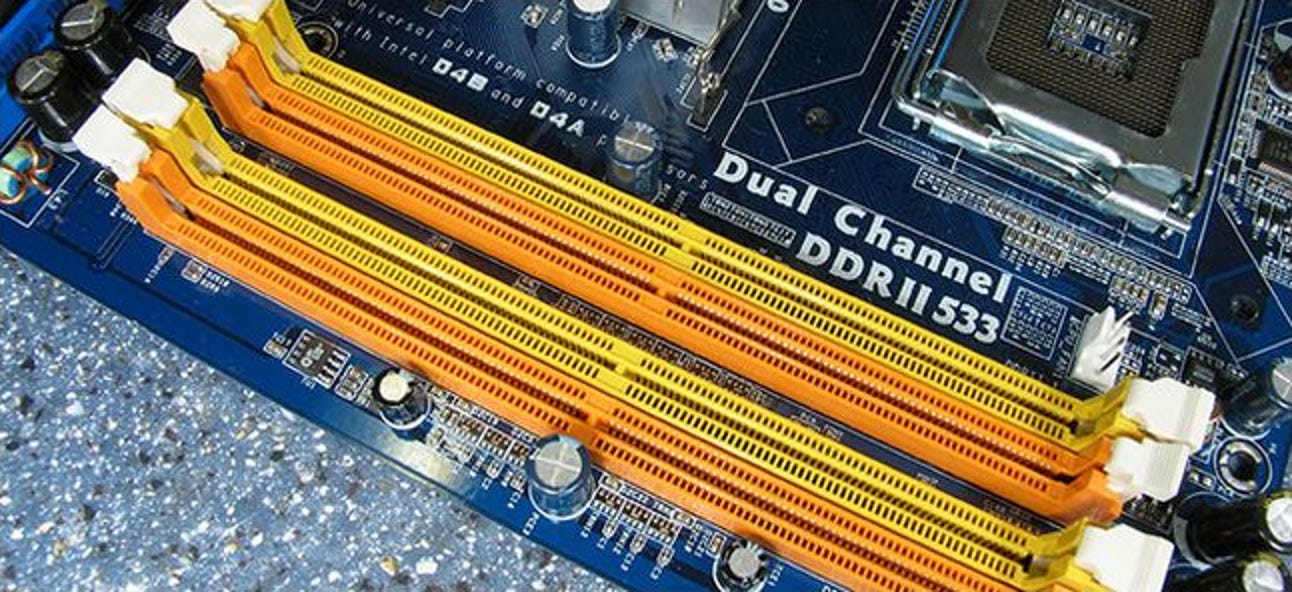
Main motherboard components
- CPU socket: holds a compatible processor. Socket alone does not guarantee support; check the board's CPU list and BIOS version.
- Chipset and controllers: coordinate communication between the CPU, storage, expansion slots, and peripherals. Modern boards no longer use the old separate northbridge and southbridge layout described in legacy guides.
- Memory slots: hold supported RAM modules. The board specifies memory generation, capacity, and supported configurations.
- Expansion slots: PCI Express slots can accept graphics cards and other expansion cards.
- Storage connectors: M.2 slots and SATA ports support different drives. Check which interfaces and sizes the board accepts.
- Power delivery: voltage-regulator components and board power connectors supply the CPU and other parts.
- Firmware and battery: UEFI firmware configures startup behavior; a small battery helps preserve clock and firmware settings when the PC is unplugged.
- Rear I/O and internal headers: connect USB, audio, networking, fans, front-panel buttons, and other features.
Check compatibility before buying
Compare the exact motherboard and CPU models, RAM type, case form factor, storage connectors, graphics-card clearance, and power-supply connectors. Socket lists in older articles can be obsolete, and similar-looking parts are not necessarily compatible.


Reader Comments 0
Sign in with email or Google to join the discussion.