Table of Contents
This guide provides a practical overview of Install and Set up a Website in IIS on Windows 10, including its main features, benefits, limitations, and important considerations.
There are 3 ways to install and set up websites in IIS on Windows 10; Use graphical user interface (GUI), PowerShell or Windows CMD.
Install IIS using the GUI
This is a simple method to set up websites in IIS. It might be the ideal method if you haven't learned PowerShell or Windows commands.
1. Start typing 'turn on windows' in the Search bar . The Turn Windows features on or off utility will display. Click on it.
2. The Windows Features window will open. It may take some time for other features to load. When done, click the checkbox next to Internet Information Services , then click the OK button .
 Click the checkbox next to Internet Information Services
3. The installation will begin and may take several minutes. Once completed, click the Close button .
4. To make sure IIS is installed and working, enter IIS in the Search bar near the Start button . As a result, you will see Internet Information Services Manager . Click it to open.
5. When IIS Manager opens, look to the left of the window in the Connections section . Expand the tree menu until you see Default Web Site . It is a placeholder website installed with IIS. Click on it to select.
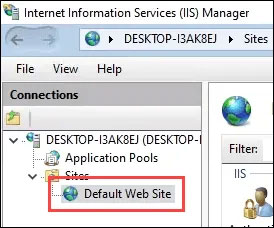 Expand the tree menu until you see Default Web Site
6. On the right side of IIS Manager , see the Browse Website section. Click Browse *: 80 (http) . The default web page opens in the default web browser.
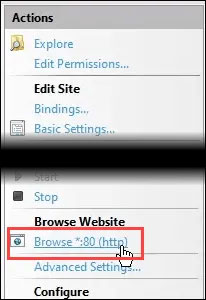 Click Browse *: 80 (http)
7. You will see a website as follows. Note the address bar has content localhost. That is the address to enter the new website.
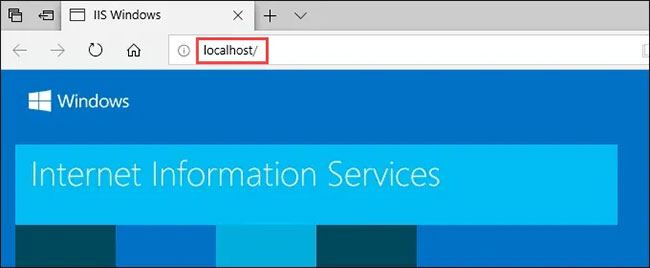 Address to enter the new website
Create the first site for IIS
Before going into the other two methods of installing IIS, let's look at where the site creation files are stored. The article will also create a very basic website. When you learn how to do this, you will learn the basics for getting into web design and development.
1. After IIS is installed, open File Explorer. Navigate to C: intepubwwwroot. That is where the files that make up the website should be stored. You should see the default IIS website file, iisstart. html and the image displayed on the page, iisstart. png. This is where you will save your first web page.
 Navigate to C: intepubwwwroot
2. Open Notepad with admin rights. To save to the wwwroot location, you must be an administrator.
3. Save the file to the wwwroot location . Name it index. html and change Save as type: to All Files . Then click the Save button .
 Save the file to wwwroot location
4. Now that it has been saved as the correct filetype, let's add some content in it. Enter the following HTML code to get a very basic web page and save it:
5. Return to the web browser with the default IIS website. Click the Refresh button . You should now see your first webpage.
Install IIS using Windows commands
You can shorten the installation of IIS into a command line. It can be done in the Windows Command Prompt or using PowerShell.
1. Open Command Prompt with admin rights.
2. Enter the following command and press Enter:
DISM /online /enable-feature /featureName:IIS-DefaultDocument /All3. You will see a progress bar appear. When it reaches 100.0% and you see the message 'The operation completed successfully' , you can close the Command Prompt. IIS has been installed.
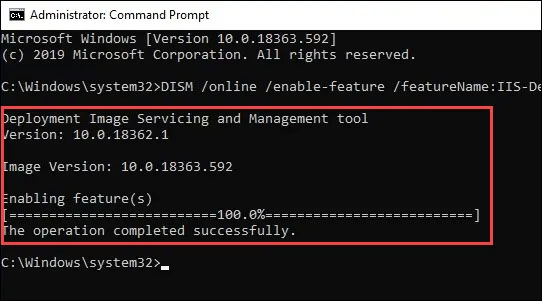 IIS has been installed
4. Verify that you can open IIS Manager and the installation is working, using steps 4 - 7 from the IIS settings section with the GUI section.
Install IIS with PowerShell
1. Run PowerShell ISE with admin rights.
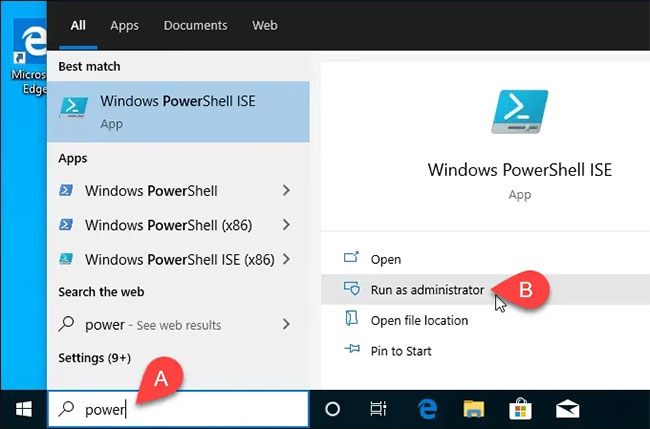 Run PowerShell ISE with admin rights
2. Enter the following cmdlet and run it:
Enable-WindowsOptionalFeature -Online -FeatureName IIS-WebServerRole -NoRestart3. You will see a progress bar begin. Once completed, check to make sure IIS is installed and working.
This step is optional, but you can save it as a PowerShell script and then run it anytime. Let's work with the script and add different parameters. Finally, you will have an IIS installation script to set everything up exactly as you want it, which you can use anytime, with just one click.
FAQ
What should I know about Install and Set up a Website in IIS on Windows 10?
Focus on the key features, requirements, limitations, and practical use cases explained in this guide.
How do I get the best results with Install and Set up a Website in IIS on Windows 10?
Follow the recommended steps, use current software or information, confirm compatibility, and review settings before major changes.
Are there any risks or limitations?
Potential limitations depend on compatibility, data quality, cost, privacy, support, and how the product or method is used.
Related Articles
 How to Install XAMPP, How to Configure XAMPP on Windows 107 minutes read
 Click: How to Install Windows 10 on a Mac7 minutes read
 How to Install Windows 8.1 from USB7 minutes read
 How to Install Windows 10 from USB with ISO File8 minutes read
 Install Windows 10 with a Super Fast USB in Just a Few Simple Steps5 minutes read
 Install Windows 10: Install Win 10 for Android Tablet4 minutes read
Reader Comments 0
Sign in with email or Google to join the discussion.