Table of Contents
This practical guide walks through how to set up or disable Linux mint update notifications, explains the main requirements, and highlights common issues that may appear along the way.
Update Notification on Linux Mint
Starting from version 20.2 Uma, Linux Mint has added a new feature, which is to automatically display a prompt on the screen when the user does not update the software regularly. Specifically, by default, the update manager (Update Manager) will automatically show you a prompt about available kernel and security-related updates, if you do not apply the update after 15 days. new day.
In general, regularly updating new versions, including security patches and important kernel improvements, is essential to ensure the safety of the system. However, there have also been many opinions that this update notification feature is really annoying, even reminiscent of the behavior of forcing users to update Microsoft's system on Windows 10.
Fortunately, you can completely control how notifications are displayed, or even turn off the feature entirely if you want.
How to Configure Linux Mint Update Notifications
First, launch the Update Manager update manager from the taskbar or from the application menu.

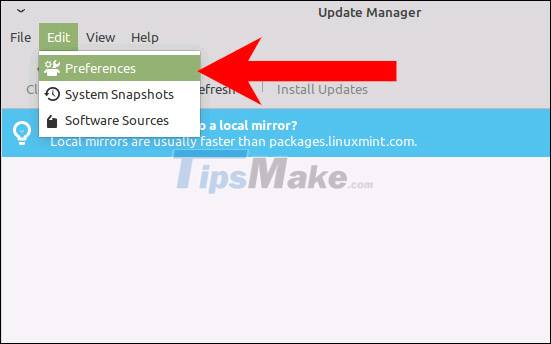
Next, open the Preferences window by clicking Edit > Preferences.
At the bottom of the Preferences window, you can adjust the configuration in the Notifications section.
Here, you can adjust the number of days that notifications are displayed, log logs, and even schedule notifications to be displayed. You can also adjust how long Update Manager will wait since the latest update is applied, before showing you any notifications. For all the options mentioned above, the shortest period you can set is 2 days.
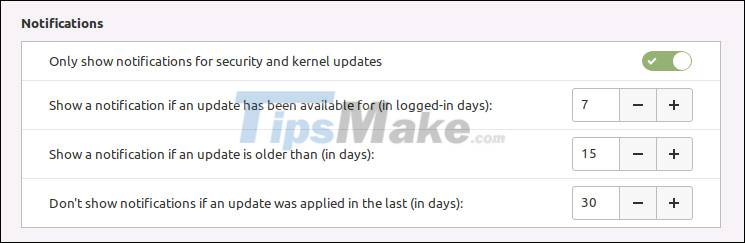
To receive notifications about all updates, turn off the 'Only Show Notifications for Security and Kernel Updates' option.
How to turn off Linux Mint update notifications
The simplest way to completely avoid receiving update notifications is to disable Update Manager from starting automatically. Note that this does not mean that you will not receive updates or that you will not be able to use Update Manager as before. Instead, you will simply not see any notifications and Update Manager will not appear on the taskbar until you launch it manually.
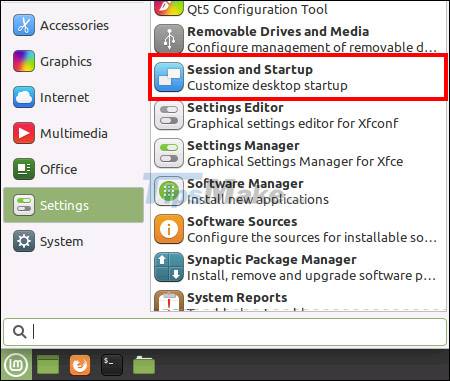
In the application menu, access the 'Session & Startup' item (also known as Startup Applications).
In the Session & Startup window, click the 'Application Autostart' tab and scroll down until you see the 'Update Manager (Linux Mint Update Manager)' option in the application list. Please uncheck it.
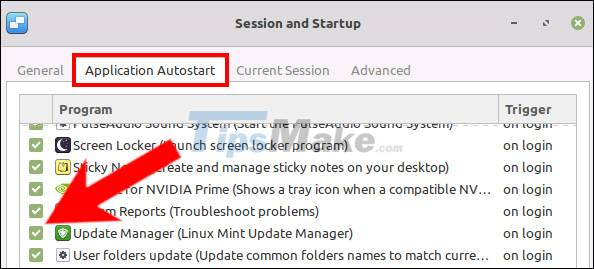
Update Manager will now no longer launch automatically when you start the system, so update notifications will no longer automatically appear on the screen. You can simply re-enable it by re-enabling the 'Update Manager (Linux Mint Update Manager' option of the Update Manager in Session & Startup.
Key Takeaways
Use the information above as a practical reference for how to set up or disable Linux mint update notifications. Review each step carefully, confirm any requirements, and choose the option that best fits your situation.
FAQ
What does this guide explain about Set up or Disable Linux Mint Update Notifications?
It explains the main concepts, practical considerations, and useful steps related to set up or disable Linux mint update notifications without requiring advanced knowledge.
Who can benefit from learning about Set up or Disable Linux Mint Update Notifications?
This information is useful for readers who want a clear overview, practical guidance, and reliable steps related to set up or disable Linux mint update notifications.
What should I check before applying this information?
Review the requirements, confirm that your device, software, or situation matches the instructions, and back up important data before making major changes.
Related Articles
 Linux Mint 20.2 'Uma' Released: What's Notable?5 minutes read
 10 Reasons You Can't Not 'Love' Linux Mint4 minutes read
 How to Upgrade from Linux Mint 19.3 to Linux Mint 208 minutes read
 6 Best New Features in Linux Mint 21.2 ''victoria''6 minutes read
 Some Notable Changes on Linux Mint 203 minutes read
 Create Bootable USB with Linux Mint 19.34 minutes read
Reader Comments 0
Sign in with email or Google to join the discussion.