Table of Contents
This updated guide examines How to Search in Mail on a Mac and organizes the essential facts, background, and practical takeaways in clear American English.
Method 1of 2:
Basic Searching
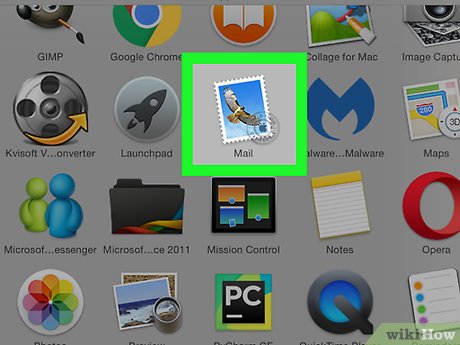 Open the Mail application by clicking on its dock icon.
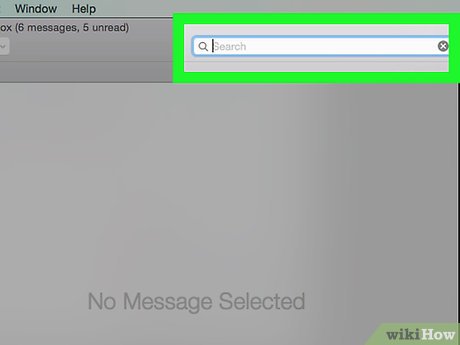 Click on the search bar. It should be located in the upper right corner of the mail window.
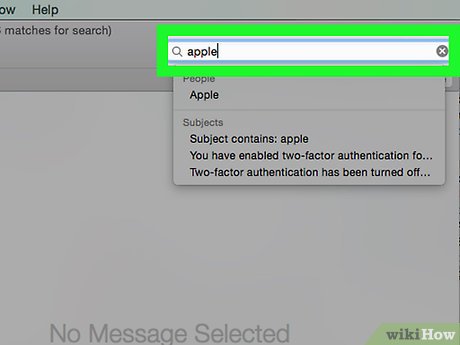 Type a key piece of information relating to the message you are searching for. You will see that even as you start to type your search word(s), Mail begins to make suggestions. In this example, the search is for an email from a friend named "Colin" containing some password details.
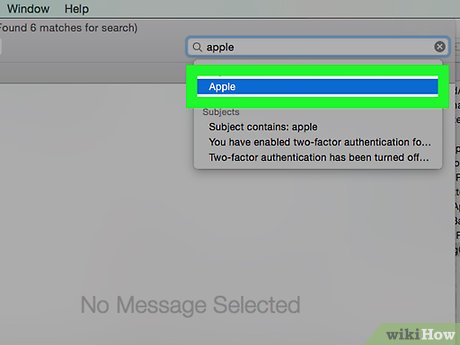 Assign your first "search token. " When the search facility finds something relevant to the message you are looking for, click on the suggestion to set it as your first "search token." You'll see that as soon as you click on the desired name (in this case, Colin), Mail will show all mail received from him across all mailboxes.
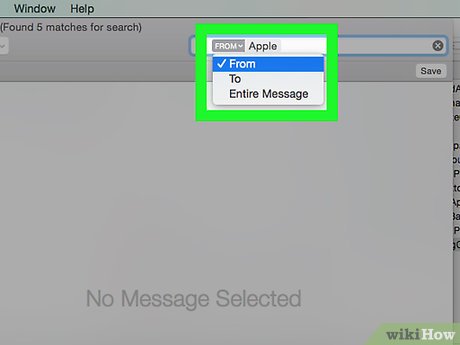 Decide on the terms of the "search token. " When a search token has been set, it appears as a blue icon. If you wish to change the terms of the "search token," click on it to display a drop-down menu.
- In this example, you can see that the search token is set to find messages "From" the "Colin" chosen from the original list. By using the drop-down menu, you could also select:
- "To" - to search for messages sent "to" the person selected from the list.
- "Entire Message" - to list all messages containing the word selected (in this case, "Colin."
- In this example, you can see that the search token is set to find messages "From" the "Colin" chosen from the original list. By using the drop-down menu, you could also select:
 Narrow your search down. Click search box again and type in another search term. This can be anything from a word in the subject line to the address that the email was sent to. In the example, you are searching for an email containing some password details, so the word "password" is typed into the box.
 Click on the most relevant entry on the search results to set this as your next search token. As before, you can change the terms of the search token using the drop down menu.
 Continue to enter additional search terms in the box to narrow down your search still further, until the message(s) you require become visible in the mail window.
Method 2of 2:
Advanced Search Techniques
 Use search commands. Text-based search commands such as "To:" "from:" and "subject:" can be typed directly into the search box as an alternative to using the blue search token menus. from:Colin subject: password
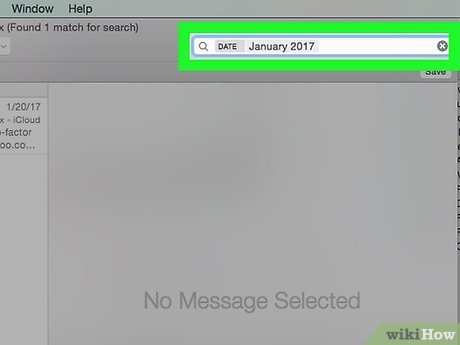 You can type a month, or a month and year into the search box, to narrow down your search results to messages sent or received during that month. Shown are the results are messages from January 2012 containing "Microsoft" in the subject line.
 Use boolean expressions. To further assist you to complete your search, you can also use boolean expressions. If you include the words "AND," "OR" or "NOT" in your search term, the search facility will take note of these expressions. For example, entering "microsoft AND action AND pack AND subscription" into the search box has located all emails containing all of these words.
FAQ
What is How to Search in Mail on a Mac about?
It provides a structured overview of search, explains the main context, and highlights practical takeaways for readers.
Why does this topic matter?
Understanding the main concepts helps readers evaluate the issue, avoid common mistakes, and make better-informed decisions.
How should readers use this information?
Use the guidance as a practical starting point, confirm details that may have changed, and follow current product, safety, or security recommendations.
Related Articles
 Great Way to Search for Gmail, Search for Super Cool Things5 minutes read
 Yahoo's New Mail Looks Better Than You Think4 minutes read
 How to Manage Email and Mailboxes in the Mail Application on iPhone9 minutes read
 Advanced Gmail Technology: Messages4 minutes read
 5 Ways to Securely Lock Your E-mail Address1 minutes read
 How to Speed up Email Search on iOS 105 minutes read
Reader Comments 0
Sign in with email or Google to join the discussion.