Table of Contents
This practical guide explains how to restart (restart) applications on windows 11 and windows 10 with clear steps and useful context. It also covers common requirements, potential problems, and the details that can help you get better results.
Close and Relaunch Apps on Windows 10, Windows 10
Quitting and reopening applications on a PC is generally very simple. In the upper right corner of the app, click the " X " icon. Alternatively, you can use the keyboard shortcut Ctrl+Q or Ctrl+W .
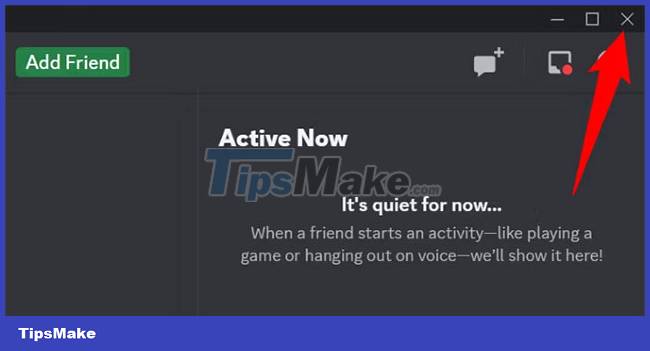
If your app opens in full screen view and you don't see the " X " icon in the corner, exit full screen mode by pressing Esc or F11 key, then do as above.
Your Windows application is now closed.
Note that some apps, such as Discord, don't quit completely when you just tap the " X " button in the top right corner of the app, but are actually just minimized to the system tray and still running. in the background. To completely close such applications, you right-click their icon in the system tray and select the option " close " or " quit " in the menu that appears.

Now, your application is completely closed. To relaunch that application, go to the " Start " menu, find the name of the application that opens it.

Windows will re-launch the application you selected and that's it.
What to Do If Windows Applications Refuse to Close
Sometimes, some apps refuse to close and become unresponsive. This makes clicking the " X " icon in the upper right corner of the application completely useless.
To solve the above problem, force close the application from the Windows Task Manager utility. This will end the process of running the application on the system, forcing the application to exit completely.
To do that, right-click on the " Start " menu icon and select " Task Manager " in the menu that appears.
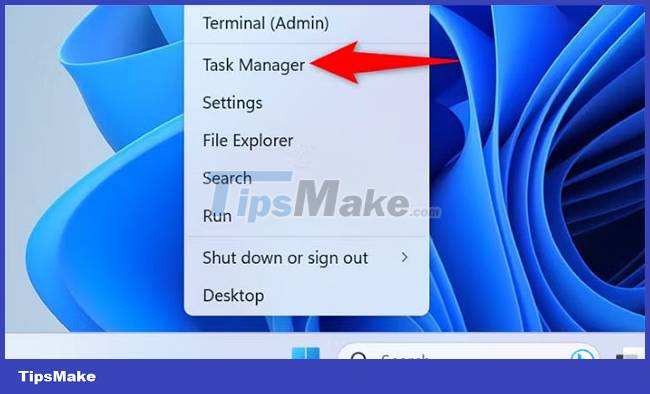
On the Task Manager interface, click the " Processes " tab. Then find the application to close, right-click on it and select " End Task ".

Windows will force the application to close. You can now relaunch the application by double-clicking the application's shortcut on the desktop or finding the application in your PC's " Start " menu and opening it.
It's all simply that. Hope you are succesful.
Conclusion
Understanding Restart makes it easier to compare options, avoid common mistakes, and apply the information in this guide more effectively. Review the relevant requirements before making changes or choosing a solution.
FAQ
How do you restart (restart) applications on windows 11 and windows 10?
Follow the steps in this guide in order, confirm the required settings or tools, and verify the result before making additional changes.
Is it safe to restart (restart) applications on windows 11 and windows 10?
It is generally safe when you follow the recommended instructions, use trusted tools, and avoid changing settings you do not understand.
What should you do if the process does not work?
Recheck the requirements, restart the device or application when appropriate, and review each step for missed settings or compatibility issues.
Related Articles
 Ways to Restart a Windows 11 PC4 minutes read
 6 Ways to Restart Your Windows Computer from Simple to 'Pro'6 minutes read
 Windows 11 Has an 'Emergency Shutdown' Option Most Users Miss5 minutes read
 How to Restart iPhone When the Device Hangs4 minutes read
 Restart: How to Disable Automatic Reboot After Windows Update3 minutes read
 How to Set up Receive Notifications to Restart Windows 11 PC3 minutes read
Reader Comments 0
Sign in with email or Google to join the discussion.