Table of Contents
To create a new partition on a disk you already use, shrink an existing volume in Disk Management, then create a volume in the resulting unallocated space. Windows normally preserves files on the volume you shrink. Back up important files to a separate device or service first, since choosing the wrong partition or losing power can put them at risk.

Before resizing a partition
- Verify that a sample file opens from your backup. If the PC uses BitLocker or device encryption, make sure you can access the recovery key.
- In Disk Management, identify the physical disk by its capacity and confirm the drive letter you plan to shrink. Leave EFI, Recovery, and other system partitions alone.
- Leave room for Windows updates, applications, and your working files if you shrink
C:. A second partition can organize data, but it shares the same hardware and does not protect you from drive failure.
See how Windows distinguishes disks, partitions, and drive letters if the diagram is unfamiliar.
Shrink the existing volume and create a new one
- Press Windows + X and select Disk Management.
- Right-click the existing NTFS volume and choose Shrink Volume. Enter how much space to set aside. The dialog shows the maximum available amount and the size the existing volume will have afterward.
- Click Shrink, then confirm that the space on the correct disk is now marked Unallocated.
- Right-click only that unallocated area and choose New Simple Volume. Choose its size, assign an unused drive letter, and format the newly created volume as NTFS for typical Windows use.
- Open File Explorer. Verify that the new drive appears at the expected size and that files on the original volume still open.

If Windows cannot shrink or extend the volume
Unmovable files can limit the amount a volume can shrink even when it has plenty of free space. See Microsoft's explanation of shrink limits. To extend a basic volume, Disk Management needs suitable unallocated space immediately after it on the same drive. If another partition is in the way, stop and confirm your layout before considering any changes.
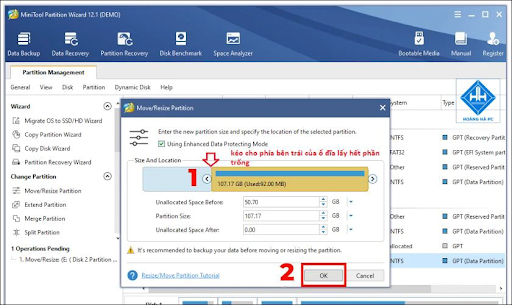
Third-party tools such as MiniTool Partition Wizard offer additional operations. Use them only with a verified backup and after checking the pending changes. For a disk that already shows errors or warnings, follow the storage recovery checklist before resizing anything.
Related Articles
 How to split the hard drive, merge the partition on Windows XP without worrying about losing data
 How to Partition a Drive in Windows 11 with Disk Management
 How to Partition a Drive with Disk Management in Windows
 How to Partition an SSD in Windows Safely
 5 Simple Ways to Partition Hard Drive Without Losing Data on Windows
 How to Convert MBR to GPT Safely with AOMEI Partition Assistant
Reader Comments 0
Sign in with email or Google to join the discussion.