Table of Contents
This updated guide examines Image: How to Make Thumbnails and organizes the essential facts, background, and practical takeaways in clear American English.
Method 1of 3:
Using MS Paint on Windows
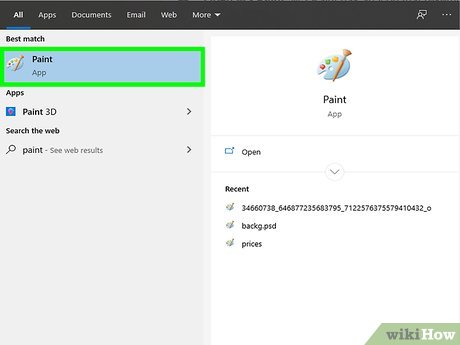 Open MS Paint. MS Paint has an icon that resembles a painters pallet. Use the following steps to open MS Paint for Windows.
- Click the Windows Start menu in the lower-left corner.
- Type "Paint".
- Click the MS Paint icon.
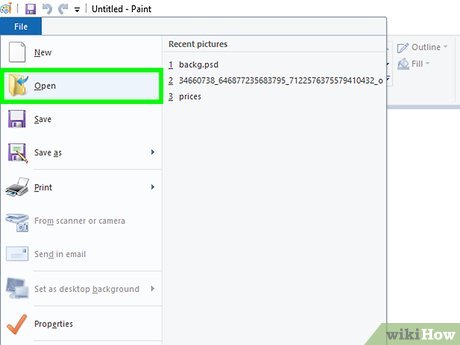 Open an image you want to make a thumbnail for. Use the following steps to open an image in MS Paint.
- Click File in the upper-left corner.
- Click Open .
- Select an image.
- Click Open .
 Create a copy of the image. You don't want to edit the size of the original image. Save the image as a separate copy. Add "thumbnail" or something similar to the end of the copy of the image (i.e. weddingphoto_thumbnail.jpg). Use the following steps to create a copy of the image:
- Click File
- Click Save As .
- Type a name for the image next to "Filename".
- Click Save .
 ClickResize. It's in the upper-left corner above the box labeled "Image".
 Tick "Percentage". It's at the top of the "Resize and Skew" window.
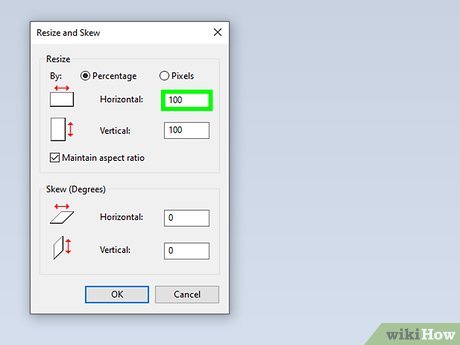 Type the percentage you want to reduce the image size next to "Horizontal" or "Vertical". 10% is a good size for a thumbnail image. Larger photos will need to be reduced greater.
- Alternatively, you can select "Pixels" and type the exact dimensions in Pixels you want the image to be next to "Vertical" and "Horizontal".
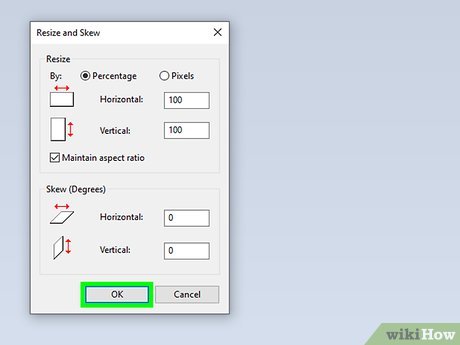 ClickOk. This reduces the size of the photo.
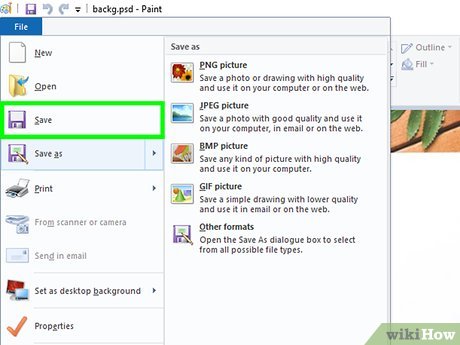 Save the photo. Use the following steps to reduce the size of the photo.
- Click File
- Click Save .
Method 2of 3:
Using Preview on Mac
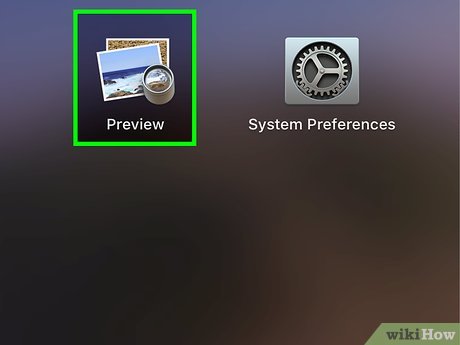 Open an image in Preview. Preview is the default image viewer on Mac. You can double-click an image on your Mac to open it in Preview.
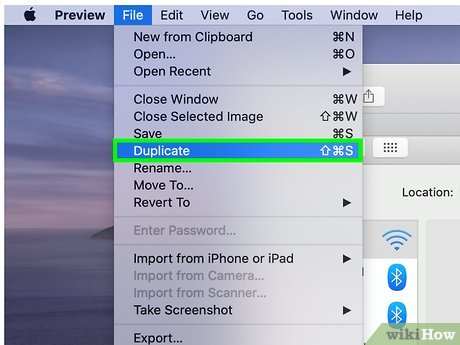 Duplicate the image. You don't want to edit the size of the original image. Use the following steps to duplicate the image in Preview.
- Click File in the upper-right corner in the Menu bar.
- Click Duplicate .
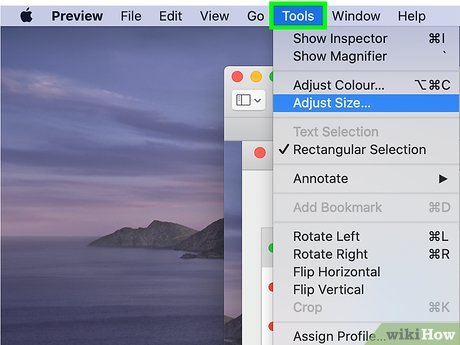 ClickTools. It's in the menu bar at the top of the screen. Make sure you have the image copy as your active image.
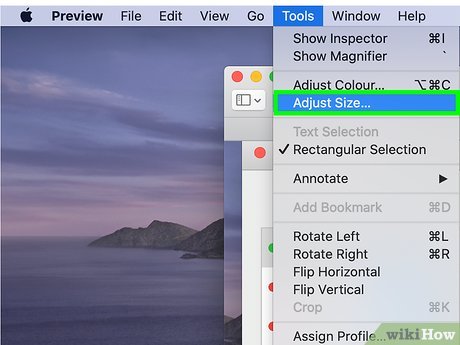 ClickAdjust Size. It's in the menu below "Tools".
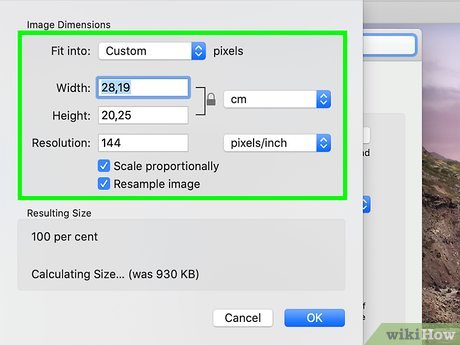 Select "Percentage". Use the drop-down menu next to "Width" and "Height" to select "Percentage".
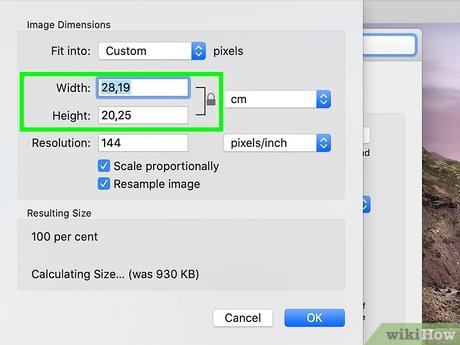 Type the percent you want to reduce the image size. Type this next to "Width" or "Height". 10% is a good image size for a large-sized thumbnail image. The amount you want to reduce it may vary depending on the size of the image.
- Alternatively, you can select "Pixels" and type the exact dimensions in Pixels you want the image to be next to "Width" and "Height".
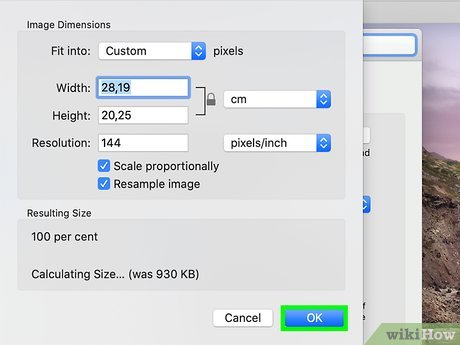 ClickOk. This reduces the size of the image.
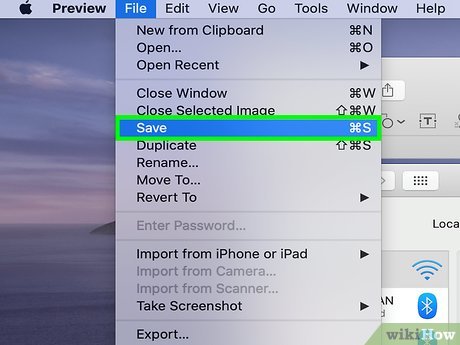 Save the image. It's a good idea to add "thumbnail" or something similar to the end of the copy of the image (i.e. weddingphoto_thumbnail.jpg) when saving the image copy. Use the following steps to save the image.
- Click File .
- Click Save
- Type a name for the image next to "Save As."
- Click Save .
Method 3of 3:
Using Photoshop and GIMP
 Open Photoshop or GIMP. Photoshop is the most popular image editor. It requires a subscription from Adobe. If you do not have a subscription to Photoshop, you can download and install GIMP for free. It has similar features to Photoshop.
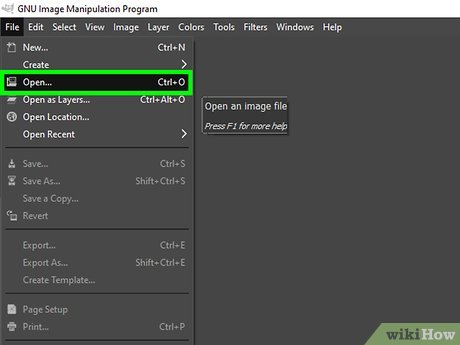 Open an image you want to reduce the size of. Use the following steps to open and image in Photoshop or GIMP:
- Click File in the upper-left corner.
- Click Open .
- Select an image.
- Click Open .
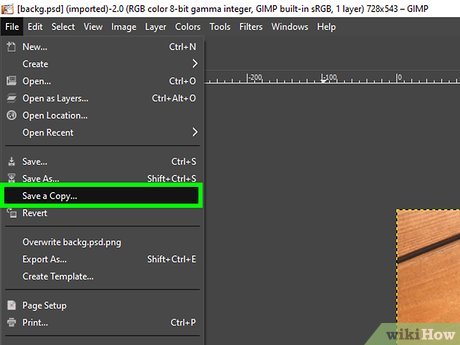 Save a copy of the image. If you want to edit the photo, do so before making a copy of the photo. You'll also want to add "thumbnail" or something similar to the end of the filename. When you are ready, use the following steps to save a copy of the photo:
- Click File
- Click "Save As' .
- Type a name for the image next to "Filename".
- Click Save .
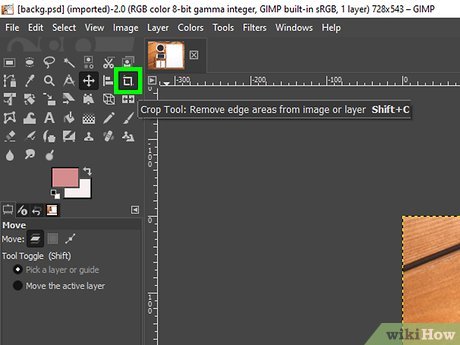 Crop the image (optional). If you want to make the image fit a certain shape, you can crop the image. The crop tool has an icon that resembles two right angles forming a square. Using the following steps to crop the image:
- Click the crop tool in the toolbar to the left.
- Click and drag over the section of the image you want to keep.
- Double-click inside the image.
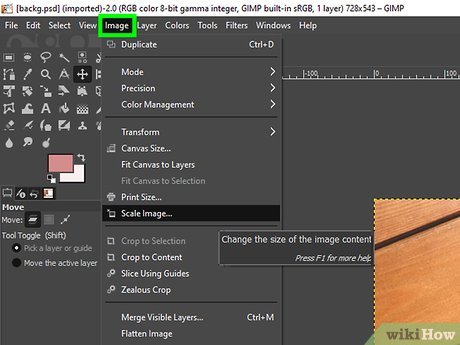 ClickImage. It's in the menu bar at the top of the screen.
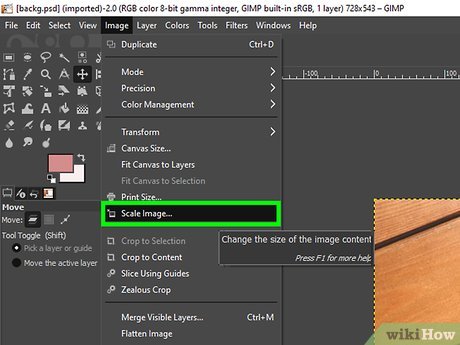 ClickImage sizeorScale Image. This is the option to resize the image.
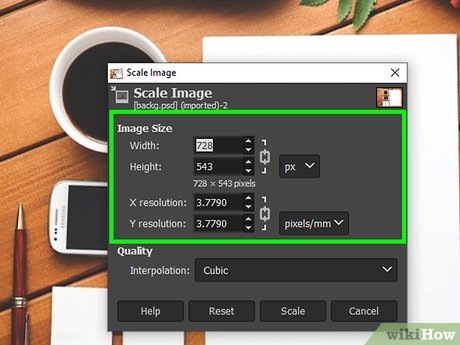 Select "Percent". It's in the drop-down menu next to "Height" and "Width".
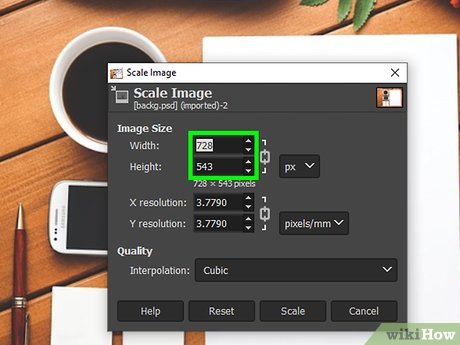 Type the percent you want to reduce the image size. Type this next to "Width" or "Height". 10% is a good image size for a large-sized thumbnail image. The amount you want to reduce it may vary depending on the size of the image.
- Alternatively, you can select "Pixels" and type the exact dimensions in Pixels you want the image to be next to "Width" and "Height".
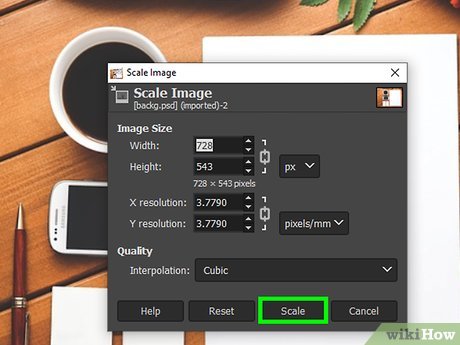 ClickOkorScale. This scales the image size down.
- You may want to apply saturation to the thumbnail image You can do so by adding a saturation adjustment layer in the Adjustment panel to the right in Photoshop, or by clicking the "Colors" drop-down menu at the top in GIMP.
- You may also want to apply a sharp filter. You can do so by clicking the Filters menu at the top of both Photoshop and GIMP.
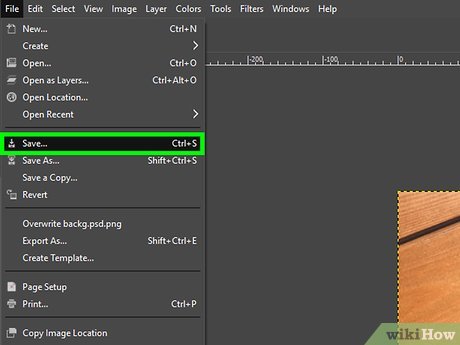 Save the image. Use the following steps to save the thumbnail image in both Photoshop and GIMP.
- Click File .
- Click Save as (Photoshop) or Export as (GIMP).
- Select JPEG as the image using the drop-down menu next to "Format" in Photoshop, or below "Select File Type" in GIMP.
- Click Save (Photoshop) or Export (GIMP).
FAQ
What is Image: How to Make Thumbnails about?
It provides a structured overview of image, explains the main context, and highlights practical takeaways for readers.
Why does this topic matter?
Understanding the main concepts helps readers evaluate the issue, avoid common mistakes, and make better-informed decisions.
How should readers use this information?
Use the guidance as a practical starting point, confirm details that may have changed, and follow current product, safety, or security recommendations.
Related Articles
 How to Download Web Page Thumbnails Using PhotoShow4 minutes read
 How to Customize Preview Thumbnails on Taskbar Windows 104 minutes read
 How to Enable Thumbnails for SVG Files in Windows 104 minutes read
 Fix Windows Error Without Image, Thumbnail Thumbnail2 minutes read
 How to Fix Error of Not Displaying Thumbnails in Win 10 + Win 11 100% Effective6 minutes read
 What Is a Thumbnail? Learn About Thumbnails Explained4 minutes read
Reader Comments 0
Sign in with email or Google to join the discussion.