Table of Contents
This practical guide walks through how to format a Write-protected USB Drive (Write Protected). It organizes the required steps, settings, and checks so you can complete the task with fewer mistakes.
Unlike regular USB drives, write-protected USB drives do not let users format or reformat, and there is no option to enable or disable the write-protection feature. Readers, please continue reading this guide to learn how to properly format a USB drive and how to format a write-protected USB drive (Write Protected).
Is the USB Drive Write-protected or Defective?
Before going into the steps of formatting a USB drive, we need to find out if the USB drive is write-protected, defective, or damaged. Possible: - The USB port on the computer is faulty or damaged. Try plugging it into another USB port to see if the issue persists. - The USB drive is defective or damaged. Try using and connecting another USB drive to see if the issue occurs.
Before you begin, plug your USB drive into a USB port on your computer.
Windows has a built-in hard drive partition management tool called Diskpart. To open Diskpart, select Windows + R To open the Run window, then enter Cmd There and select Enter to open Command Prompt.
The User Access Control (UAC) window appears in the window asking you to confirm. select Yes To continue.
The Command Prompt window will now appear in the window. Enter the command below:
Diskpart
A new command line window appears in the window with the DISKPART command prompt. Enter the command below to see which hard drive is connected to your computer:
List Disk
The above command will list all available devices. Where Disk 0 is the system drive on the computer. This is the Windows installation drive. If there are multiple partitions, these partitions will be numbered consecutively in order. Note the size shown for each drive.
The USB drive connected to your computer is Disk 1, or possibly Disk 2,.. This USB drive has quite small size and capacity.
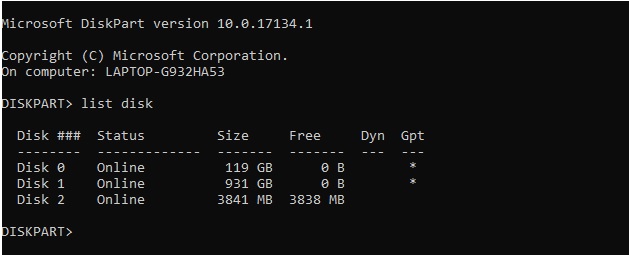
As you can see in the image above, Disk 0 has a size of 119GB and Disk 1 is 931GB (2 partitions of the same hard drive), Disk 2 is 16GB. So Disk 2 is the USB drive.
However, sometimes the USB drive capacity can be up to 1TB. So make sure you have selected the correct USB drive to format, format and perform the next steps.
Next step, select your USB drive, in this tutorial the USB drive is disk 2, so we will enter the command below:
Select Disk 2
The above command confirms disk 2 is the selected drive. Next step run the command below to request the attribute:
Attributes Disk
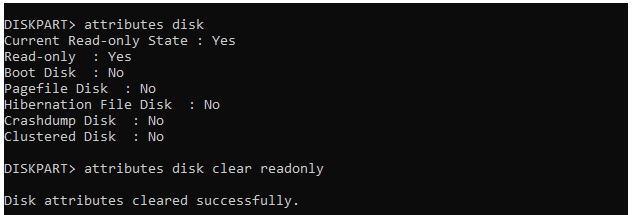
The screen displays different information. Your task is to check the first line is Current Read-only State. If the USB drive cannot be written or reformatted, the Current Read-only State is set to Yes.
To remove the write protected attribute on the USB drive, run the command below:
Attributes Disk Clear Readonly
If the command is executed successfully, the message "Disk attributes cleared successfully" will be displayed in the window.
To format a USB drive using diskpart's Clean Command, first make sure the USB drive is selected:
Select Disk 2
Clean
Use the command below to create and format the partition:
Create Partition Primary
Format Fs=ntfs
Wait until the process finishes and your USB drive has been formatted. Try copying and storing files and data in the USB drive to see if the issue persists or not.
Write-protected USB Format Tool, Write Protected Drive Format
Below are some free tools and utilities to properly Format USB, format your USB drive If a Write Protect error occurs.
SD Formatter
Although designed specifically for SD memory cards, the SD Formatter tool is also compatible with USB drives. Just connect the device, select your USB drive and select the Format option.

Download SDFormatter To your device and install it from the official provider.
Kingston Format Utility
Kingston Format Utility is the ideal solution for formatting USB devices on older Windows operating systems (Windows XP to Windows 7).
After downloading the tool, run the EXE file and select Browse To select a location (on the desktop or Documents folder). select Unzip , then browse to the new location and double-select the Kingston Format Utility. exe File.
Do the above to run the application, then Simply select the device and file system from the menu. select Format To format the device.
Download Kingston Format Utility to your device and install it from the official provider.
Link: https://TipsMake. vn/download-kingston-format-utility-34337
If the above methods are not available, visit the manufacturer's homepage for support.
The above article TipsMake has just shown you how to format and format a write-protected USB drive (Write Protected). In addition, if you have any questions or concerns, you can leave your comments in the comments section below the article.
You can learn more about how to format your computer's hard drive safely and without affecting your data. This article on TipsMake introduces you to the standard Way to format your hard drive And how to format your hard drive quickly. You can select either method..
FAQ
What do I need before I format a Write-protected USB Drive (Write Protected)?
Prepare the required device, software, account access, and any files mentioned in the steps. Back up important data before changing system settings.
Why does the process look different on my device?
Menus and options can vary by operating system, app version, device model, or region. Use the closest matching setting and check the official documentation when needed.
What should I do if a step does not work?
Restart the app or device, confirm permissions and connectivity, update the software, and repeat the step carefully. Avoid unofficial downloads or tools.
Related Articles
 How to Format a Write–Protected Pen Drive: Step-by-Step9 minutes read
 How to Fix Device Media Is Write-protected When Format USB7 minutes read
 How to Use the Format Command to Write 0 to the Hard Drive10 minutes read
 How to Format the Hard Drive on Windows10 minutes read
 How to Fix the Disk Is Write Protected Error on USB4 minutes read
 How to Format a Hard Drive with the CMD Command5 minutes read
Reader Comments 0
Sign in with email or Google to join the discussion.