Table of Contents
This updated guide examines How to Fix 'Explorer. Exe' Error During Shutdown on Windows 8 and organizes the essential facts, background, and practical takeaways in clear American English.
Method 1of 3:
Fixing the Error Using Registry Editor
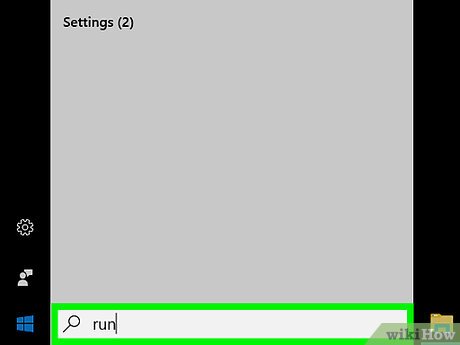 Open the 'Run' dialog box. On your Windows screen, navigate your cursor to the lower-right side of the screen to open the Start menu and go to Search.
- On the Search bar, type 'Run' then hit Enter.
- You can also go to Run by pressing the Windows key + R on your keyboard.
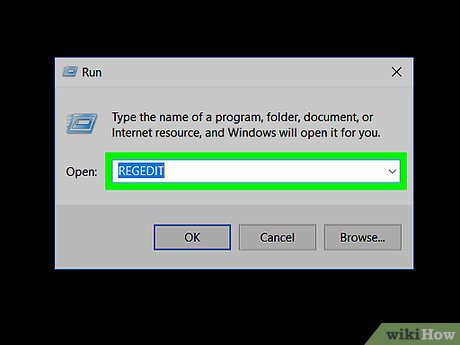 Run the Registry Editor. Type 'regedit' on the Run dialog box and press 'OK'.
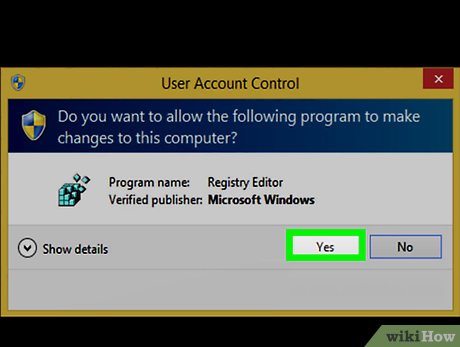 Allow the Registry Editor to make changes. Click 'Yes' on Account User Control to allow Registry Editor to make changes to your computer.
 Navigate to 'Windows' from the HKEY_CURRENT_USER. This contains different files and folders because this is the location of the root of the error.
- From HKEY_CURRENT_USER, open the 'Software' folder then 'Microsoft.' After that, click 'Windows NT' then 'Current Version,' and finally, the 'Windows' folder.
 Take ownership of Windows key. This is on the left pane of this registry location. Use this Command Prompt:
- Open the Command Prompt by typing it on the search bar and allowing administrative privileges.
- On the CMD, type this next to C:WindowsSystem32:
- takeown F: 'HKEY_CURRENT_USERSoftwareMicrosoftWindows NTCurrentVersionWindows' /A /R
- Press Enter when you're done.
 Find 'Load.' Look for the registry string, or REG_SZ, named 'Load' on the right pane of the Registry Editor. This is the cause of the error message during shutdown.
 Delete 'Load.' Right-click 'Load' and select 'Delete' to remove the cause of the error message.
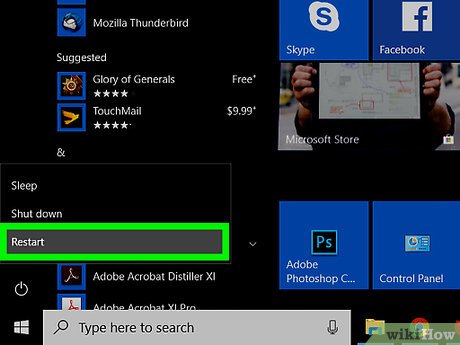
 Restart. You can now close the Registry Editor and restart your computer. When you shut down, check if the error message still appears. If it doesn't, then you were successful in removing the cause of the error.
- If you still see the error message, try the next method.
- If you cannot locate 'Load' in the Registry, try the next method.
Method 2of 3:
Scanning and Removing Threats on Your Computer
 Open Windows Defender. A genuine Microsoft Windows 8 comes with this free Anti-Virus software.
- Go to 'Application' on the Start menu or press Windows Key and look for 'Windows Defender.'
- You may also use the Search Bar in the Start menu by typing 'Windows Defender' there and searching for it.
 Update Defender. If your computer is not set for automatic update, then update Windows Defender on the Update Tab of the software, next to Home. Click 'Update' and it will install the latest virus and spyware definition.
 Pick a Scan option. You can find this at the right side of the Window that you'd like to run.
- It will be better to choose the Full Scan so that the software will check all the on your computer if there are viruses or spywares causing the error, but scanning will take longer using this option.
 Begin scanning. After you choose an option, press 'Scan Now.'
 Remove or quarantine any malicious threats detected on your computer. After scanning, the program will list all the threats it found. Select the appropriate button to Remove or Quarantine the threats.
 Restart your computer. When you shut down, check if the error message will still appear.
Method 3of 3:
Updating Your Drivers and OS
 Go to Windows Update. Navigate to the Start menu, choose Search Bar (magnifying glass symbol), and then type in 'Windows Update.'
- You can also go to Windows Update by navigating to the Control Panel then choosing 'System and Security'; under that is the Windows Update.
 Update your drivers. Check all the updates that your computer requires, including the drivers, to fix bugs and errors and install them. Wait until the computer finishes downloading the updates.
- If your computer is set to automatic updates, Windows Update will automatically download and install them.
- Restart your computer. When you shut down, check if the error message will still appear.
FAQ
What is How to Fix 'Explorer. Exe' Error During Shutdown on Windows 8 about?
It provides a structured overview of windows, explains the main context, and highlights practical takeaways for readers.
Why does this topic matter?
Understanding the main concepts helps readers evaluate the issue, avoid common mistakes, and make better-informed decisions.
How should readers use this information?
Use the guidance as a practical starting point, confirm details that may have changed, and follow current product, safety, or security recommendations.
Related Articles
 Windows 10 Shutdown Error - the Resources and How to Fix Windows 10 Error5 minutes read
 Fix 'This App Is Preventing Shutdown' Error on Windows 104 minutes read
 Instructions for Fixing Errors Do Not Turn Off Windows 106 minutes read
 Instructions to Prevent Shutdown on Windows 10 Computers5 minutes read
 How to Create Slide to Shutdown Function on Windows 104 minutes read
 Annoyed Because Your Laptop Lost the Windows 10+11 Shutdown Button? Refer to How7 minutes read
Reader Comments 0
Sign in with email or Google to join the discussion.