Table of Contents
This practical guide walks through how to back up and restore the start menu layout, explains the main requirements, and highlights common issues that may appear along the way.
Use PowerShell to back up and restore Start menu layout
You need to be a Pro or Enterprise edition user to use this method. If you are a Home edition user, follow the second method.
PowerShell command to back up the Start menu layout
Step 1. Open the Start menu .
Step 2. Search for 'PowerShell' and open it.
Step 3. Execute the command below, remember to replace C: savelocationbackup.xml with the actual path where you want to save the backup file. In my case, the author is saving the file on my desktop.
Export-StartLayout -Path "C:savelocationbackup.xml"
Step 4. Immediately after you execute the command, PowerShell will back up the Start menu layout and save it to the location you chose earlier.

Restore the Start menu layout using Group Policy
To restore the Start menu backed up using the PowerShell command, you must use the Group Policy Editor. Here's how to do it.
Step 1. Open the Start menu .
Step 2. Search for gpedit.msc.
Step 3. Right click on it and select Run as administrator .
Step 4. Go to User Configuration> Administrative Templates> Start Menu and Taskbar folder .
Step 5. Double-click the Start Layout policy .
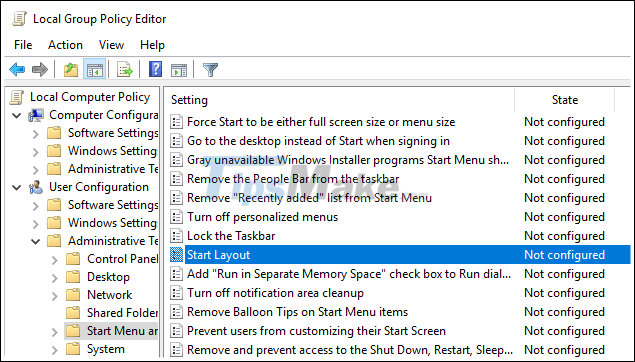
Step 6. Select the Enabled option .
Step 7. In the Options section , enter the backup file path.
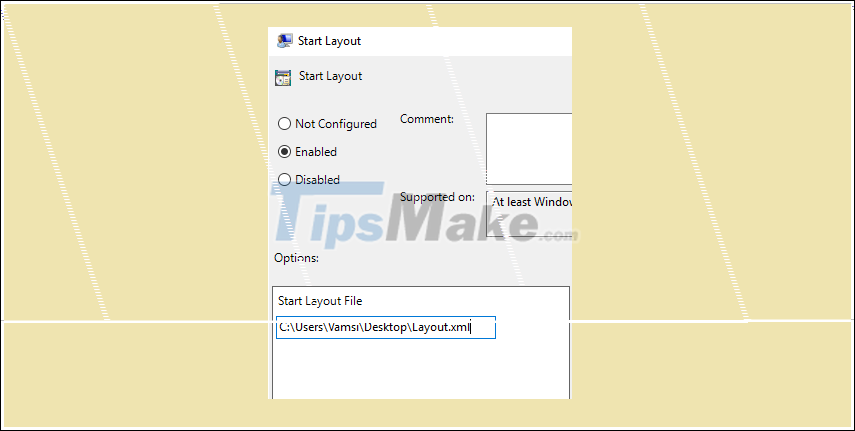
Step 8. Click Apply> OK button .
Step 9. Restart Windows.
After the reboot, your Start menu layout will be restored.
Use BSML to back up the Start menu layout
Use a portable and free app called Backup Start Menu Layout , you can back up and restore the Start menu layout with just one click. In addition, the app even allows you to reset the Start menu layout to default state.
Step 1. Download the BSML application.
Step 2. Extract the contents of the zip file to the desktop.
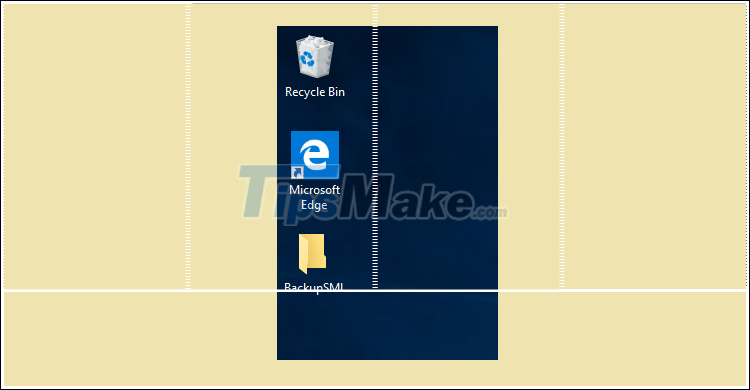
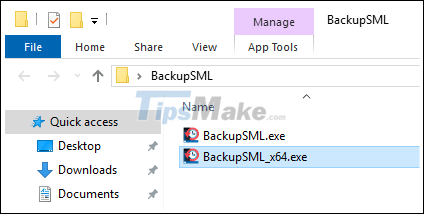
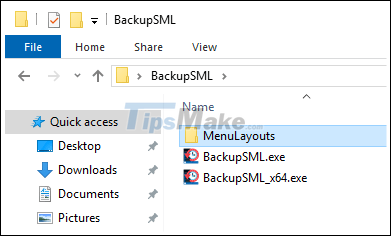
Step 3. Open the unzipped folder and execute the application according to your system architecture.
Step 4. Click the Save icon to back up the Start menu layout.
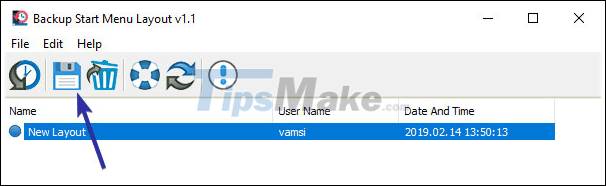
Step 5. Backup file is saved to the same location as the application.
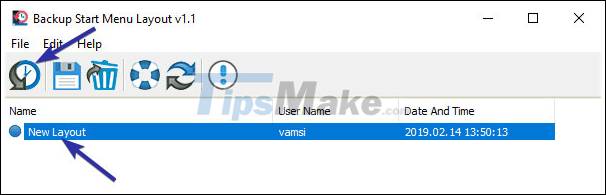
Step 6. To restore Start menu layout, select an in-app layout.
Step 7. Click the Restore icon .
Key Takeaways
Use the information above as a practical reference for how to back up and restore the start menu layout. Review each step carefully, confirm any requirements, and choose the option that best fits your situation.
FAQ
What does this guide explain about Back up and Restore the Start Menu Layout?
It explains the main concepts, practical considerations, and useful steps related to back up and restore the start menu layout without requiring advanced knowledge.
Who can benefit from learning about Back up and Restore the Start Menu Layout?
This information is useful for readers who want a clear overview, practical guidance, and reliable steps related to back up and restore the start menu layout.
What should I check before applying this information?
Review the requirements, confirm that your device, software, or situation matches the instructions, and back up important data before making major changes.
Related Articles
 Back Up Start Menu Settings on Windows 107 minutes read
 How to Restore a Disappeared Start Menu4 minutes read
 How to Bring the Traditional Start and Start Menu Back on Windows5 minutes read
 Task: How to Get Your Windows 10 Start Menu Back3 minutes read
 Customize and Restore Start Menu Windows 10 by Default3 minutes read
 3 Ways to Fix Start Menu on Windows 10 Stopped Working5 minutes read
Reader Comments 0
Sign in with email or Google to join the discussion.