Table of Contents
To hide individual Control Panel items in Windows 10, enable Hide specified Control Panel items under User Configuration and enter each item’s canonical name. To block access to both Control Panel and the Settings app, use the separate policy for that purpose.
Hide selected Control Panel items
- On an edition with Local Group Policy Editor, such as Windows 10 Pro or Enterprise, press Windows + R, enter
gpedit.msc, and press Enter. Local Group Policy Editor is not included with Windows 10 Home.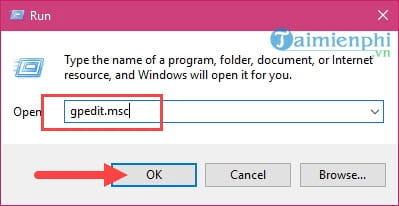
- Go to User Configuration > Administrative Templates > Control Panel. Open Hide specified Control Panel items.
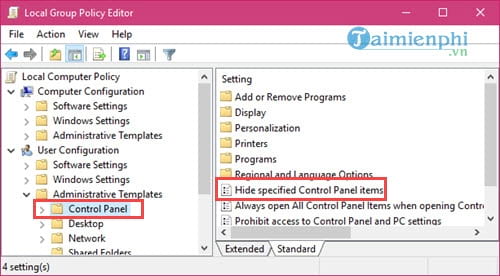

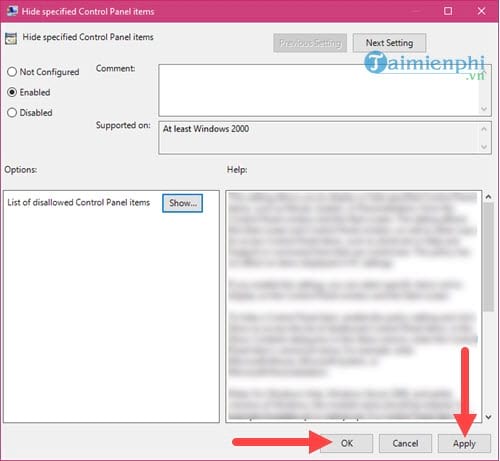
- Select Enabled, then click Show. Add one canonical name per row, such as
Microsoft.DevicesAndPrinters. Use Microsoft’s list of canonical names for other items.

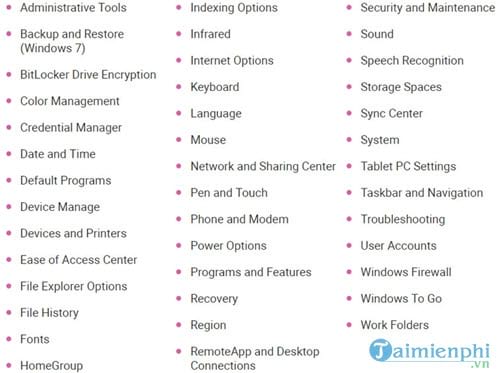
- Click OK, then Apply and OK. Refresh user policy, or sign out and back in if the change does not appear. Reopen Control Panel using an account covered by the policy to verify the item is hidden.
Block Control Panel and Settings together
In the same policy folder, enable Prohibit access to Control Panel and PC settings if the affected account should be blocked from both interfaces. To undo either change, return its policy to Not Configured and refresh the policy.
Hiding an applet controls what users can access through that interface. Use standard user accounts and the appropriate permissions to prevent unauthorized system changes. On a work-managed PC, have IT check which user policy applies.
Related Articles
 How to reset Local Group Policy settings on Windows 10
 Change the default Control Panel view to a Windows computer
 Install the printer using Group Policy Object
 8 'tweak' Windows Group Policy any Admin should know
 How to Customize Your Windows Control Panel
 System Administration with Group Policy in Windows XP - Part I
Reader Comments 0
Sign in with email or Google to join the discussion.