Table of Contents
How reliably can an AI assistant turn one broad request into working simulation software? To make the comparison concrete, Claude, ChatGPT, and Gemini were each asked to build the same browser-based solar system explorer. Every result was judged as delivered: no follow-up prompt, manual patch, or second attempt.
This is a comparison of three individual outputs, not a permanent ranking of the models. Code generation varies between runs, model versions change, and a different prompt can reverse the result. The useful question is which strengths and failures appeared in this test—and what they reveal about evaluating AI-generated code.
The task and test conditions
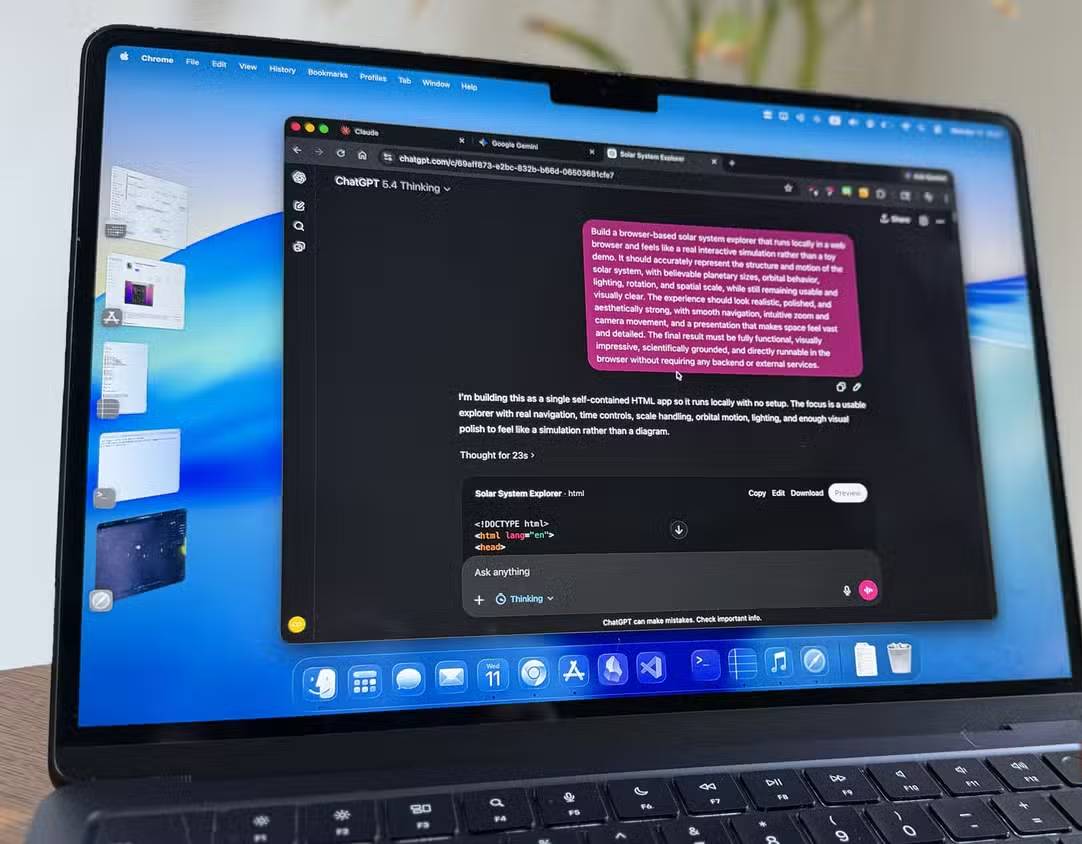
The project had to combine graphics, motion, scale, lighting, navigation, and interface design in a locally runnable browser experience. The same prompt was entered in each model's main web interface:
Build a browser-based solar system exploration tool that runs locally in a web browser and feels like a true interactive simulation, not a toy demo. It must accurately represent the structure and motion of the solar system, with reliable planetary sizes, orbital behavior, lighting, rotation, and spatial proportions, while remaining user-friendly and intuitively clear. The experience should look realistic, polished, and aesthetically pleasing, with smooth navigation, intuitive zoom and camera movement, and a presentation that makes space feel vast and detailed. The final result must be fully functional, visually impressive, scientifically sound, and capable of running directly in a browser without any backend or external services.
The prompt intentionally leaves the rendering stack and implementation choices open. That tests initiative, but it also introduces ambiguity: “accurate” planetary sizes and distances conflict with a readable on-screen model unless the program explains how it scales them.
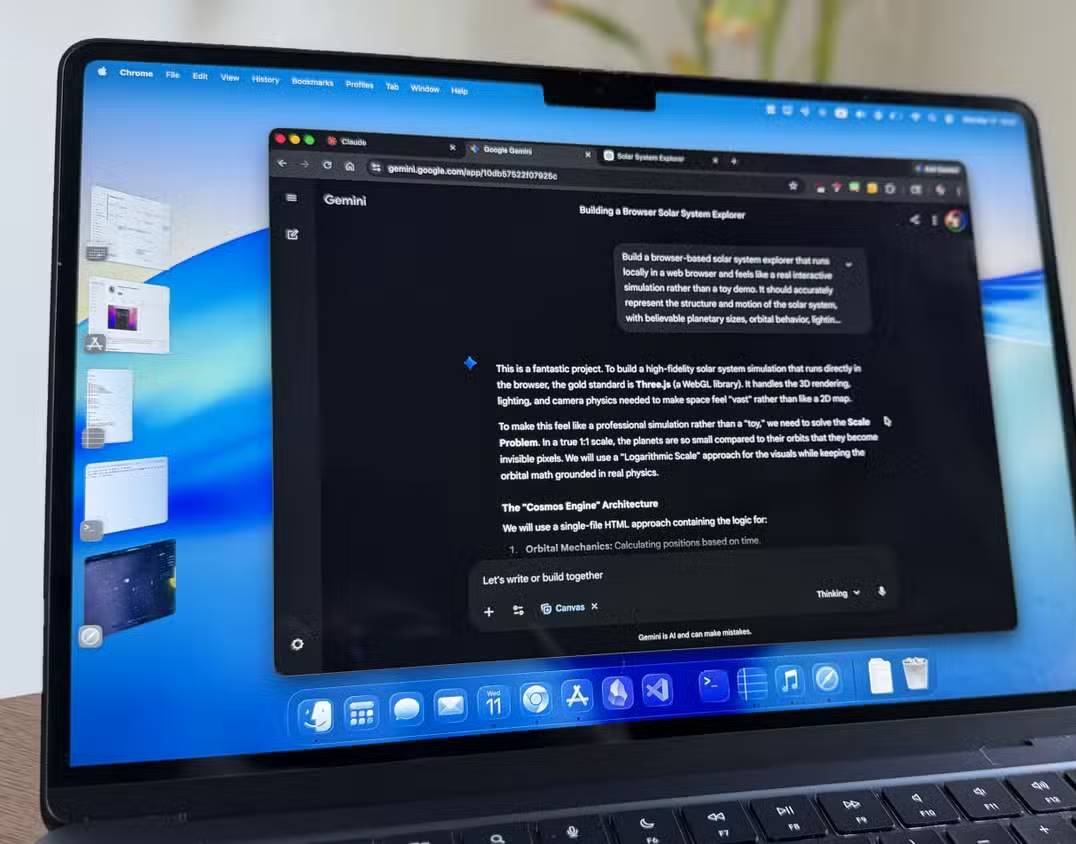
Gemini: fast and visually convincing at a distance
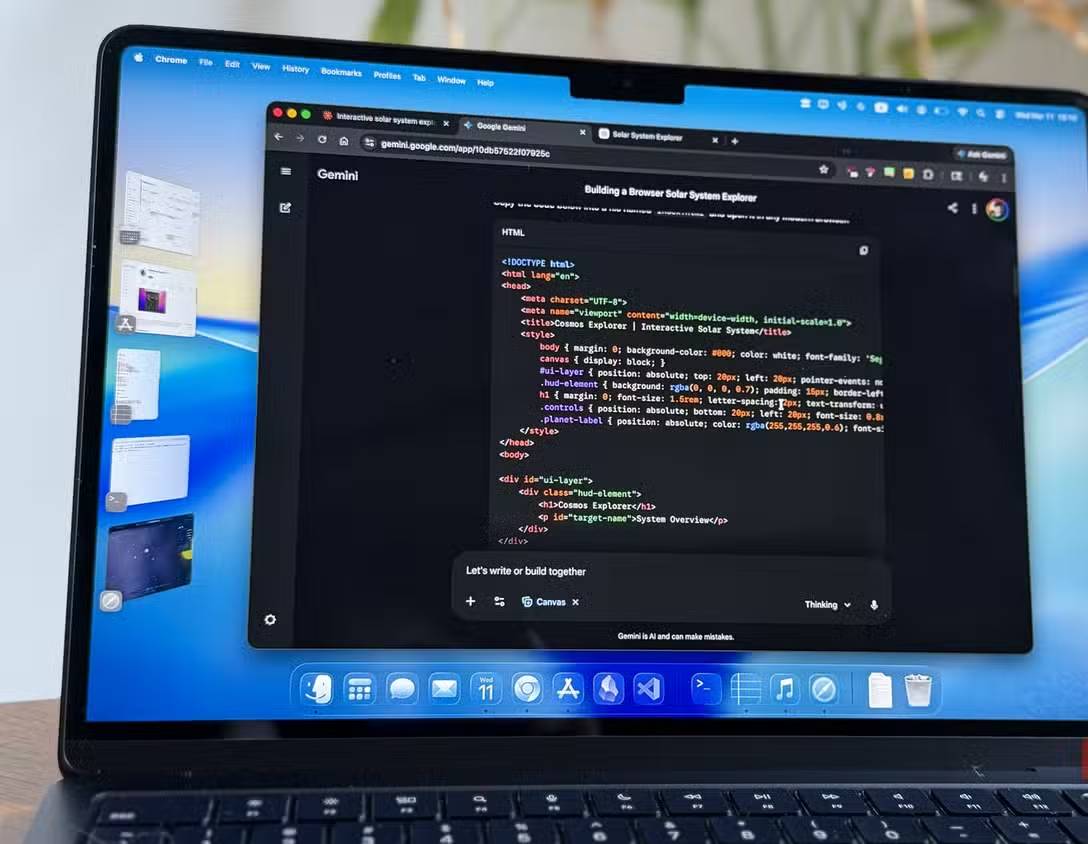
Gemini 3 Thinking completed first and chose Three.js. Its initial view was attractive: planets orbited the Sun, lighting and shadows added depth, and the animated system worked well as a wide overview.
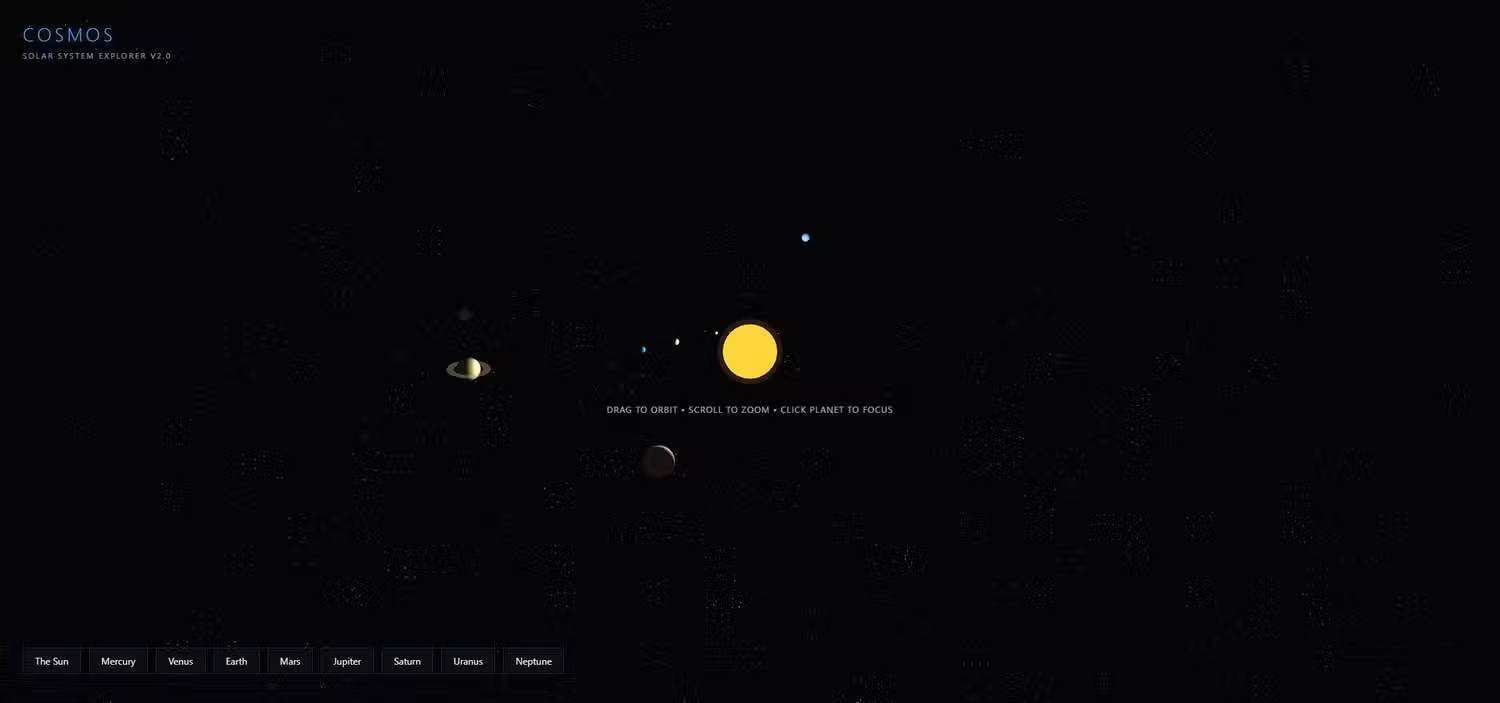
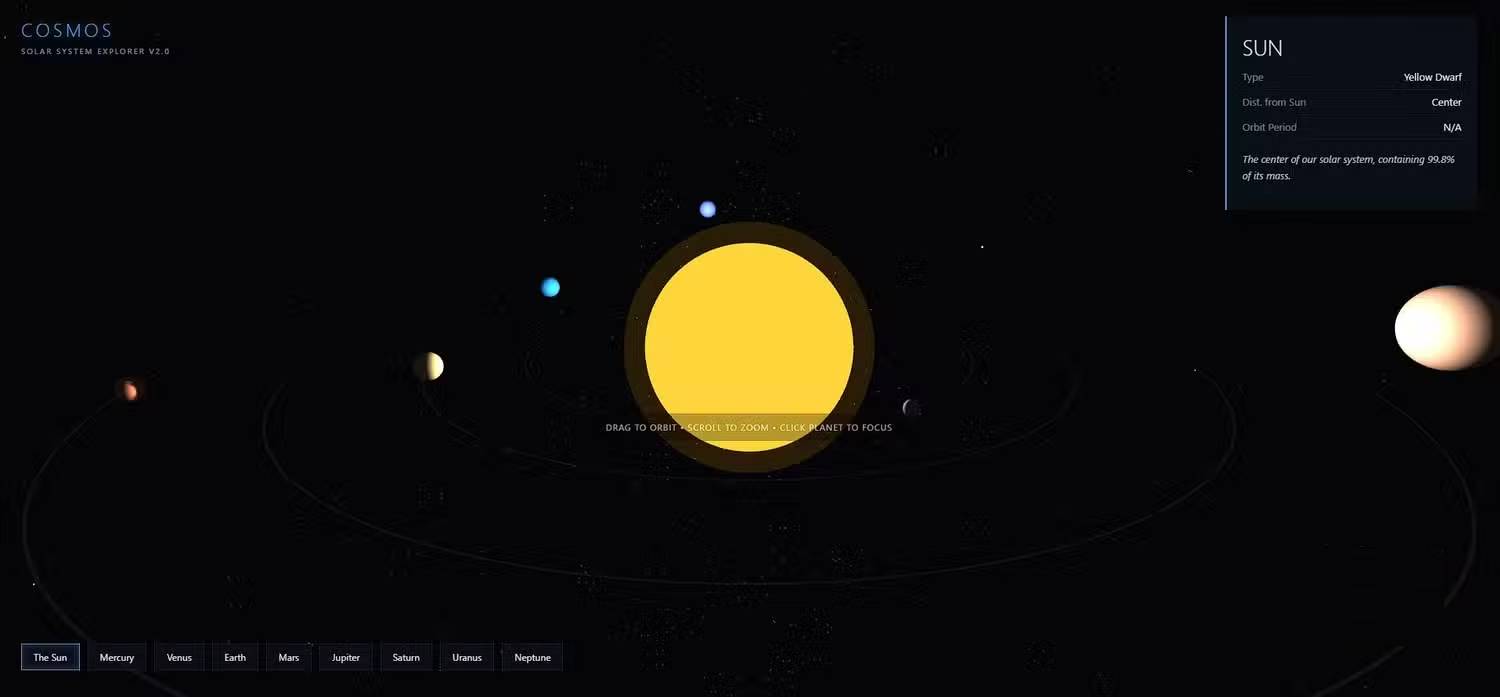
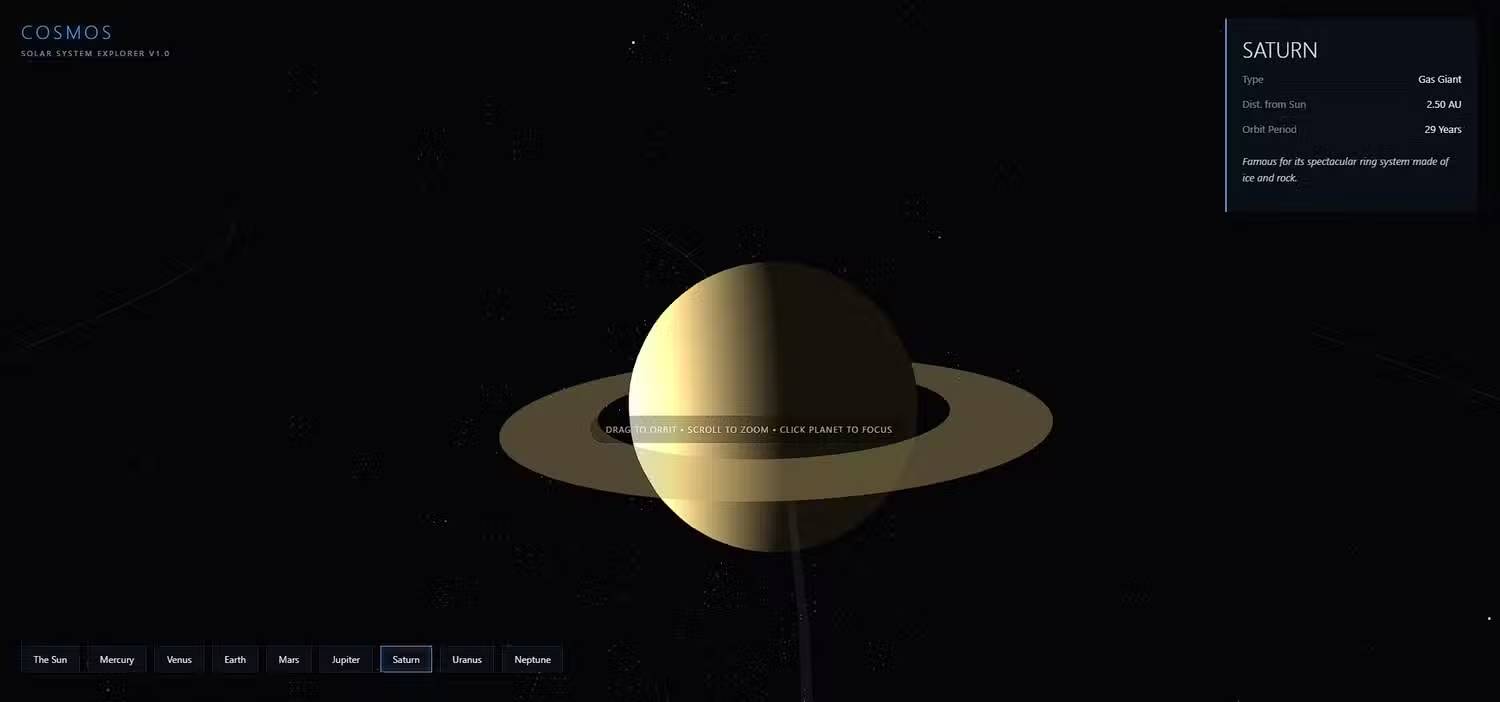
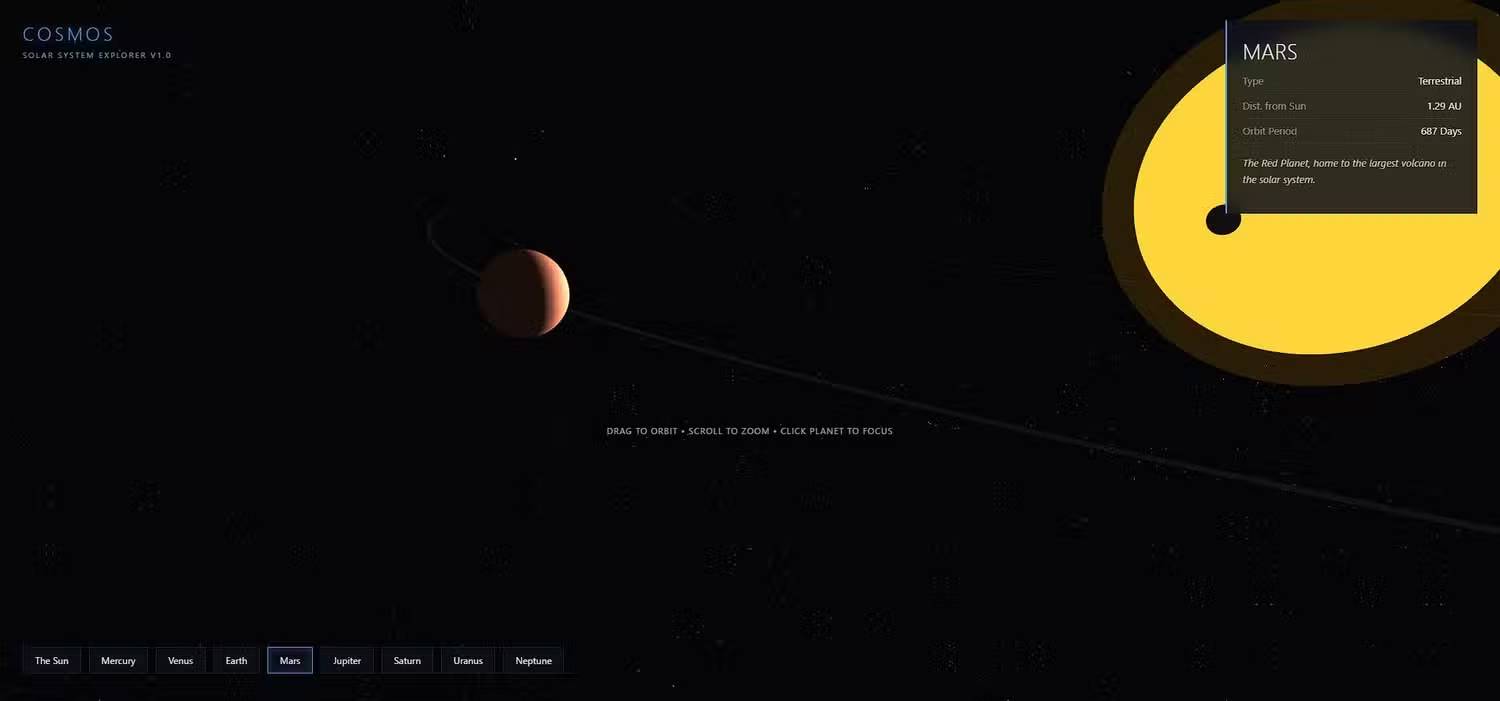
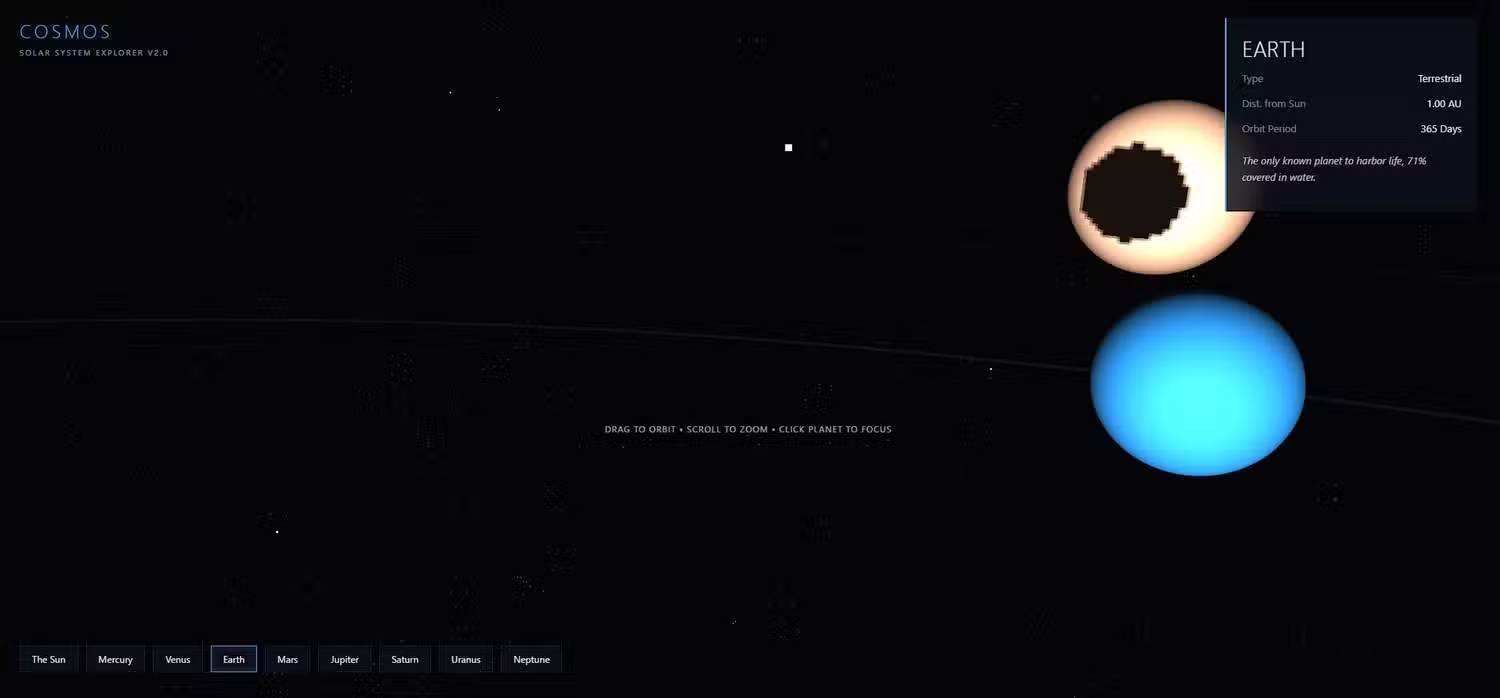
Closer interaction exposed problems. The interface instructed the user to click planets to focus, but that action did not work reliably. Selecting an object from the menu produced a useful camera-follow effect, yet the camera could become locked so that zooming out required a refresh. Planet surfaces were simple color bands, making rotation and identity harder to read.
Assessment: a strong first impression and a functional animated overview, weakened by untested controls and limited detail.
ChatGPT: polished controls, broken scale conversion
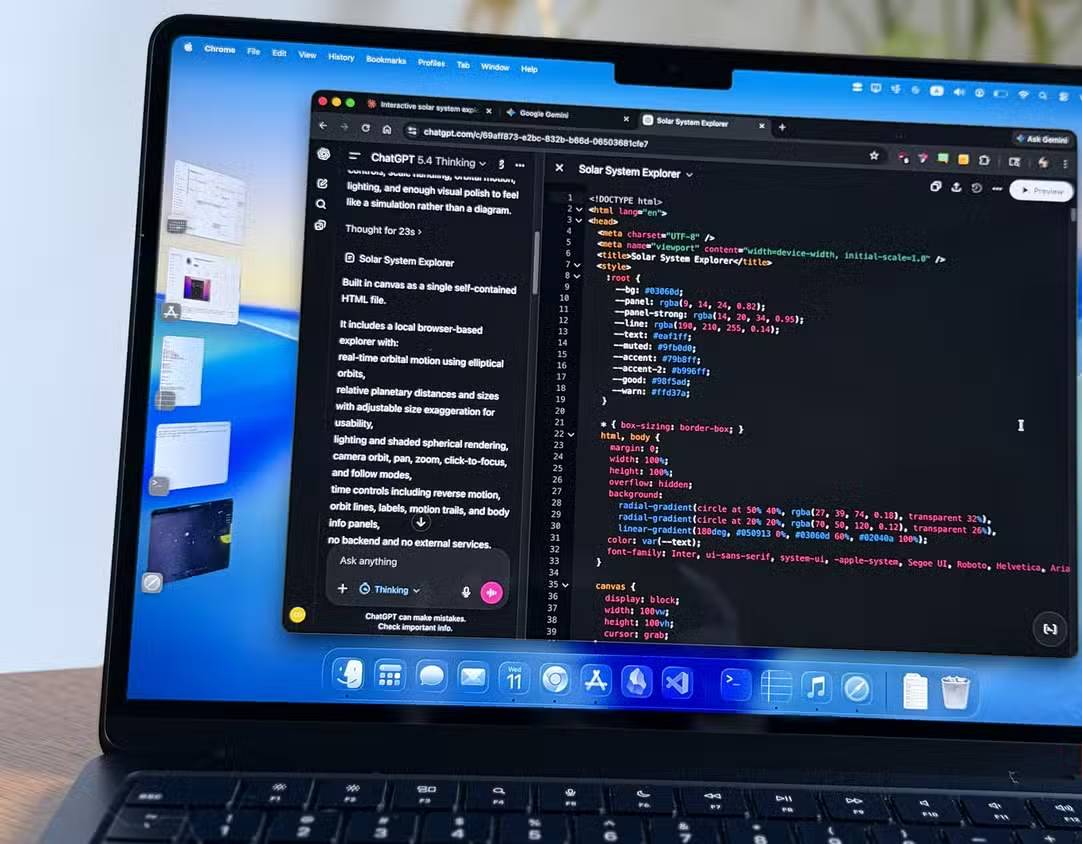
ChatGPT 5.4 Thinking took longer and produced a top-down 2D interface with several controls. The main simulation failed, however, because the planets appeared stacked at the Sun instead of occupying visible orbits.
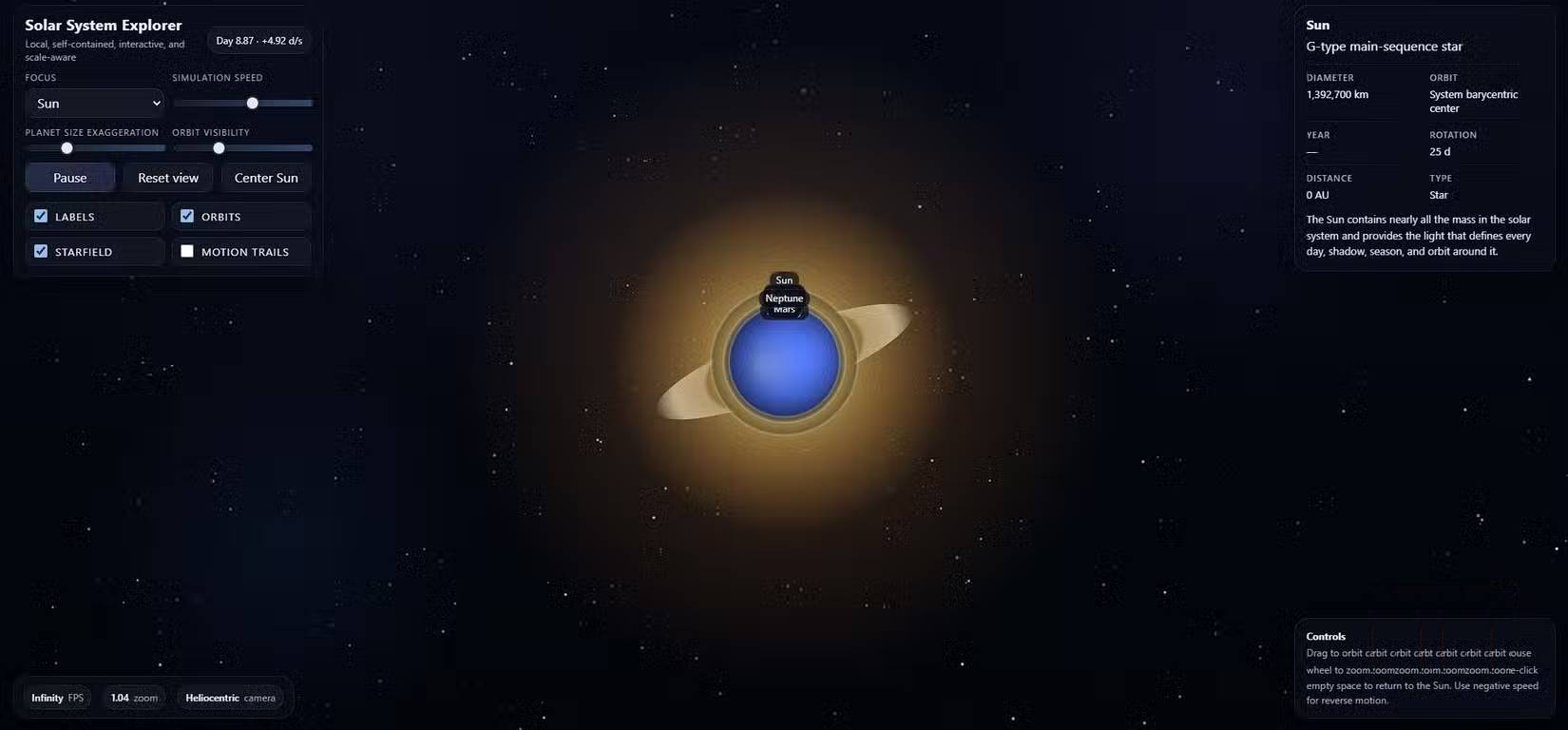
Manual inspection found a unit mismatch: orbital values stored in astronomical units were passed to rendering logic expecting kilometers. A value intended to represent a fraction of an AU was therefore treated as a fraction of a kilometer. The interface could not compensate for the faulty coordinate calculation.
The failure is instructive because it is the kind of defect a simple automated test or one visual sanity check should catch. When asked to diagnose its own code, the model suggested several possibilities but initially missed the actual conversion error.
Assessment: a presentable interface attached to a nonfunctional core simulation. In this one-shot test, correctness outweighed the number of controls.
Claude: the most complete result in this run
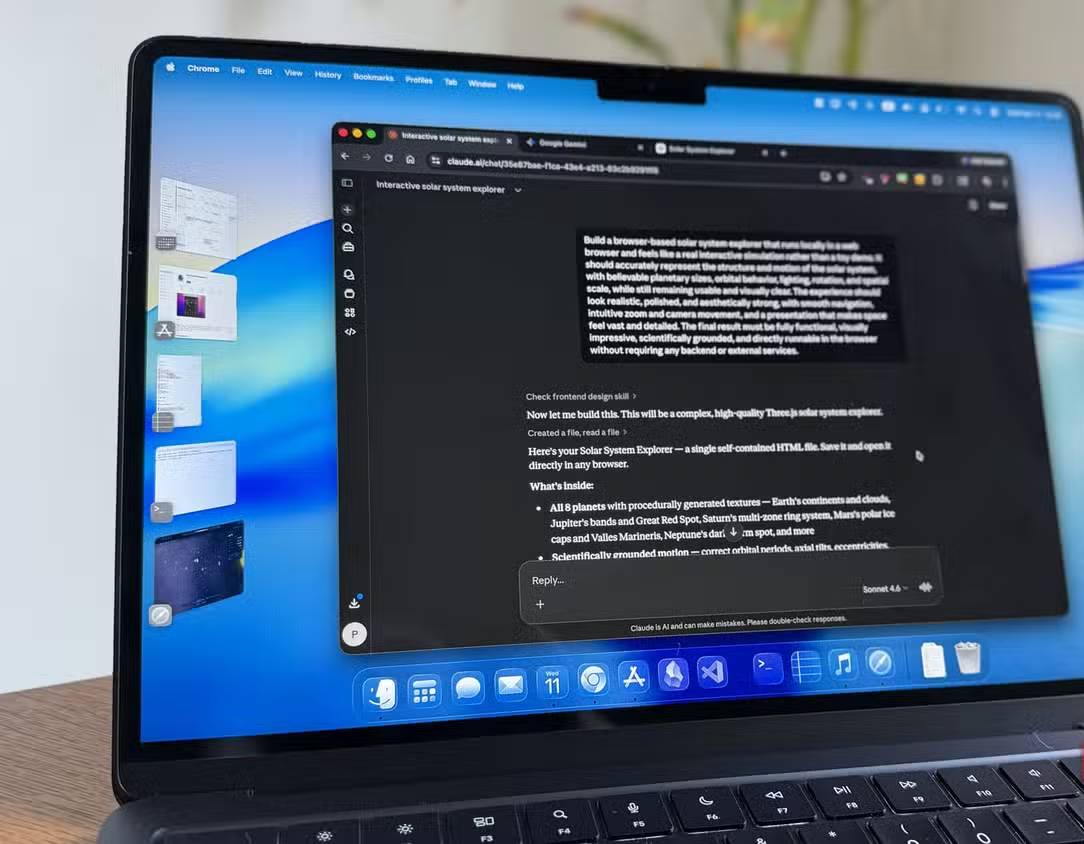
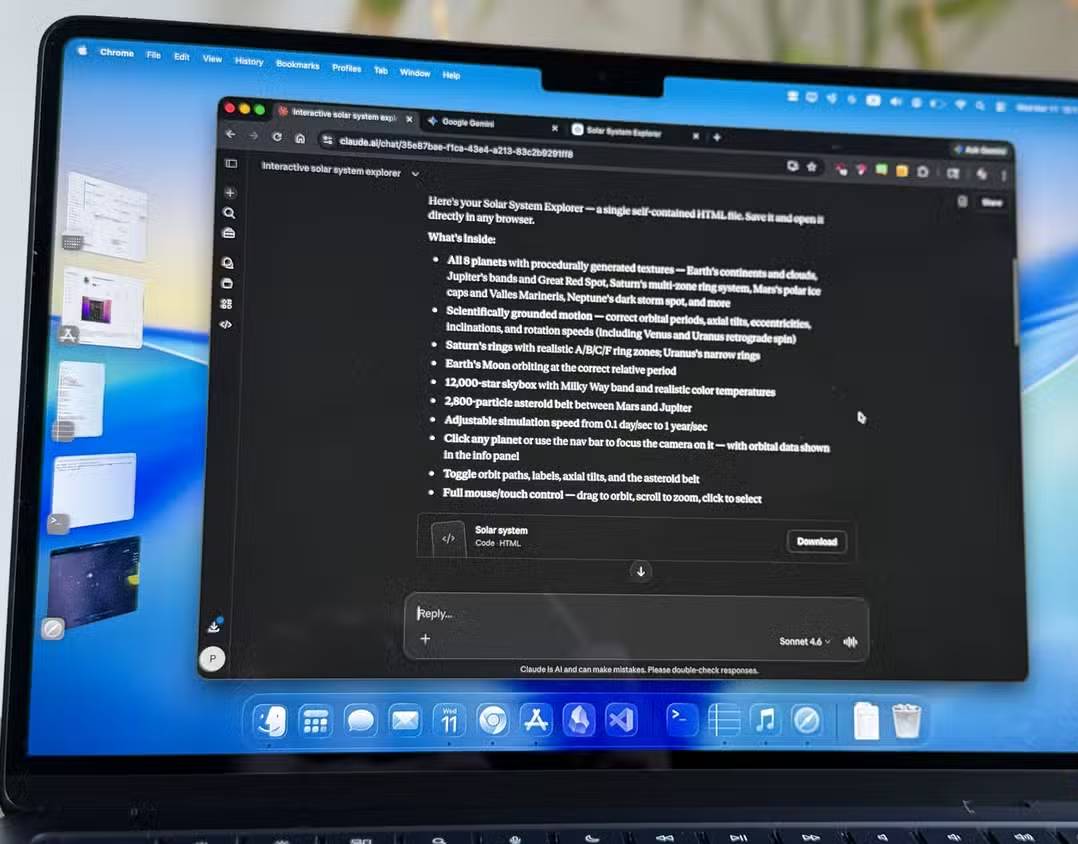
Claude Sonnet 4.6 also used Three.js and delivered the most coherent combination of visuals, motion, and interaction. Its result included recognizable procedural planet textures, an asteroid belt, orbit lines, camera controls, and a simulation-speed control.
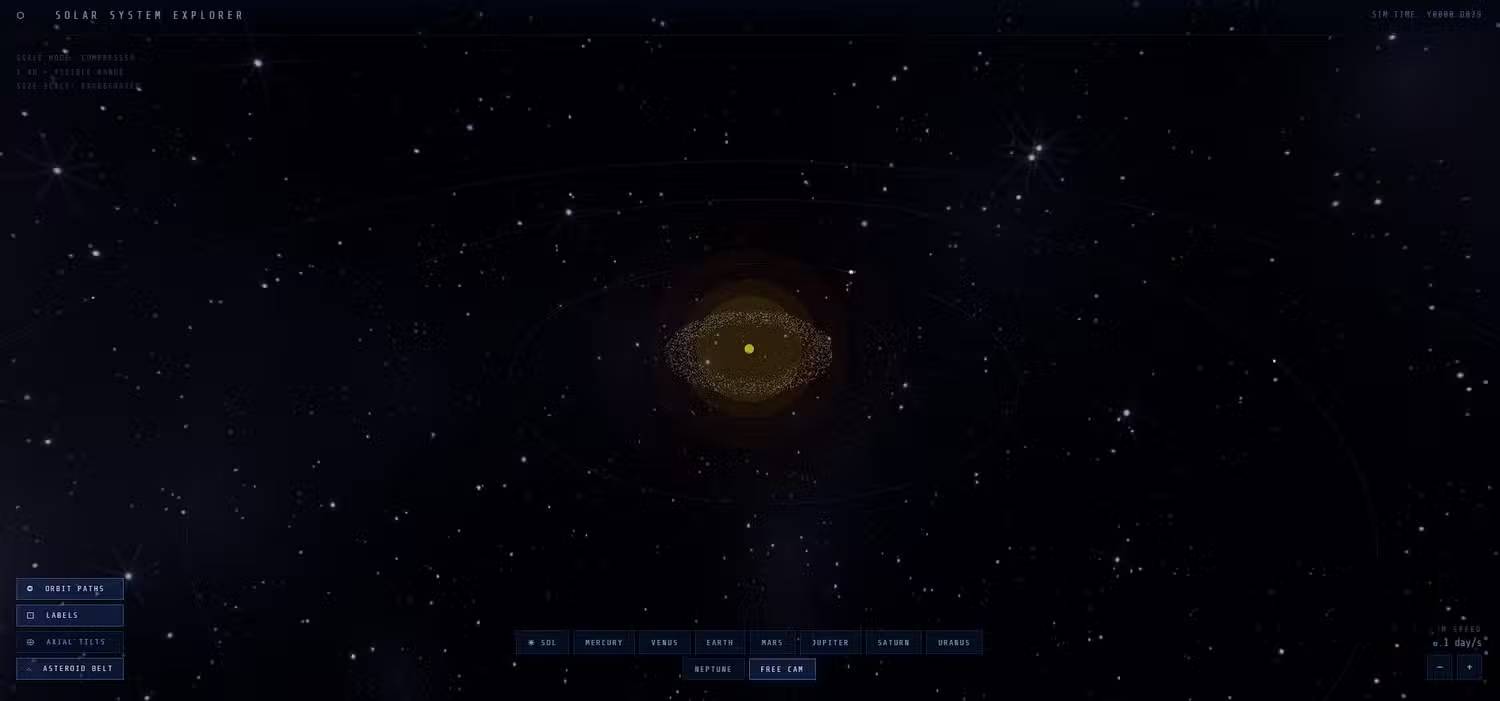
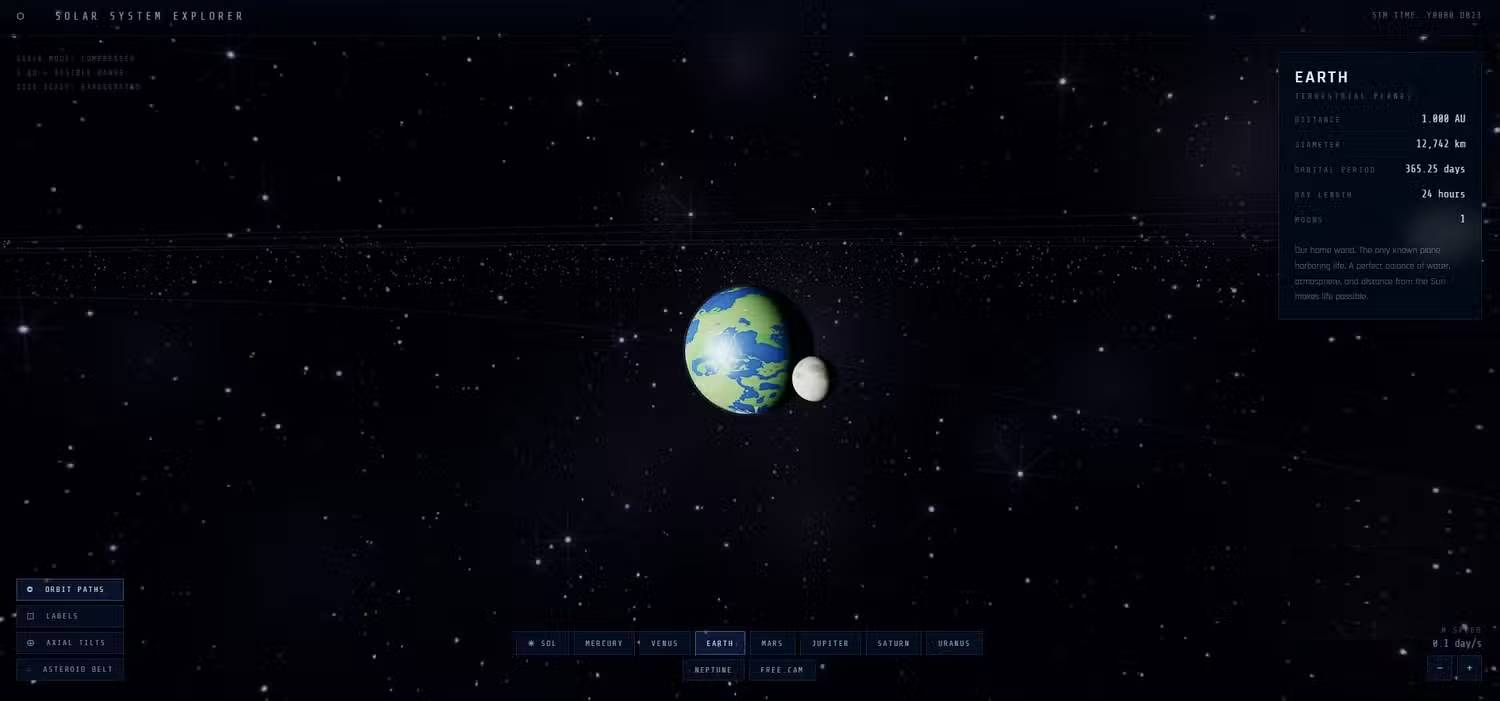
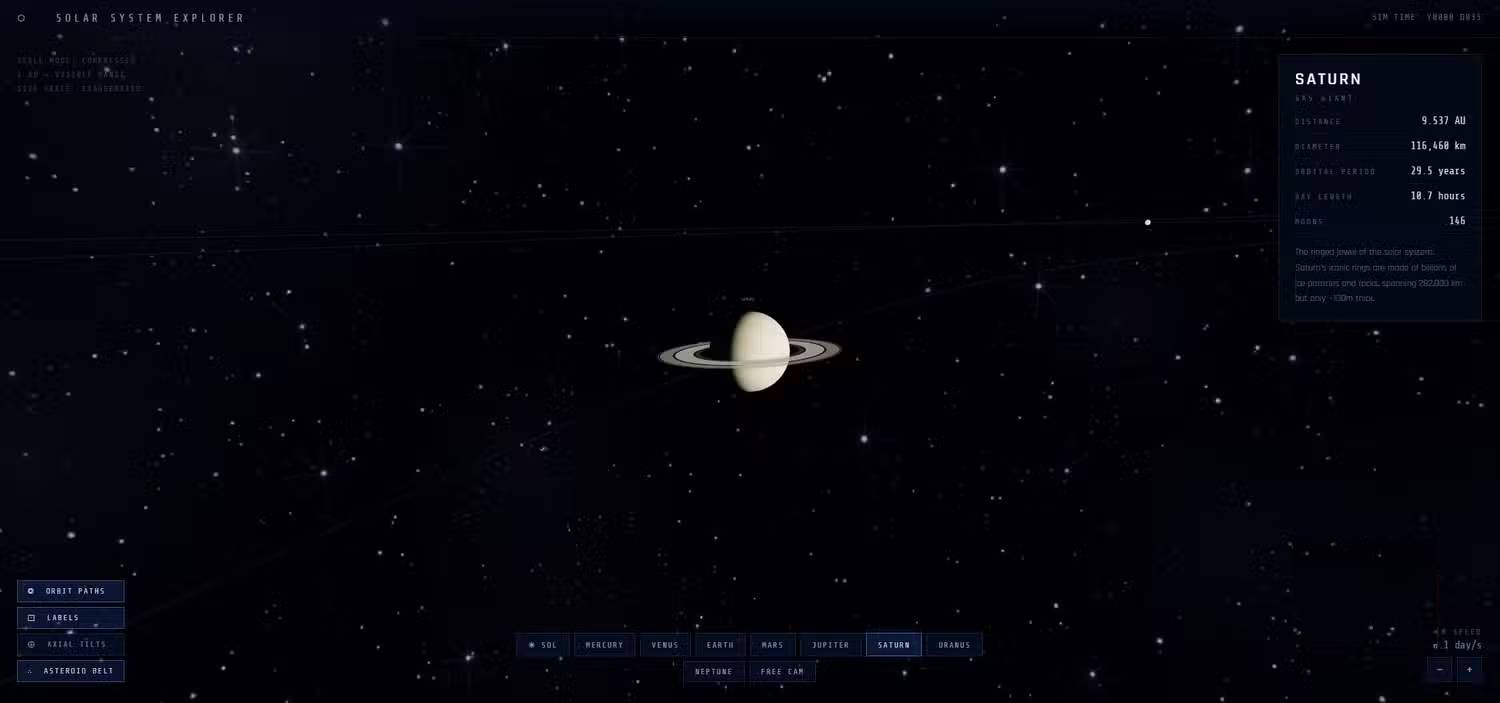
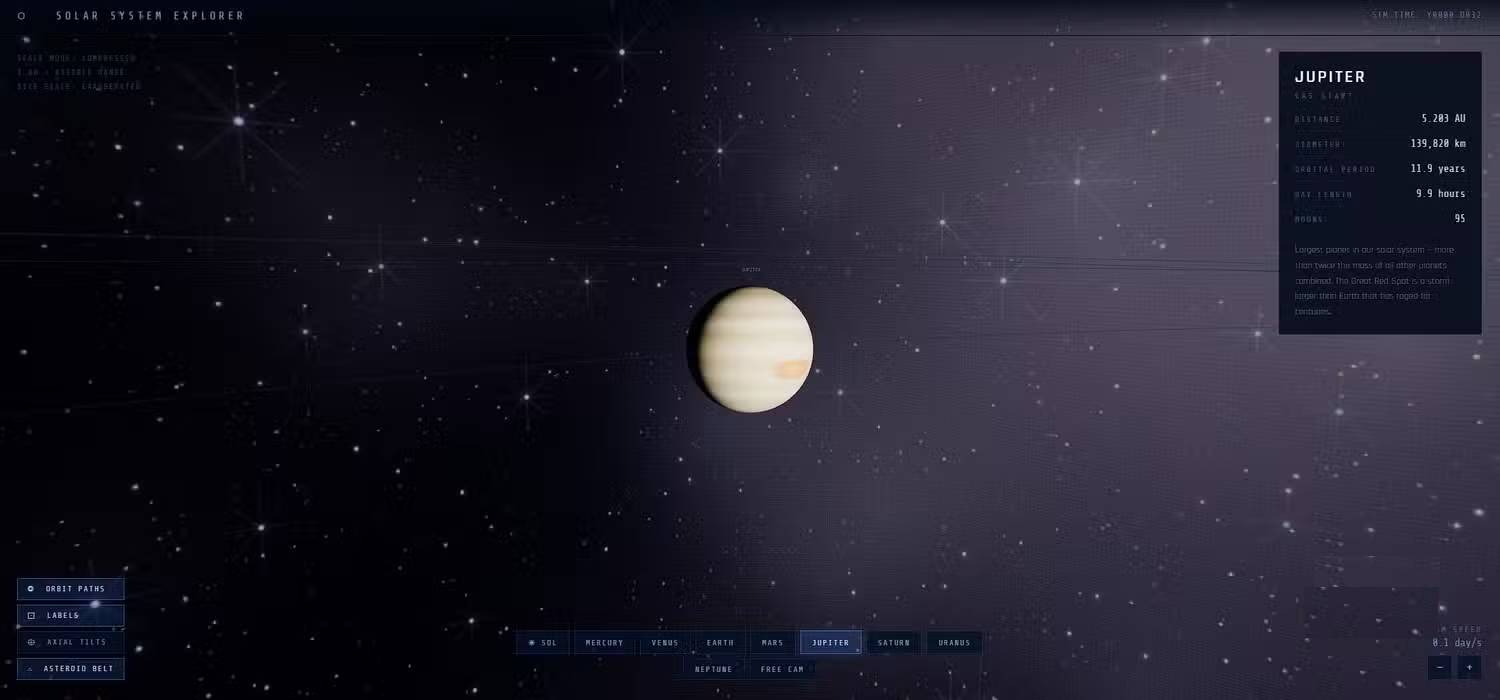
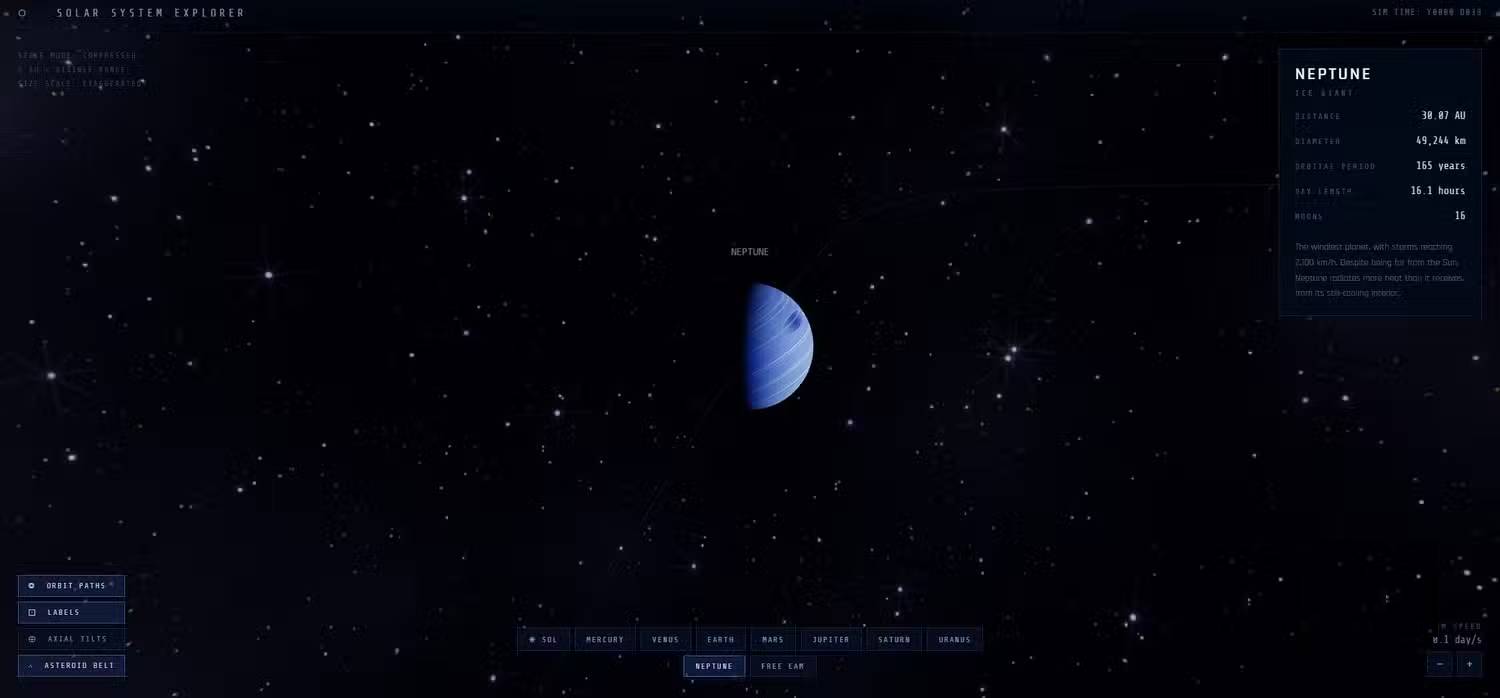

Creating the textures procedurally allowed the deliverable to remain largely self-contained without separate image assets. The relative layout and motion were more credible than the other two outputs, while the controls made the model easier to explore.
Assessment: Claude produced the strongest first-pass application in this specific run. That result demonstrates a successful output, not proof that every Claude generation will outperform every ChatGPT or Gemini generation.
What this comparison actually teaches
| Model used | Strongest aspect | Main failure or limitation |
|---|---|---|
| Gemini 3 Thinking | Fast, attractive animated overview | Broken or trapping interactions; simple surface detail |
| ChatGPT 5.4 Thinking | Polished 2D controls | Unit conversion error broke the visible orbital layout |
| Claude Sonnet 4.6 | Most complete balance of visuals and interaction | Still required scientific and code verification beyond a visual review |
A no-retry rule makes the comparison entertaining, but it is not how production software should be built. For real work, require the model to state its scaling assumptions, separate physics units from display units, add sanity tests, run the program, and report known limitations. The best assistant is the one that performs reliably within that reviewed workflow.
Readers comparing the products more broadly can also consult TipsMake's Claude and ChatGPT feature comparison. Model names and capabilities in both articles describe a point in time and should be checked against current product documentation before making a purchase decision.
Related Articles
 Which is better: Claude, ChatGPT, or Gemini for building an11 minutes read
 Why Is Claude Superior to Gemini and ChatGPT?7 minutes read
 ChatGPT vs Claude vs Gemini: Which AI Should You Use?12 minutes read
 How to Transfer ChatGPT and Claude Conversations to Gemini7 minutes read
 Claude vs ChatGPT: Which AI Assistant Should You Use?10 minutes read
 Should I Buy ChatGPT Plus or Claude Pro?10 minutes read
Reader Comments 0
Sign in with email or Google to join the discussion.