Table of Contents
This guide provides a clear, practical overview of "You Don't Need a New Chip for Great Performance: the Infinix XPAD GT". It organizes the most useful details, explains important considerations, and highlights the steps or choices that matter most.
Snapdragon 888 will still do its job well in 2025

To put things into perspective, Qualcomm, one of the leading processor manufacturers for Android devices, regularly refreshes its flagship chipsets every year. Back in 2020, its flagship processors were branded as Snapdragon 8xx. Since then, the company has rebranded its flagship processors not once but twice – first as Snapdragon 8 Gen 1, Gen 2, etc., and now as the new Snapdragon 8 Elite series.
Along with the rebranding, the company's chipsets have also seen significant upgrades, including a move to newer architectures and more efficient manufacturing processes. The latest Snapdragon 8 Elite, for example, is built on a 3nm process. Generally, the smaller the process, the better the performance and battery life.
Infinix says its new Android tablet, the XPAD GT, runs on the Snapdragon 888 – a five-year-old chip found in phones like the Samsung Galaxy S21 Ultra and built on a 5nm process. The first thought is how this will affect day-to-day use. Will it lag right from the start, or will it be manageable?
Surprisingly, the answer is yes. I've been using the Infinix XPAD GT for over a month now, and it's been doing just fine. In fact, unless you're specifically looking for performance gaps, it's not any slower than today's mid-range tablets. Most modern processors are optimized well enough that you won't notice a performance difference.
This effect is even more pronounced on tablets, which are often not used as much or as frequently as smartphones. You don't have to take calls, answer emails, and surf the web all day. Instead, they are often used in a casual way—working perfectly well without the latest flagship SoC.
After a month of use, I've barely noticed any stuttering or lag on the XPAD GT. Apps open as quickly as an iPad, multitasking is smooth, and even games like PUBG Mobile and Monument Valley run without any major issues. Sure, it's not as efficient or as thermally efficient as the latest chips, but unless you're using it for an extremely demanding workload, you probably won't notice.
Original software makes a big difference
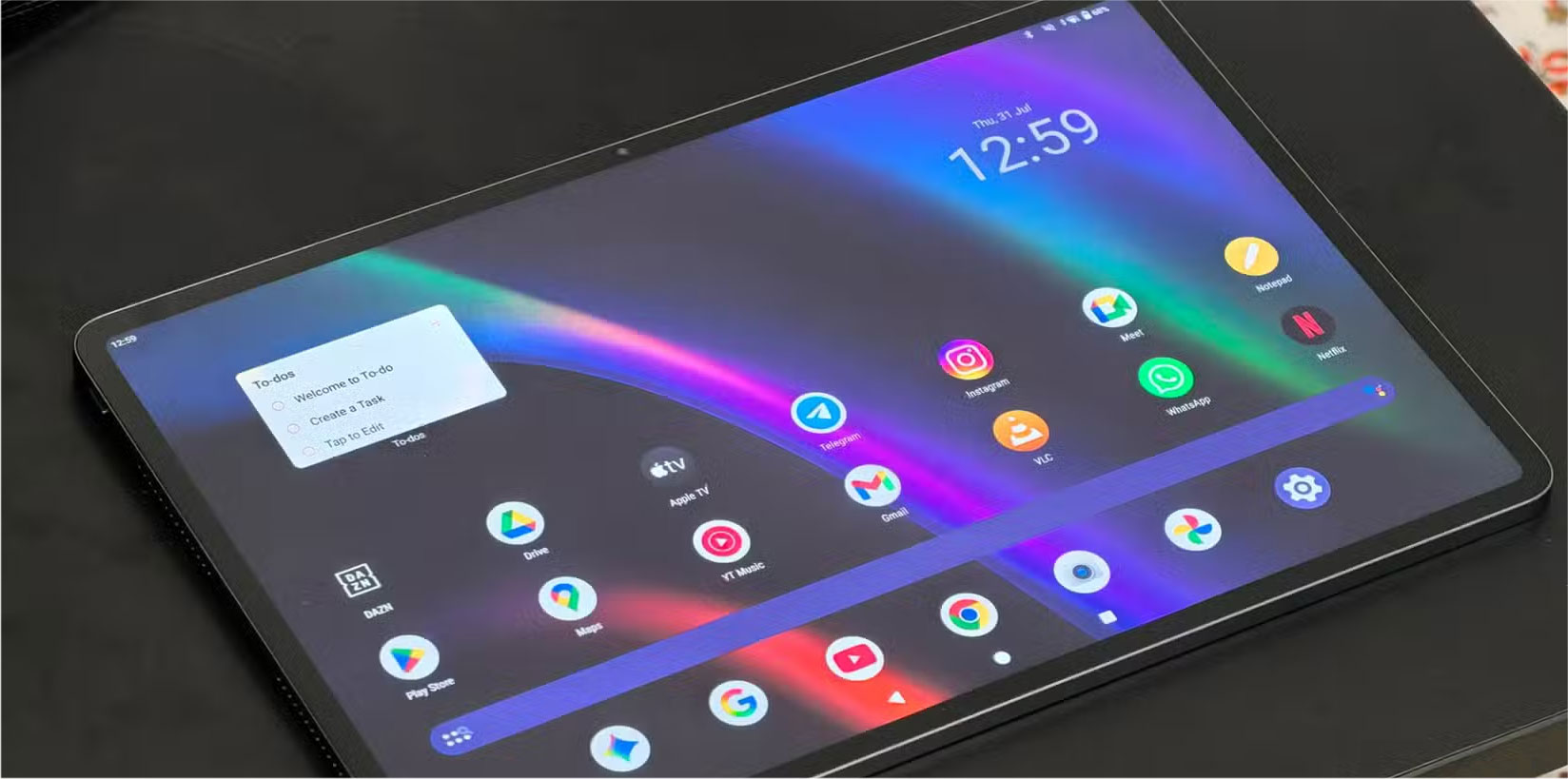
One of the biggest factors that affects the performance of a tablet—or any device, really—is how well its software is optimized. One of the reasons people love the Apple TV (despite its shortcomings) over any other streaming device is that its software is optimized, making the whole experience smooth and enjoyable. The same is true for tablets.
While most competitors like Samsung and OnePlus use their own Android skins on tablets, these skins are often heavy and need additional optimization to run well. Infinix, on the other hand, has opted for a Stock Android- like experience, which makes for a noticeable difference.
Because the hardware has less to do on Android, along with minimal bloatware, the software on the XPAD GT runs very smoothly. Despite running Android 14, which is two versions behind the latest release, there aren't any noticeable issues.
The fact that Android 14 is at its most stable — as it's been for a while — makes a big difference, especially since this tablet uses an older chipset. It may start to show signs of being outdated down the road, but for now, with Android 14 still relevant for at least a few more years, there are no complaints about the XPAD GT's software performance.
Should you buy such old hardware?
This article isn't saying you should buy a tablet with an older chip, but it's not something you should completely ignore either.
There's a difference between recommending a device just because it uses an older chip and recognizing when that older chip still works. I'm not suggesting that anyone should look for a Snapdragon 888-powered device in 2025, but it's unfair to think that such a device isn't worth it.
The reality is that most people don't use their tablets as their primary devices. You don't need to max out your CPU cores or edit video all day. For general use—streaming, reading, light gaming—top-of-the-line chips from a few years ago are still plenty powerful.
However, if you can, you should opt for a tablet with a newer mid-range chipset. These chips offer solid day-to-day performance, better efficiency, and support for modern on-device AI tasks that older processors simply don't have. You're also more likely to get longer software support when the chip is newer.
FAQ
What should you know about snapdragon 888 will still do its job well in 2025?
To put things into perspective, Qualcomm, one of the leading processor manufacturers for Android devices, regularly refreshes its flagship chipsets every year. Back in 2020, its flagship processors were branded as Snapdragon 8xx. Since then, the company has rebranded its flagship processors not once but twice – first as.
What should you know about original software makes a big difference?
One of the biggest factors that affects the performance of a tablet—or any device, really—is how well its software is optimized. One of the reasons people love the Apple TV (despite its shortcomings) over any other streaming device is that its software is optimized, making the whole experience smooth and enjoyable. The same is.
Should you buy such old hardware?
This article isn't saying you should buy a tablet with an older chip, but it's not something you should completely ignore either.
Related Articles
 Infinix HOT 50 Pro+Series: Ultra-Thin Curved Screen Phone, Durable6 minutes read
 Experience the Amazing Ways to Connect Your Tablet to Your TV5 minutes read
 Intel Panther Lake Launched: CPU and GPU Performance Increased by up to 50%4 minutes read
 Qualcomm Built a New Wi-Fi Chip for the Wi-Fi 802-11ax Generation4 minutes read
 A19 Pro Performance on iPhone 17 Pro Is Superior4 minutes read
 Fonepad K004, Tablet Using Asus Intel Chip4 minutes read
Reader Comments 0
Sign in with email or Google to join the discussion.