Table of Contents
DAS is easier to understand when the core ideas are explained in practical terms. This guide covers what it means, how it works, why it matters, and the main details you should know.
Key Takeaways
- Understand what is DAS.
- Explore how does DAS work.
- Understand advantages and disadvantages of DAS.
What Is DAS?
DAS (Direct Attached Storage) is a type of storage method where storage devices such as hard drives, SSDs or external storage devices are directly connected to a computer or server via USB, SATA, SCSI or other connection protocols.
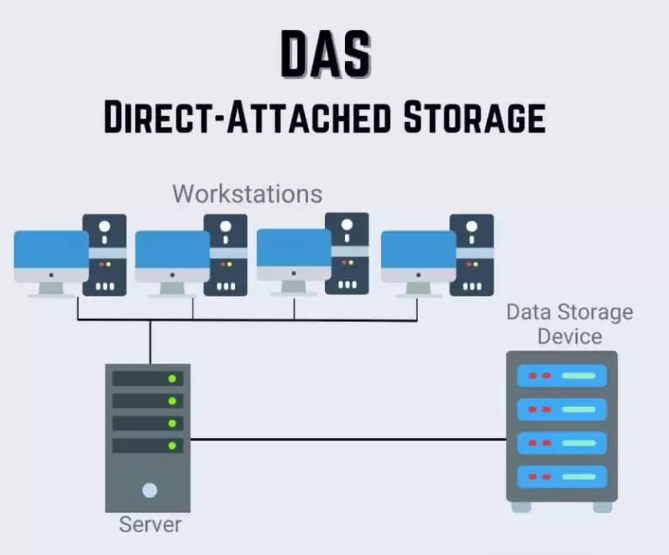
What is DAS?
DAS can be connected in a variety of ways, from using USB cables to internal SCSI connections. The storage device becomes a private data 'vault' for the computer, improving transfer speeds and reducing latency compared to network storage when connected.
How Does DAS Work?
Let's analyze the data transmission process step by step. This helps you better understand how DAS works.
- DAS system structure: A DAS system usually consists of basic components such as; hard drive, connection interface, server or computer. The system will send signals through the connection interface to the storage device and receive data back through transmission protocols when users access data.
- Data transfer process: When a file is requested, the computer sends a request to the hard drive via the connection interface. The storage device searches for the file in its memory and then sends the data back to the computer.
- Interaction between computer and DAS: Computer and DAS can interact through different protocols. The flexibility in choosing the connection protocol lets you customize their storage configuration according to their specific needs.
Advantages and Disadvantages of DAS
Like any other technology, DAS has its own advantages and disadvantages that users need to consider before deciding to adopt.
Advantages of DAS
The biggest advantage of DAS is the speed of data access. Since there is no need to go through a network, the transfer speed between the computer and the storage device is usually very fast. This makes DAS an ideal choice for applications that require fast data processing.
In addition, the cost of DAS is often lower than other storage solutions such as NAS or SAN.
Disadvantages of DAS
One of the major limitations of DAS is its scalability. You will need to buy new devices and connect them to your computer, which can get complicated if you have many devices if you want to increase your storage capacity.
Furthermore, sharing data between multiple computers is also difficult because DAS doesn't support network access.
How Is DAS Different from NAS and SAN?
We need to compare it with two other popular storage solutions: NAS (Network Attached Storage) and SAN (Storage Area Network). This helps you get a more comprehensive look at DAS.
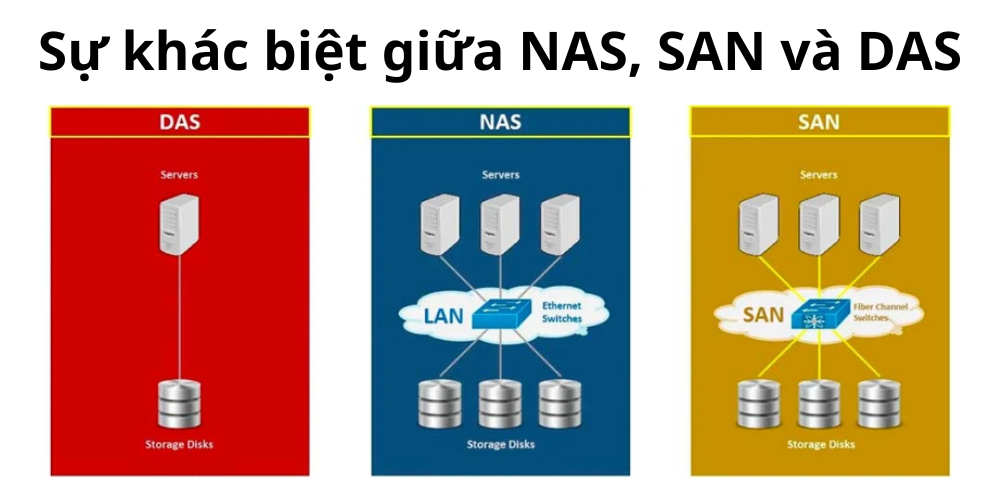
Comparing DAS with NAS and SAN
How to Upgrade DAS?
You can follow these steps: This helps you upgrade Direct Attached Storage (DAS).
- Determine your upgrade needs: First, you need to determine your upgrade needs. Do you need more storage capacity? Or do you want to improve transfer speed? Determining your specific needs makes it easier to make a better decision.
- Choosing a new device: Once you have determined your needs, the next step is to choose a new storage device. You should research the different brands and models available in the market, based on speed, capacity, and price.
- Installation and Configuration: Once you have a new device, installation and configuration are also important. You may need to access the BIOS or management software to set up the new device in the system.
- Upgrade to a larger hard drive: Replace existing hard drives with larger capacity ones.
- Add external hard drives: Connect external hard drives via interfaces such as USB, eSATA, or FireWire.
Which DAS Devices Should Be Used?
Users often consider many factors when choosing the right NAS device. Here are two notable NAS products on the market:
- Synology DiskStation DS220+ is an ideal choice for home and small office, featuring stable data access and impressive performance. DS220+ provides a balanced hardware configuration, combined with effective data sharing and security features.
- NextZen 168 Plus NZ168+ is aimed at both personal and business users. This device has a powerful configuration and a rich application ecosystem, promising to meet diverse data storage and usage needs.
Conclude
Direct Attached Storage (DAS) is an effective storage method for those who need to access data quickly without sharing over the network. Although it has many advantages, compared to NAS and SAN, it also has specific disadvantages. Through this article, we hope you have a more general view of DAS and can make the right decision for your storage needs.
Final Thoughts
The most reliable way to handle DAS is to follow the process in order, verify each important setting, and test the result before moving on. Use the guidance above as a practical reference, then adjust the details for your device, software version, or specific goal.
FAQ
What is DAS?
Direct Attached Storage (DAS) is a common term in the field of data storage and information technology.
Why is DAS important?
Understanding DAS helps you evaluate its purpose, requirements, limitations, and practical impact before you use it or make a related decision.
Who should understand DAS?
It is useful for beginners who need a clear overview and for experienced users who want to confirm terminology, requirements, or best practices.
Related Articles
 Best Nas (Network Attached Storage) Devices in 201919 minutes read
 Explore the Synology DS220 + Network Attached Storage Device5 minutes read
 How to Use Wi-Fi Direct on Android: Step-by-Step Guide4 minutes read
 Things to Know When Storing Data on 'Cloud'5 minutes read
 Wi-Fi Direct? Wi-Fi Direct Used for: What It Is and How to Connect and Use7 minutes read
 Instructions for Viewing Wi-Fi Direct Passwords on TV5 minutes read
Reader Comments 0
Sign in with email or Google to join the discussion.