Table of Contents
This guide provides a practical overview of some iPad acceleration tips run smoother with clear explanations and useful details. It focuses on the information users are most likely to need.
After a long time of use, the iPad will show signs of slowing down, its performance is not as fast as before. Especially for older models like iPad 1, 2, 3, 4 or iPad mini 1, the status of slow devices will often occur. If your device is in a slow-working state, or using older iPad versions, you may want to refer to some iPad acceleration tips below.
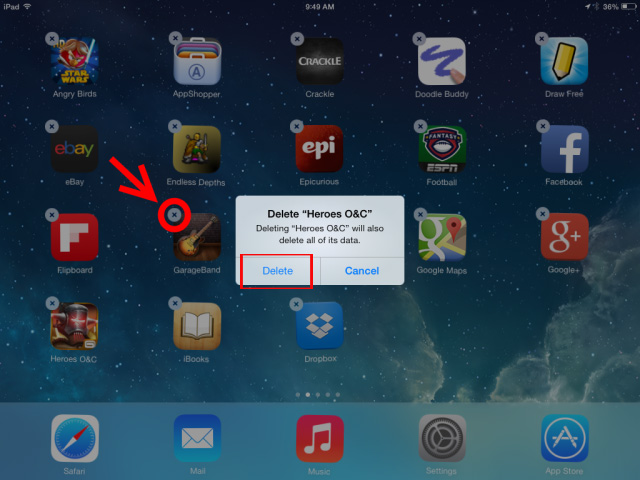
1. Delete unused applications
If the app does not need to be used, it is best to uninstall it, even if the app size is heavy or light. This will regain a large amount of memory, especially when your iPad has limited memory.
How to delete the app is very simple, Press and hold the app icon Until the icon vibrates, then click The X To delete the app.
When needed to delete multiple applications at once, users access menu Settings> General> Storage & iCloud Usage . Then click Manage Storage Under Storage, then find unused applications. Click Delete To delete the app.
2. Restart the iPad
After removing unused applications on the iPad, users should restart the device to refresh the memory. Press and hold the power button until Slide To Power Off appears , swipe right to turn off the iPad. Then press and hold on the power button to restart the device.

3. Turn off applications that automatically refresh the background
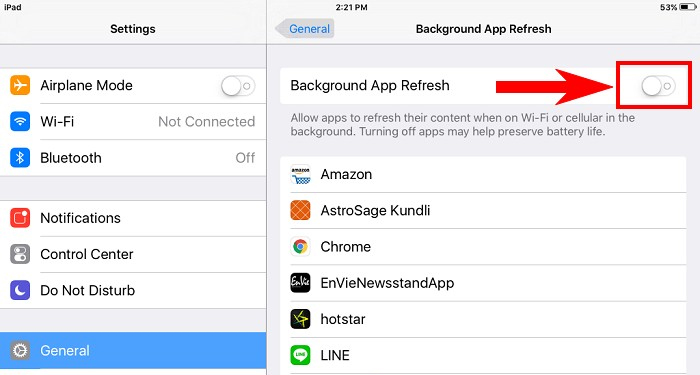
This is the Background App Refresh feature added from iOS 7, with the task of automatically updating the latest content even if we don't open the app. However, this feature sometimes causes the iPad to fall into a "turtle-like" slow-running state.
To turn off this feature, go to Settings> General> Background App Refresh And switch to Off status.
If users still want to use this feature for essential applications such as Mail, it is possible to turn on the Background App Refresh, but turn off applications that do not want to refresh in the list.
4. Upgrade to the new operating system
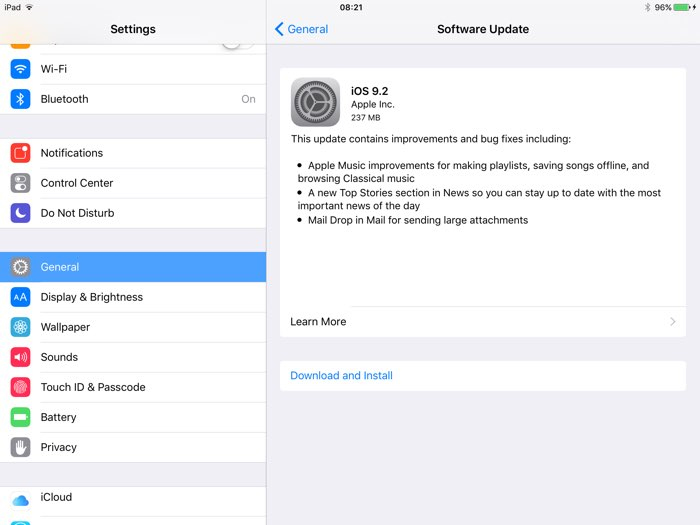
The new version of the iOS operating system will solve many problems in the predecessor, such as fixing some bugs, increasing security, optimizing the device for smoother operation.
If your iPad is running slowly, try upgrading to the latest operating system version. Go to Settings> General> Software Update Menu and then upgrade to the latest iOS version.
5. Delete Safari cache
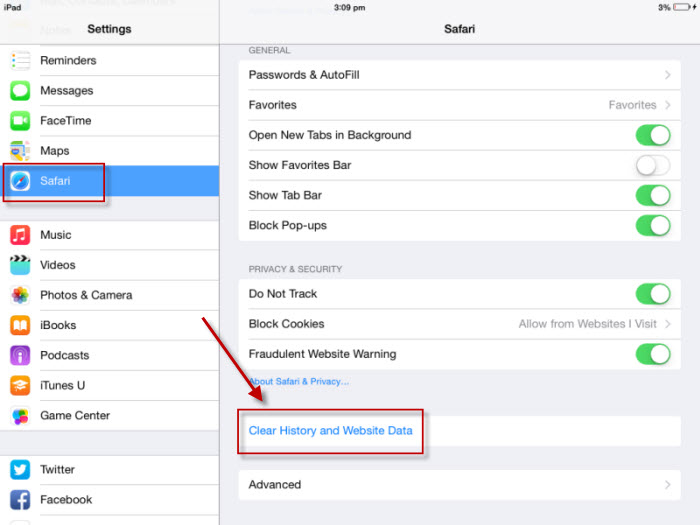
Safari is one of the most frequently used and slow applications. This is because you forgot to clear the cache when surfing the web on Safari. Visit the Settings> General> Clear History and Website Data Links to clear the cache on Safari browser when we surf the web.
6. Turn off location services on the iPad
In some cases of using the app, we need to use Location Services location. However, if you forget to turn off this service and let it run in the background, it will reduce the performance of the machine, even drain the battery quickly.
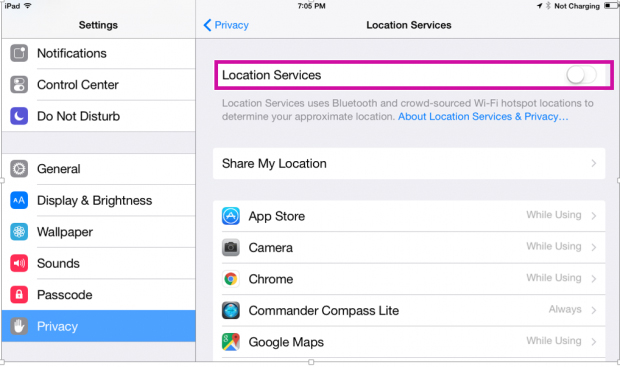
Follow the Settings> Privacy> Location Services link And move the Location Services setting To Off .
7. Turn off Spotlight on iPad
Spotlight application on iPad device will help us to search content quickly. But to keep this tool in a standby state to receive search commands from users, may cause the device to fall into a slow operating state.
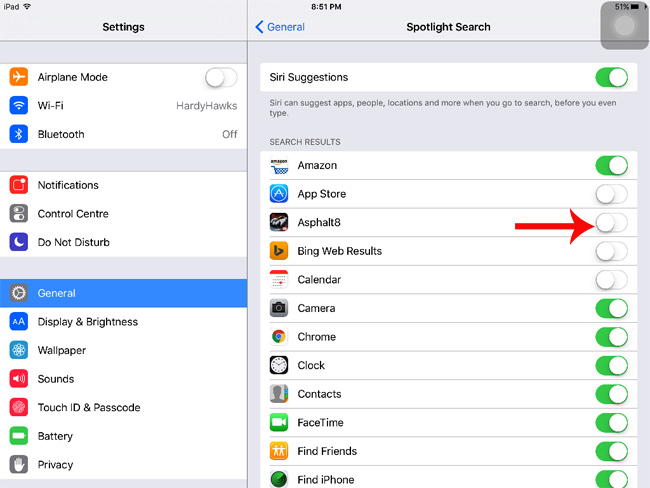
To turn off Spotlight, we go to Settings> General> Spotlight Search And move all Search Results settings to Off .
Here are some tips to improve the performance of older iPads, or fix the iPad problem suddenly falling into a slow state. In addition, you should also delete old images, clean up messages, especially delete all applications running in the background, affecting the performance of the iPad.
Hope the above article is useful to you!
FAQ
What is the main benefit of some iPad acceleration tips run smoother?
The main benefit is a clearer understanding of the topic and a practical way to apply the information covered in this guide.
What should I check before using some iPad acceleration tips run smoother?
Confirm compatibility, review the required settings, protect important data, and use the latest supported version whenever possible.
What should I do if the result is different?
Repeat the steps carefully, verify permissions and version differences, and consult the product's official support documentation for changes not shown in the article.
Related Articles
 11 Acceleration Tips for iPhone and iPad for a Long Time17 minutes read
 To Enable Hardware Acceleration in Chrome, Firefox4 minutes read
 17 Great Tips to Make the Best Use of the iPad Pro M1 20218 minutes read
 New Tips to Distinguish iPad Series5 minutes read
 Tips to Speed up Android Phones at a Glance6 minutes read
 10 Acceleration Tips for Old Computers19 minutes read
Reader Comments 0
Sign in with email or Google to join the discussion.