Network Management - Here we will look at the network settings of Windows 7, including: Network Discovery, File Sharing, Media Streaming, Password Protected Sharing (sharing password protected), installing Encryption for shared connections and methods for configuring HomeGroup connections. Search for network sharing settings We must first access the
Network and Sharing Center . In the left window, click the
Change advanced sharing settings link , then a new window will appear. Alternatively, we can import the word
sharing into the
Start menu's
Search box, then click on the displayed result called
Manage advanced sharing settings , then the
Advanced sharing settings window will appear.
Figure 1.
In the
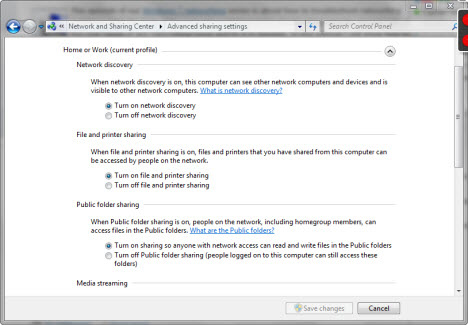
Advanced sharing settings window, we will see many settings have been divided into two groups, including:
Home or Work and
Public as shown in Figure 2.
Figure 2.
To display the settings of these two groups, simply click on their right arrow. First we need to edit the settings of the current Profile. In addition, we can change the sharing settings for other Profiles, and they will be applied whenever we connect to a network using that Profile.
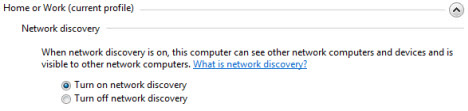
Network Discovery The first installation in the list of available installations is Network Discovery. When this feature is turned on, it will allow the computer to search for other devices on the network to which the computer is connected. In addition, this feature also allows other computers on the network to see our computers on the network. If you are using Home or Network, a practical approach is to enable this feature. For public networks, we should turn this feature off so that other computers can't see our computer on the network.
Figure 3.
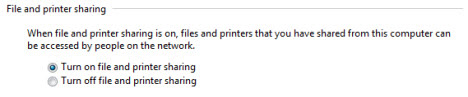
File and printer sharing We can enable or cancel file and printer sharing. When enabled, this feature allows us to share data with other computers on the network. When this feature is turned off, we will not be able to share any resources. Even if the computer appears on the network, no one can access the shared files or folders.
Figure 4.
a practical approach is to enable this feature on Home or Work networks and turn off on Public networks.
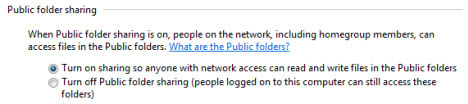
Share Public Folder
One method that can help share files and folders is to move them to Windows 7 Public folders. These folders have the path C: UsersPublic. If this option is enabled, all data copied to these folders will be visible to other computers on the network.
Figure 5.
In fact this feature is not really useful, because we can share files or folders directly in the drive. If you use this feature we will have to perform an operation to copy to the Public folder, and if the data is shared, we will have to wait for a copy time and waste disk space. If you want to use the Public folder, we can enable this feature, but on public networks a practical approach is to turn it off.
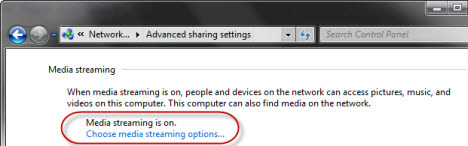
Media Streaming
Media Streaming allows us to play multimedia files with Windows Media Player. In the Media Streaming area we will see the current status, if you want to change the current status, click the Choose media streaming options link .
Figure 6.
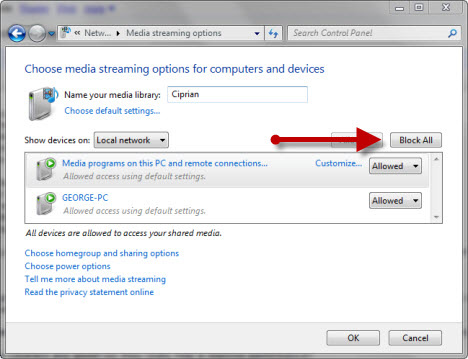
If this feature is enabled we will see a window listing our computer and other computers on the network that have Media Streaming enabled. If you do not need to use this feature, just click the Block All button and click OK .
Figure 7.
If Media Streaming is turned off, we will receive a message asking to activate this feature. When clicking on the Turn on media streaming button, we will see a window similar to the one shown in Figure 5, where we can edit the settings for Media Streaming.
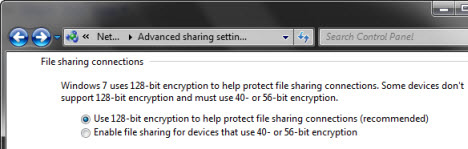
Encrypt file sharing connections
The next setting is the type of encryption used for data sharing connections, when computers connect to each other and copy files or folders from one computer to another. By default, file sharing connections will use 128-bit encryption .
Figure 8.
a practical approach is to use 128-bit encryption or else there will be some problems with older devices or computers using operating systems that cannot fully access shared files and folders.
Turn on or turn off Password Protected Sharing
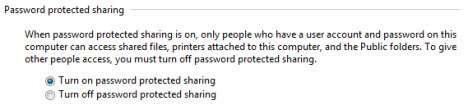
Password Protected Sharing only allows users to access files and folders if they have a user account and password installed on the system. Without knowing this information, they will not be able to connect to shared data.
Figure 9.
Best of all, we always enable this feature to secure shared data.
Configure the connections of HomeGroup
By default, HomeGroup has its own password that every computer must use when connecting to. If you want to use the password and username on every computer in HomeGroup, we can install Windows 7 using this password instead of using separate passwords. However, to get the best security we should not use the same username and password for every computer in the HomeGroup.
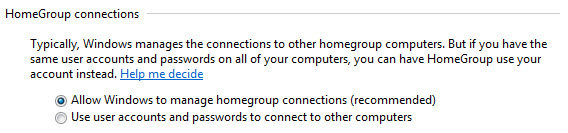
Figure 10.
It's best to select the Allow option Windows to manage homegroup connections ( Allow Windows to manage HomeGroup connections ). Conclude As we have seen, setting up network sharing settings is not too complicated. What we need to remember is to turn off all features when connecting to the Public network to prevent unauthorized access to shared resources. With the Home or Work network, we should only activate the necessary features.

 How to Configure TCP/IP Settings in Windows7 minutes read
 Set up Ad Hoc Wireless Network to Play Wi-Fi Without Software12 minutes read
 How to Share Printer in Windows Network System?5 minutes read
 How to Turn Off Network Sharing on Windows4 minutes read
 How to Reset Windows 10 Internet Settings: Practical Guide6 minutes read
 How to Fix the Network and Sharing Center Not Opening Error6 minutes read
Reader Comments 0
Sign in with email or Google to join the discussion.