Table of Contents
Change the Icon Size and Display Settings in Windows 7 is easier to understand when the core ideas are paired with practical examples. The sections below explain the topic clearly, highlight useful steps, and point out details that can prevent common errors.
If you're using a 27-inch screen, you'll know how small your icons are on the screen. Unless you like to look at such small icons (save display space), you can completely change the icons (and text) to get bigger sizes instead of trying to Try to look at the icon and the small text to see what its content is showing.
By default, the size of the text and icons is set quite small (100%). This size is suitable for normal screens. If you are using a large screen, then setting 100% may be too small for you. This is how you can easily configure them to be larger in size:
- Go to ' Control Panel' ( Start -> Control Panel )
- Select ' Appearance and personalization '. Click ' Display '.

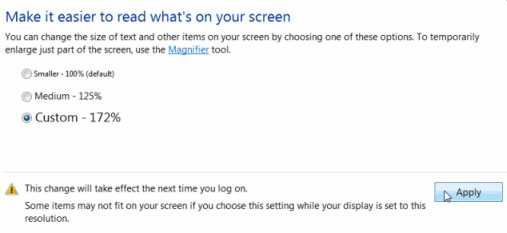
- In the next window, there are three options that appear. Note that the third option will only appear if your screen supports 1200 x 900 resolution.

- You can choose any of the options below.
- Smaller - 100%: This is the default option.
- Medium - 125%: This size sets text and item size to 125% of normal size.
- Larger - 150%: This size sets text and items to be equal to 150% of normal size.
- Select ' Medium ' and click ' Apply '. You will immediately receive a message asking you to log out of your computer.

- Click ' Log off now '.
- You may see changes the next time you log in.
In some situations, after increasing the text size and icon, you may find that the text may not be suitable for your screen. You may then have to adjust the resolution of the screen.
- Navigate to ' Control Panel> Appearance and personalization ' and click ' Display '.
- Select ' Resolution ' from the left panel.
- Set the screen resolution to best suit your screen and click ' Apply '.
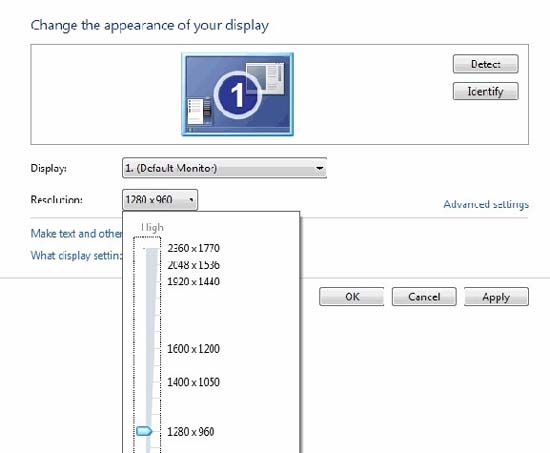
- When prompted if you want to keep that display setting, click ' Keep changes '.
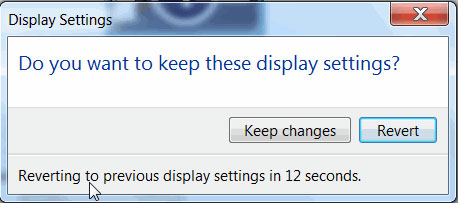
- Click the ' Advanced settings ' option and switch to the ' Monitor ' tab.
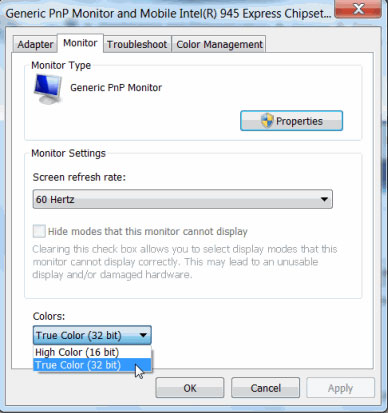
- Select ' True Color (32 bit) ' from the ' Colors : ' drop-down menu
- Click ' Apply ' then click ' OK '.
If you want to set the text size as you like, follow the steps below:
- Select ' Set custom text size (DPI) ' from the left panel of the main ' Display ' window.
- Set the percentage by text size and regular icons by dragging the mouse in the slider.
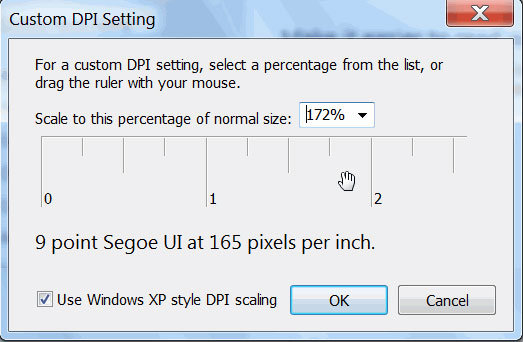
- Click ' Apply '.
Good luck!
FAQ
What is Change the Icon Size and Display Settings in Windows 7?
If you're using a 27-inch screen, you'll know how small your icons are on the screen.
Why is Change the Icon Size and Display Settings in Windows 7 important?
A clear understanding of Change the Icon Size and Display Settings in Windows 7 helps you make informed decisions, avoid common mistakes, and use the relevant tools or techniques more effectively.
How should beginners approach Change the Icon Size and Display Settings in Windows 7?
Start with the fundamental concepts, follow the examples step by step, and test each change in a safe environment before applying it to important systems or data.
Related Articles
 How to Change the Windows 11 Taskbar Icon Size to 32x323 minutes read
 Instructions to Change Icon Size on Windows 11 Taskbar2 minutes read
 How to Increase Icon Size on Android: Step-by-Step Guide3 minutes read
 Resize Icons in Windows 10: Tips and Examples4 minutes read
 Shrink Icon Size: How to Resize Desktop Icon on Windows?6 minutes read
 How to Change the Windows 11 Recycle Bin Icon3 minutes read
Reader Comments 0
Sign in with email or Google to join the discussion.