Table of Contents
This guide provides a clear, practical overview of how undo works on Windows PC, with useful context, important details, and straightforward takeaways for everyday readers.
Undo and Redo on Windows with the keyboard
As mentioned, almost every Windows application supports the one-step Undo feature, and it's straightforward to do. To undo an action you just performed in Windows, press Ctrl + Z on your keyboard at the same time.
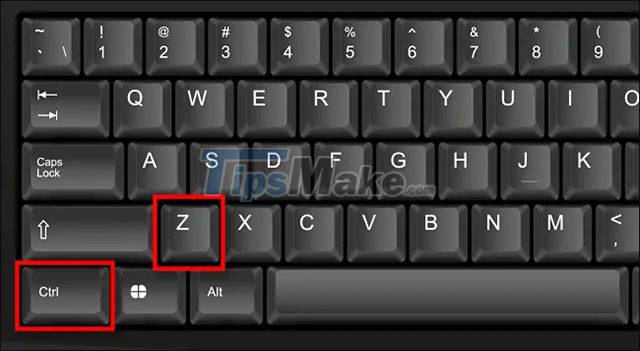
Some specific applications (such as Adobe Photoshop and Microsoft Office) support multi-step undo, allowing you to go back to another step each time you execute an Undo command. In this case, you can also just keep pressing and releasing Ctrl + Z repeatedly to go back to the previous respective steps.
Conversely, the Redo feature allows you to repeat the last action you performed before Undo. Redo can be understood as an undo command for Undo. In many applications — such as Microsoft Office — you can press Ctrl + Y or F4 on your keyboard to redo the action you just undone.
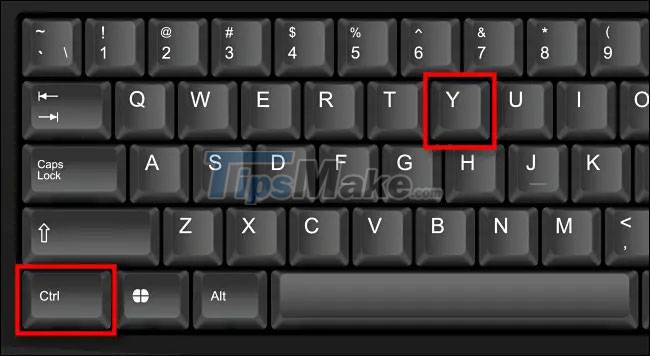
However, unlike macOS, the Redo feature is not widely adopted in the Windows environment. That is, not all applications will support Redo. You will have to experiment manually to see which apps support this feature.
Undo and Redo on Windows using the options menu or toolbar
In many applications with the classic 'File/Edit' menu bar at the top of the interface window, you can perform an Undo command by clicking 'File/Edit' and selecting 'Undo' in the menu that appears.
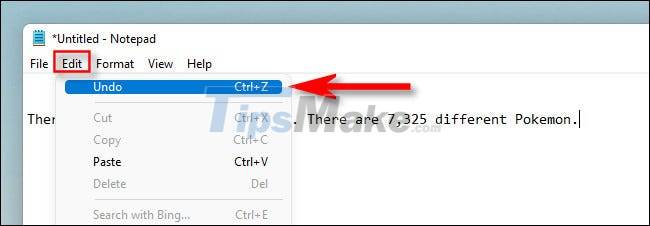
Similarly, some apps put a 'Redo' option just below 'Undo' in the 'Edit' menu. But this classic File/Edit menu bar is getting harder and harder to find in Windows. Instead, some applications such as Microsoft Word (and other Office applications) include special Undo and Redo buttons on the toolbar.
For example, to perform an undo in an Office app, simply click the curved, left-facing arrow in the Quick Access Toolbar located at the top of the application window.
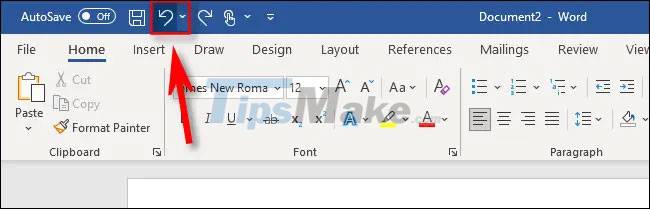
Similarly, to execute a Redo command, simply click the curved, right-pointing arrow button in the Quick Access Toolbar. What you have undone will be restored immediately.
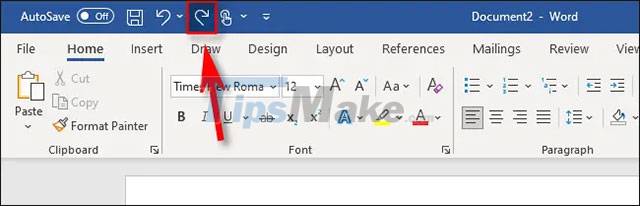
Of course, each application will have a different way of designing and arranging the interface layout. But in general, if you see a curved arrow pointing to the left, it's most likely the Undo button, and vice versa, Redo.
You can also try right clicking in the text input area and looking for the 'Undo' option. Or try pressing Ctrl + Z on your keyboard. Good luck!
Key Takeaways
Use the information above as a practical reference for how undo works on Windows PC. Review each step carefully, confirm any requirements, and choose the option that best fits your situation.
FAQ
What does this guide explain about How Undo Works on Windows PC?
It explains the main concepts, practical considerations, and useful steps related to how undo works on Windows PC without requiring advanced knowledge.
Who can benefit from learning about How Undo Works on Windows PC?
This information is useful for readers who want a clear overview, practical guidance, and reliable steps related to how undo works on Windows PC.
What should I check before applying this information?
Review the requirements, confirm that your device, software, or situation matches the instructions, and back up important data before making major changes.
Related Articles
 How to Use the Undo and Redo Commands5 minutes read
 How to Undo an Action on a Mac5 minutes read
 Toolbar: How to Redo Typing in Windows2 minutes read
 How to Turn Off the 'Shake to Undo' Feature on iOS 9?4 minutes read
 How to Use Undo and Redo Functions When Writing Text on iPhone6 minutes read
 How to Increase the Number of Undo in Word, Excel, PowerPoint2 minutes read
Reader Comments 0
Sign in with email or Google to join the discussion.