Table of Contents
This updated guide examines How to Use Dosbox and organizes the essential facts, background, and practical takeaways in clear American English.
Part 1of 4:
Installing DOSBox
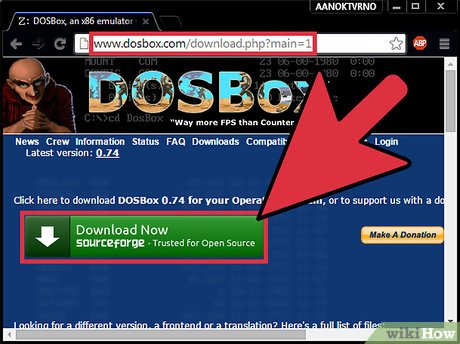 Download the latest version of DOSBox. You can download it for free fromDOSBox.comin the Downloads section.
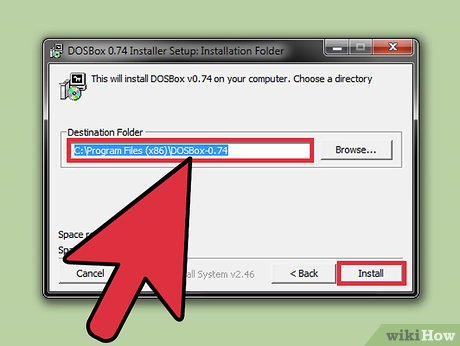 Run the installer. When installing DOSBox, you may find it easier to change the installation location toC:DOSBoxinstead of using the default location.
- ChangeC:to whatever drive letter you want DOSBox installed on.
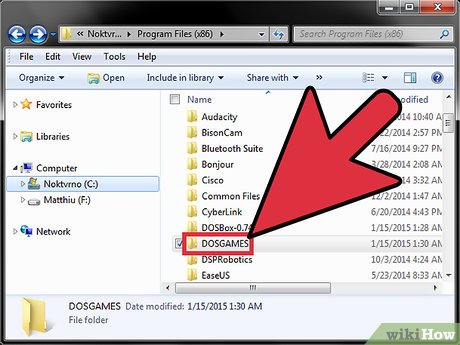 Create a new folder on the same drive for your games. Games that you download will be placed here. This folder will be mounted as a virtual drive in DOSBox.
- For example, if you installed DOSBox atC:DOSBox, create a folder in the same location likeC:DOSGAMES
 Download a game. There are tons of sites that host old DOS games that can be downloaded free and legally. Search for "abandonware" sites. "Abandonware" are programs made by companies that no longer exist and that have no retail means to purchase. Place the downloaded files in their own folder inside the games folder you created in the previous step.
- You can also copy the files from old installation disks you may have lying around (if you still have a floppy drive).
 Start DOSBox. You will be taken to the virtual command promptZ:>.[1]
Part 2of 4:
Mounting Drives
 Mount your games folder. It is not safe to mount your entire hard drive in DOSBox, so instead you'll be mounting your games folder as a virtual drive. The games folder will act as a hard drive.
- Typemount C C:DOSGAMESand press↵Enter. TypeC:and press↵Enter. Your input will change toC:>.
- For Macs, change the locations as appropriate (e.gmount C ~/DOSGAMES)
 Mount a CD. Insert the CD into your computer's disc drive. Type in the following mounting command:
- Typemount D D: -t cdromand press↵Enter. ReplaceD:to the drive letter of your disc drive. TypeD:and press↵Enter. Your input will change toD:>and you can navigate through the CD's files.
- cdromneeds to be lowercase.
 Mount an ISO disc image. If you have an ISO file for the game CD you want to play, you can mount it as if it was an actual disc.
- Typeimgmount D C:ImagePathimage.iso-t isoand press↵Enter. ReplaceC:ImagePathimage.isowith the actual location and filename of the ISO file.
 Mount a BIN/CUE disc image. If you have a BIN/CUE file for the game CD you want to play, you can mount it as if it was an actual disc.
- Typeimgmount D C:ImagePathimage.cue-t isoand press↵Enter. ReplaceC:ImagePathimage.cuewith the actual location and filename of the CUE file. The BIN file needs to have the same name and be in the same location.
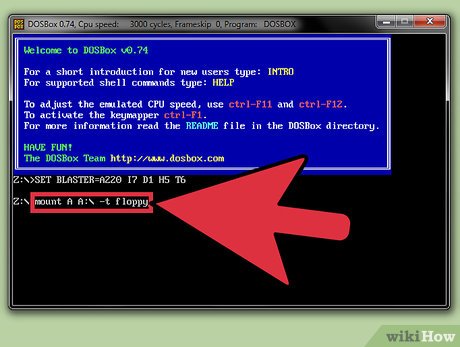 Mount a floppy disk drive. If you have a floppy disk drive installed in your computer, you can mount it so that DOSBox can access it.
- Typemount A A: -t floppyand press↵Enter.
 Set DOSBox to automount your drive. To save yourself some time when you start DOSBox, you can set it to automatically mount the drive of your choice. To do this, you'll need to open thedosbox.conffile in a text editor like Notepad.[2]
- Windows - C:UsersusernameAppDataLocalDOSBoxdosbox-version.conf
- Mac - /Macintosh HD/Users/username/Library/Preferences/DOSBoxversionPreferences
- Add the following lines to the very bottom of the configuration file and then save it:
MOUNT C C:DOSGAMES C:
Part 3of 4:
Running a Game
 Display the list of folders. If you've mounted your DOSGAMES folder, each of your games will usually be contained in their own folders. Typedirto list all of your game directories. If you mounted a disc or disc image, a list of all the files and folders on the disc will be displayed.
 Type. cddirectory to open the directory of the game you want to play.
 Type. dir to display a list of all the files in the game's directory.
 Look for the game file. Most games start by running an EXE file, though you may need to run a COM or BAT file. This is mainly for older games.
- The EXE file will often have a name similar to the game. For example, Prince of Persia may be calledPOP. EXE.
 Run the game file. Type the name of the EXE, COM, or BAT file, including the extension, and press↵Enter.
 Adjust your game's performance. There are several keyboard shortcuts that can be used to adjust the performance of your game. These commands can be useful since a lot of old games will not perform properly on modern systems.
- Ctrl+F8- This increases the amount of frameskip. Frameskip prevents DOSBox from rendering certain frames, which can improve performance but leads to some visual problems.
- Ctrl+F7- This decreases the amount of frameskip. 0 frameskip means that DOSBox is rendering every frame possible.
- Ctrl+F12- This will speed up the game by allocating more processor power to DOSBox. You can monitor your processor by pressingCtrl+⇧Shift+Escand selecting the "Performance" tab. If you still need performance increases after maxing out your processor, increase the frameskip.
- Ctrl+F11- This will slow the game down by reducing the amount of processing power.
- Not all games will run smoothly on DOSBox, even after tweaking performance settings.
 Switch to full screen. If you want the game to take up your entire screen, pressAlt+↵Enter. You can exit full screen mode by pressing the same keys again.
Part 4of 4:
Using a Frontend Program
 Download and install a front-end program. If using the command prompt seems a little too complex, you can download a frontend program. These programs use a Windows interface, allowing you to load, start, and adjust games without ever using a command prompt.
- One of the most popular front ends is D-Fend Reloaded, available for free fromdfendreloaded.sourceforge.net.
- D-Fend Reloaded includes the DOSBox files.
 Run D-Fend Reloaded. Once it has been installed, you can start D-Fend reloaded to manage your games. Your installed games will be sorted in the left frame.
 Add games. You can easily add DOS games by dragging and dropping an archive file containing the game into the open D-Fend Reloaded window. The game archive will be automatically extracted and the files will be placed in the right place.
 Run a game. Double-click a game from the list to begin playing it. Your Windows color scheme may change temporarily while the game is running to support old DOS colors.[3]
FAQ
What is How to Use Dosbox about?
It provides a structured overview of dosbox, explains the main context, and highlights practical takeaways for readers.
Why does this topic matter?
Understanding the main concepts helps readers evaluate the issue, avoid common mistakes, and make better-informed decisions.
How should readers use this information?
Use the guidance as a practical starting point, confirm details that may have changed, and follow current product, safety, or security recommendations.
Related Articles
 How to Use Dosbox to Run Old Programs and Applications?10 minutes read
 Play Old Dos Games on macOS with Dosbox6 minutes read
 How to Install DOSBox on Raspberry Pi to Play Classic DOS Games6 minutes read
 DOS Game Guide in Win XP, Vista or Windows 75 minutes read
 10 Best Software Emulators for Gaming Consoles9 minutes read
 How to Fix Full Screen Command Prompt8 minutes read
Reader Comments 0
Sign in with email or Google to join the discussion.