Table of Contents
This updated guide examines Computer: How to Start Windows in Safe Mode and organizes the essential facts, background, and practical takeaways in clear American English.
Method 1of 2:
Windows 8 and 10
- Suspend BitLocker protection (if enabled). Go to Manage BitLocker then click on "Suspend protection". If you do not suspend BitLocker protection, then you will be asked for your recovery key to continue booting into safe mode.
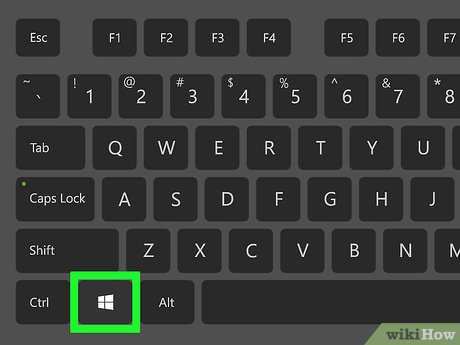 Turn on or restart your computer. Do so by pressing your computer's power button. If your computer is already on but malfunctioning, first press and hold the power button to turn it off.
- If you're already logged in and you just want to restart in Safe Mode, open the Start menu instead by pressing the⊞Winkey or by clicking the Windows logo in the bottom-left corner of the screen.
 Click the start-up screen. Once your computer finishes starting (or waking up), you should see a screen with a picture and the time in the bottom-left corner. Clicking this screen will bring up the user selection screen.
 Click the power icon. This icon, which is in the bottom-right corner of the screen, resembles a circle with a line through its top. Doing so invokes a pop-up menu.
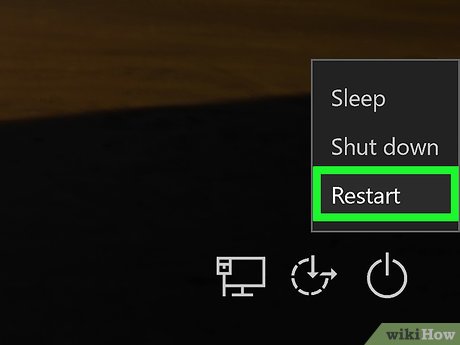 Hold down⇧Shiftand clickRestart. The Restart option will appear near the top of the pop-up menu, and you'll find the⇧Shiftkey on the left side of your computer's keyboard. This process will restart your computer and open the Advanced Options page.
- You may need to click Restart anyway after clicking Restart . If so, keep holding⇧Shiftwhile you do.
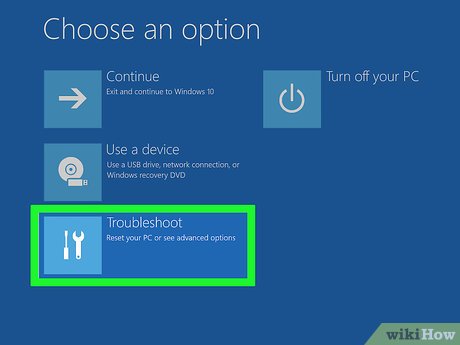 ClickTroubleshoot. It should be the middle option on the Advanced Options page, which is a light-blue screen with white text.
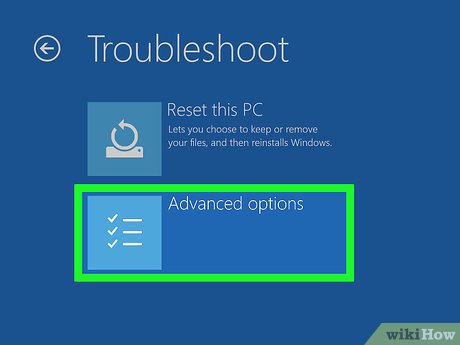 ClickAdvanced options. It's the bottom option on this page.
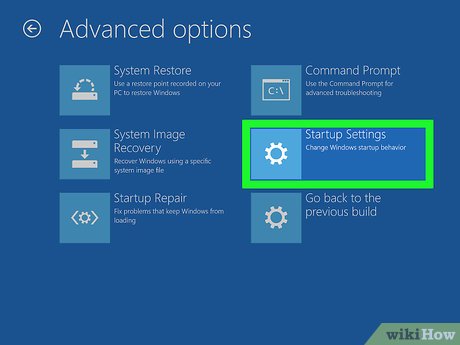 ClickStartup Settings. This option is on the right side of the page, just below the Command Prompt option.
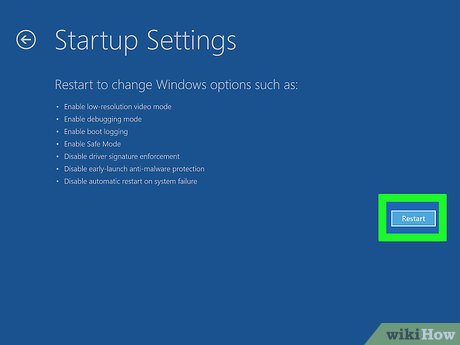 ClickRestart. It's in the bottom-right corner of the screen. Clicking it will restart your computer to the Startup Settings menu.
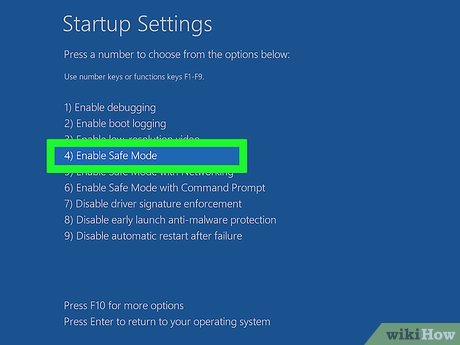 Press the4key. Once Windows has restarted to the Startup Settings page, pressing4will select Safe Mode as your current start-up option.
 Wait for your computer to finish restarting. Once it finishes restarting, your computer will be in Safe Mode.
- To exit Safe Mode, restart your computer normally.
Method 2of 2:
Windows 7
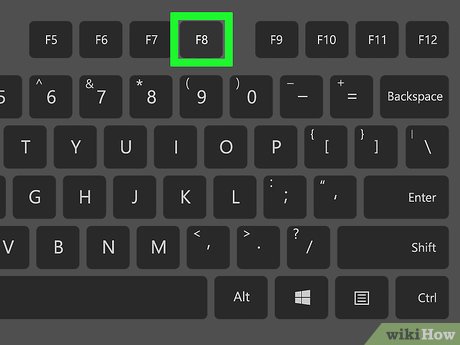 Locate theF8key. It's in the top row of keys on your computer's keyboard. To access the Safe Mode option in Windows 7, you'll have to pressF8while restarting your computer.
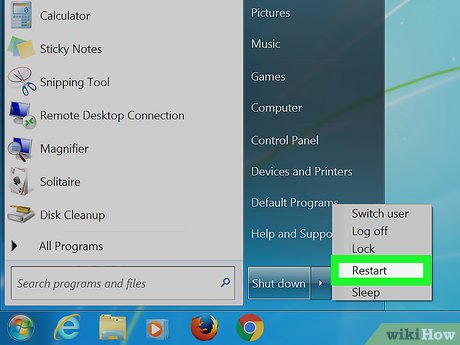 Turn on your computer. Do so by pressing your computer's power button. If your computer is already on but malfunctioning, first press and hold the power button to turn it off.
- You can also restart your computer by clicking the Windows logo in the bottom-left corner of the screen, clicking the power icon, and clicking Restart .
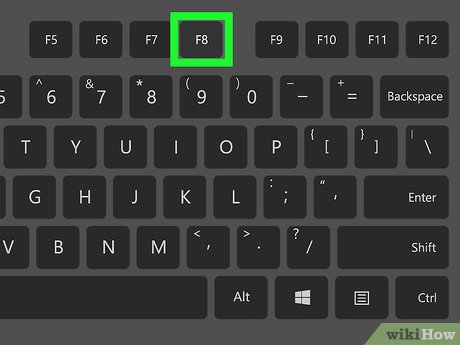 Repeatedly pressF8. Do so immediately after your computer begins to turn on. This action will launch the boot menu, which is a black screen with white text.
- The goal here is to pressF8before you see the "Starting Windows" screen.
- If nothing happens while pressingF8, you may need to hold theFnkey while pressingF8.
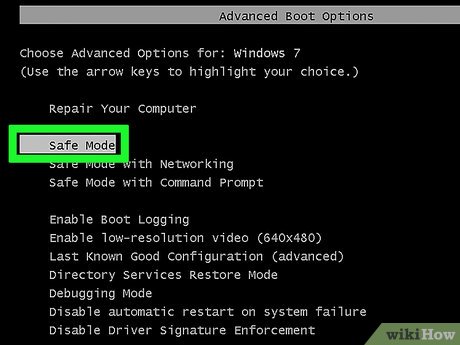 Press the↓key until "Safe Mode" is selected. This key should be on the right side of your keyboard. When "Safe Mode" has a white bar over it, you've successfully selected it.
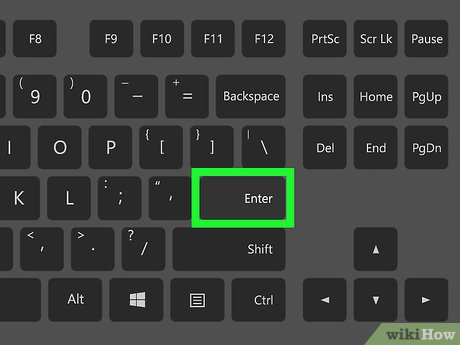 Press↵Enter. Doing so will both select Safe Mode as your restart option and continue the start-up process.
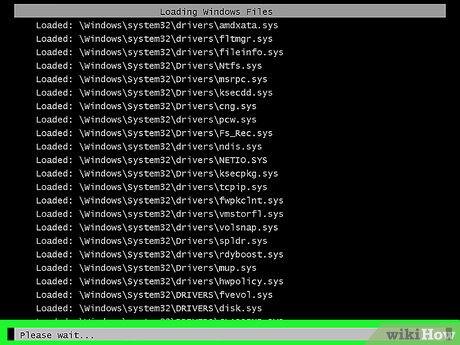 Wait for your computer to finish restarting. Once it finishes restarting, your computer will be in Safe Mode.
- To exit Safe Mode, restart your computer normally.
FAQ
What is Computer: How to Start Windows in Safe Mode about?
It provides a structured overview of computer, explains the main context, and highlights practical takeaways for readers.
Why does this topic matter?
Understanding the main concepts helps readers evaluate the issue, avoid common mistakes, and make better-informed decisions.
How should readers use this information?
Use the guidance as a practical starting point, confirm details that may have changed, and follow current product, safety, or security recommendations.
Related Articles
 All Problems with Starting Windows in Safe Mode8 minutes read
 Start Safe Mode on Windows XP: Explained4 minutes read
 How to Access Safe Mode Windows 10 on Startup9 minutes read
 The Procedure to Open Microsoft Office 2013/2016 in Safe Mode5 minutes read
 Instructions for Setting F8 Key to Start Windows 8 in Safe Mode3 minutes read
 How to Start Windows in Safe Mode: Clear Instructions6 minutes read
Reader Comments 0
Sign in with email or Google to join the discussion.