Table of Contents
This guide explains how to secure IIS in Windows Server 2012, with clear steps, practical tips, and important checks before you begin.
- The first rule is to update the system regularly
- The second principle is to create Application Pool (containing one or more applications and allow configuration of many levels between different web applications). This can be done by following the steps shown below.
Step 1: You must access Server Manager> Internet Information Services (IIS) Manager> Application Pools .
 Go to Server Manager> Internet Information Services (IIS) Manager> Application Pools
Step 2: Click Sites , right-click Default Website , select Manage Website> Advanced Settings .
 Select Manage Website> Advanced Settings
Step 3: Select Default Pools.
Step 4: Disable the OPTIONS method, this can be done by following the path Server Manager> Internet Information Services (IIS) Manager> Request Filtering .
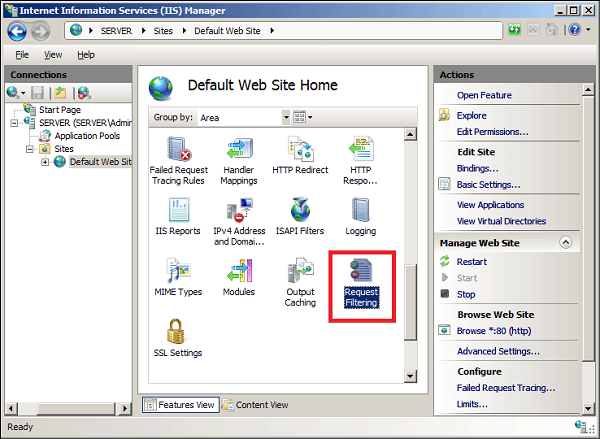 Go to Server Manager> Internet Information Services (IIS) Manager> Request Filtering
Step 5: In the Actions panel, select Deny Verb , enter OPTIONS into Verb , then click OK.
Step 6 : Enable Dynamic IP Restrictions blocks by going to IIS Manager , double-clicking on IP Address and Domain Restrictions , then selecting the Actions panel .
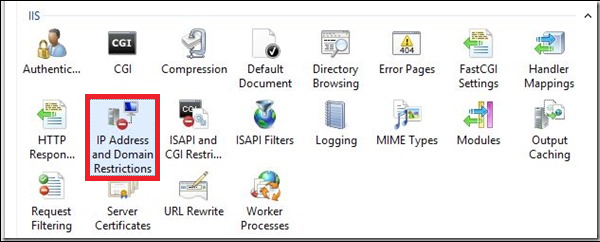 Double click on IP Address and Domain Restrictions
Step 7: Then select Edit Dynamic Restriction Settings , modify and set dynamic IP restriction settings as needed, then click OK.
Step 8: Activate and configure the Request Filtering rules. To do this, go to IIS Manager , double-click Request Filtering, switch to the Rules tab , then the Actions panel .
 Activate and configure the Request Filtering rules
Step 9: Then select Add Filtering Rule , set the required rule, then click OK.
 Select Add Filtering Rule
Step 10 : Allow logging. To do this, go to IIS Manager , select the specific site you want to configure, and then select Logging.
 Allow logging
FAQ
What should I know about Secure IIS in Windows Server 2012?
Focus on the key features, requirements, limitations, and practical use cases explained in this guide.
How do I get the best results with Secure IIS in Windows Server 2012?
Follow the recommended steps, use current software or information, confirm compatibility, and review settings before major changes.
Are there any risks or limitations?
Potential limitations depend on compatibility, data quality, cost, privacy, support, and how the product or method is used.
Related Articles
 8 Ways to Secure SSH Server Connections on Linux9 minutes read
 How to Connect Proxy Servers on Windows 10 to Secure Internet4 minutes read
 The Best Sftp Server and Tools for Secure File Transfer10 minutes read
 Top Best Scp Server Software6 minutes read
 10 Reasons to Install Windows Server 20086 minutes read
 6 Ways to Check Which DNS Server Is Being Used in Windows 117 minutes read
Reader Comments 0
Sign in with email or Google to join the discussion.