Table of Contents
This updated guide examines Folder: How to Install Oracle Java Jre on Ubuntu Linux and organizes the essential facts, background, and practical takeaways in clear American English.
Method 1of 2:
Using Terminal
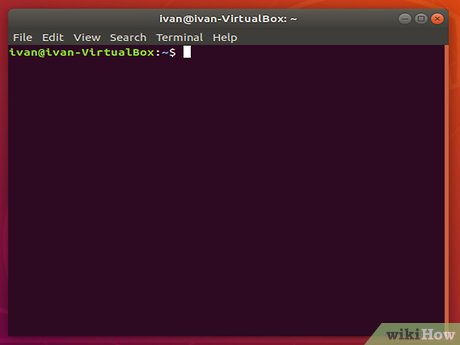 Open Terminal. Click the Terminal app icon, which resembles a black box, in the bar on the left side of the screen.
- You can also pressAlt+Ctrl+Tto bring up the Terminal window.
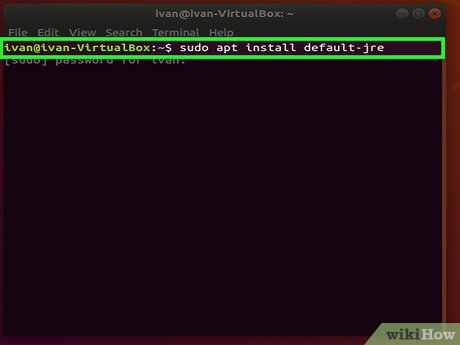 Enter the Java install command. Type insudo apt install jreand press↵Enter. This command prompts Linux to begin searching for the JRE installation site.
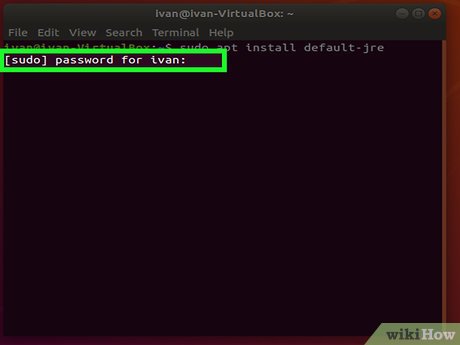 Enter your password when prompted. Type in the password you use to log into your computer, then press↵Enter. The installation will commence.
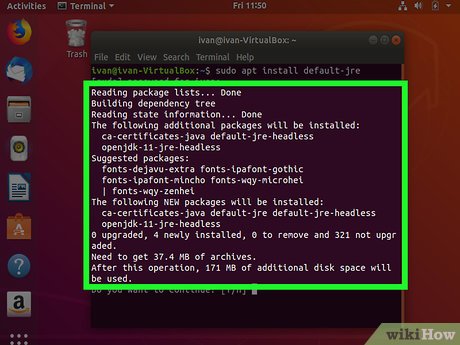 Allow the JRE files to install. This will take a few minutes. When you see the terms of use prompt appear, you may proceed.
 Select when prompted. Press the left arrow key, then press↵Enter. Java will resume installing.
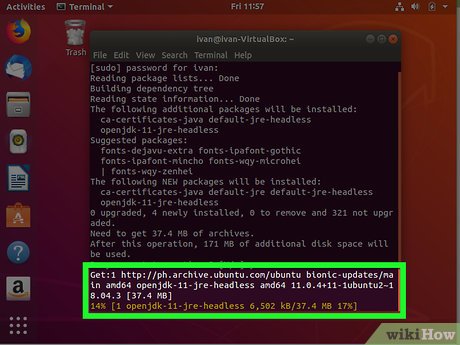 Wait for Java to finish installing. Once you see your username appear at the bottom of Terminal, you can continue.
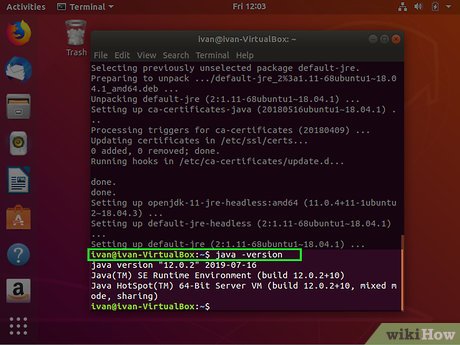 Check your Java version. Type injava -versionand press↵Enter, then wait for the Java version number to appear.
- If doing this results in an error, Java didn't install correctly. You may need to try installing it manually.
 Remove unnecessary files. You can get rid of temporary files installed by Java by doing the following:
- Type insudo apt autoremoveand press↵Enter.
- Type inyand press↵Enter.
Method 2of 2:
Installing Java Manually
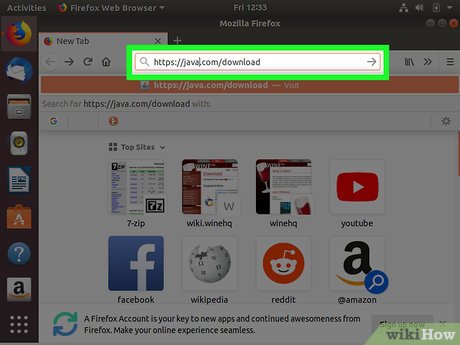 Open the Java download site. Go to https://java.com/download in your computer's web browser.
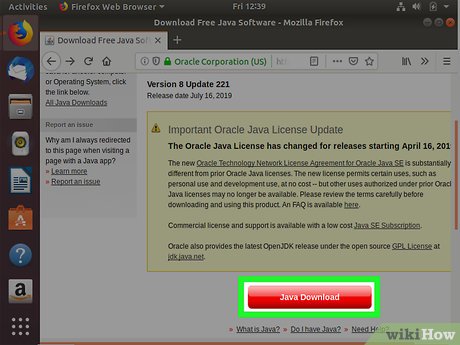 ClickFree Java Download. It's a red button in the middle of the page. Doing so opens the Downloads page.
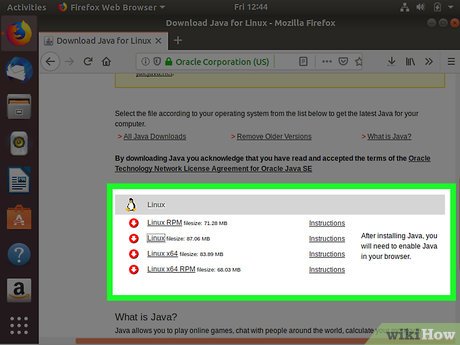 Click theLinuxlink. This option is near the middle of the page. Clicking it should prompt the Java folder to begin downloading.
- You may first have to click Save to prompt the download to begin.
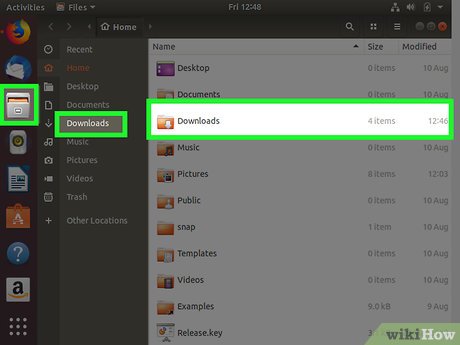 Open the "Downloads" folder. Click the Files app icon—which resembles a grey filing cabinet drawer on the left side of the screen—then double-click the "Downloads" folder.
 Extract the downloaded folder. Right-click the "jre-#####-linux" folder, then click Extract Here in the resulting drop-down menu. You should see a new, regular folder with a similar name appear in the "Downloads" folder.
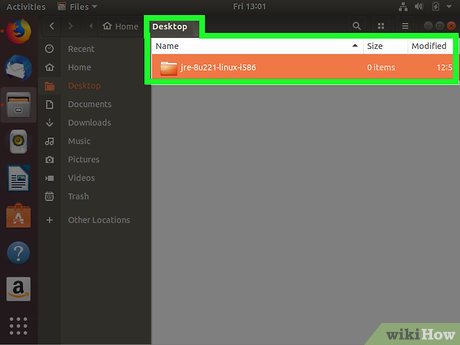 Move the extracted folder if necessary. If you want to install Java in a location other than the "Downloads" folder, do the following:
- Click once the extracted folder to select it.
- PressCtrl+Xto cut the folder.
- Go to the folder you want to use as an installation location and open it.
- PressCtrl+Vto paste in the extracted Java folder.
 Find the extracted folder's "bin" folder. Open the extracted folder, then double-click the folder with the Java version number as its name. This will open the Java folder; you should see a folder entitled "bin" here.
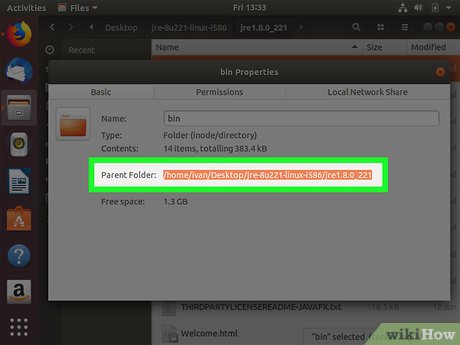 Find the "bin" folder's path. To do so:
- Right-click the "bin" folder.
- Click Properties .
- Expand the "Properties" window by clicking and dragging right its right side until the entire "Location" path is visible.
- Select the "Location" path by clicking and dragging your mouse across it.
- PressCtrl+Cto copy the path.
 Open the".profile" document. The easiest way to do this is through Terminal:
- Open Terminal.
- Type ingedit.profileand press↵Enter.
 Create a new line at the bottom of the document. Scroll all the way down to the bottom of the document, then click below the bottom text entry.
 Enter the Java "Home" path. The home path is the line
export JAVA_HOME=/pathwhere "/path" refers to the path you copied from the "bin" folder; you can paste in the copied path by pressingCtrl+V. Your end result should resemble something like the following:[1]- export JAVA_HOME=/home/name/java/jre1.8.0_181
 Press↵Enterto create a new line. This new line should be directly beneath the "export JAVA_HOME=" line.
 Specify the PATH variable. Type inPATH="$PATH:$JAVA_HOME/bin"and then press↵Enter.
 ClickSave. It's in the top-right corner of the window. Doing so saves your changes to the ".profile" document.
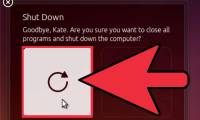
 Restart your computer. This will apply your changes, thus installing Java:
- Click
 in the top-right corner of the screen.
 - Click
 in the resulting drop-down menu.
 - Click Restart when prompted.
- Click
FAQ
What is Folder: How to Install Oracle Java Jre on Ubuntu Linux about?
It provides a structured overview of folder, explains the main context, and highlights practical takeaways for readers.
Why does this topic matter?
Understanding the main concepts helps readers evaluate the issue, avoid common mistakes, and make better-informed decisions.
How should readers use this information?
Use the guidance as a practical starting point, confirm details that may have changed, and follow current product, safety, or security recommendations.
Related Articles
 How to Install Oracle Java on Ubuntu Linux6 minutes read
 How to Enable Oracle Java in Your Web Browsers on Ubuntu Linux5 minutes read
 How to Upgrade Oracle Java on Ubuntu Linux7 minutes read
 How to Install Android on Ubuntu Linux with Eclipse Ide12 minutes read
 Oracle Wants to Turn Java EE into Fully Open Source5 minutes read
 How to Install Java Runtime in Ubuntu5 minutes read
Reader Comments 0
Sign in with email or Google to join the discussion.