Table of Contents
This updated guide examines Ini: How to Use R Language to Connect with an Oracle Database and organizes the essential facts, background, and practical takeaways in clear American English.
Method 1
Instant Client + ODBC packages
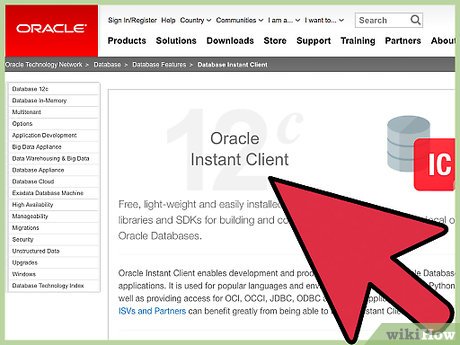 Choose your OS (Linux 32) here: http://www.oracle.com/technetwork/database/features/instant-client/index-097480.html
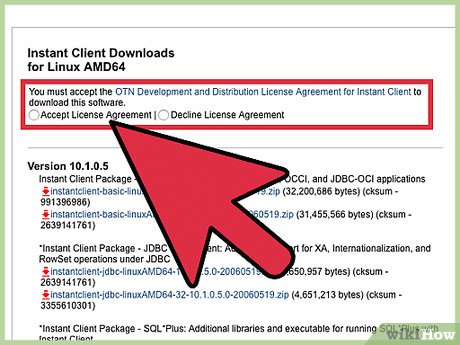 Accept the License Agreement and agree to download:
-
- Instant Client Package - Basic
- Instant Client Package - ODBC
-
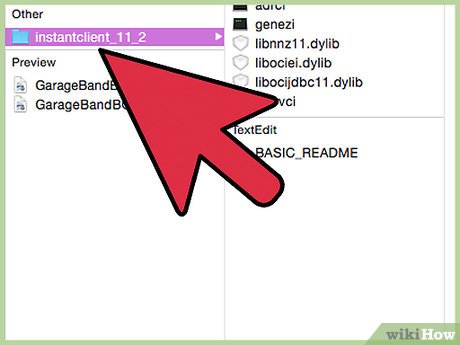 Unzip both packages in the same directory. For example, /home/sven/instantclient_11_2
Method 2
Unixodbc
 Download unixodbc from here: http://www.unixodbc.org/download.html.
 Install it.
Method 3
Edit odbc.ini & odbcinst.ini
 Find the two.ini files. These are located in /etc/ (Ubuntu). Perhaps there are similar files in other locations; if so, it's recommended that you delete them.
 Add a new entry like this:
- For odbc.ini...
- [ORACLE2]
- Driver = ORACLE2
- ServerName = 143.93.91.33:1521/xe
- UserID = your_username
- Password = xxx
- METADATA_ID = 0
- ENABLE_USER_CATALOG = 1
- ENABLE_SYNONYMS = 1
- For odbcinst.ini...
- [ORACLE2]
- Description = oracle driver
- Driver = /home/sven/instantclient_11_2/libsqora.so.11.1
- DontDLClose = 1
- FileUsage = 1
- UsageCount = 1
- Notes: 'Driver' points at the file 'libsqora.so.11.1' in the Instant-client location.
Method 4
Add to your path
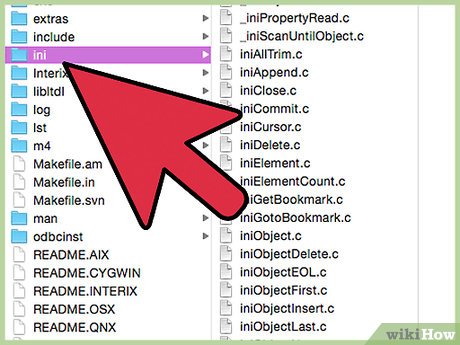 You may need to add 2 entries to your path (example):
- export OCI_LIB=/home/sven/instantclient_11_2
- export LD_LIBRARY_PATH=/home/sven/instantclient_11_2
- export OCI_LIB=/home/sven/instantclient_11_2
Method 5
The R language
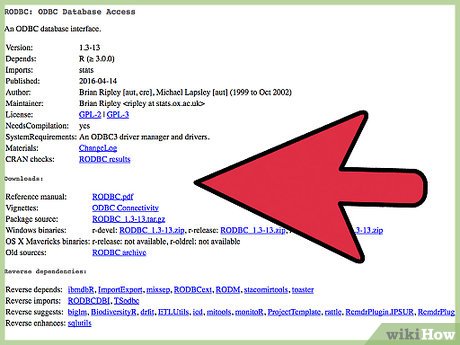
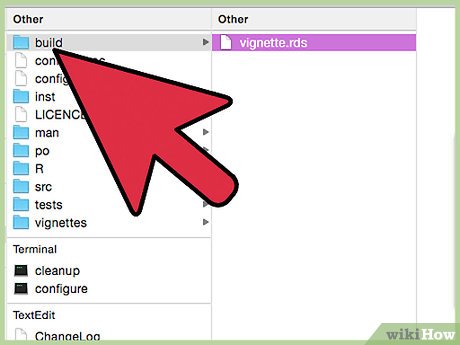 Obtain a package called 'RODBC' to connect with the database. Download it here: http://cran.r-project.org/web/packages/RODBC/index.html
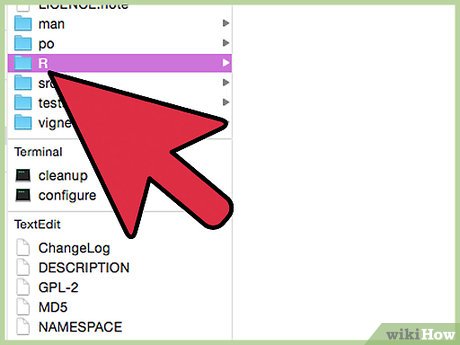
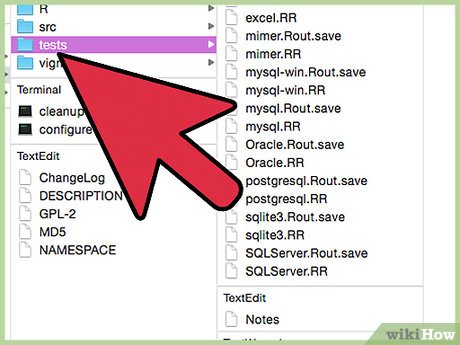 Start R, switch to the location which contains the RODBC package and an enter the following R code:
- install.packages(packagename.tar.gz)
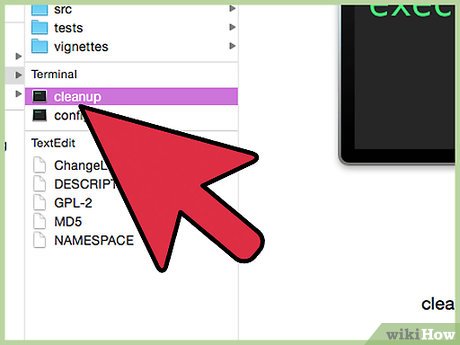 After the package installation you can create a channel:
- ch=odbcConnect("ORACLE2")
- Check the channel with odbcGetInfo(ch)
- If the connection was successful, the console shows something like this:
- odbcGetInfo(ch)
- DBMS_Name DBMS_Ver Driver_ODBC_Ver
- "Oracle" "10.02.0010" "03.52"
- Data_Source_Name Driver_Name Driver_Ver
- "ORACLE2" "SQORA32. DLL" "11.02.0001"
- ODBC_Ver Server_Name
- "03.52" "143.93.91.33:1521/xe"
FAQ
What is Ini: How to Use R Language to Connect with an Oracle Database about?
It provides a structured overview of ini, explains the main context, and highlights practical takeaways for readers.
Why does this topic matter?
Understanding the main concepts helps readers evaluate the issue, avoid common mistakes, and make better-informed decisions.
How should readers use this information?
Use the guidance as a practical starting point, confirm details that may have changed, and follow current product, safety, or security recommendations.
Related Articles
 Oracle Database 11g Set a New World Record4 minutes read
 Oracle Database Has More Errors Than SQL Server6 minutes read
 Oracle Launched an Autonomous Database Exclusively for Business4 minutes read
 How to Study Oracle5 minutes read
 Database: New Worm Variant Exploits Oracle Errors1 minutes read
 How to Become an Oracle Consultant: Step-by-Step Guide9 minutes read
Reader Comments 0
Sign in with email or Google to join the discussion.