Table of Contents
Learning how to free up RAM to help your computer run smoother doesn't have to be complicated. This updated guide presents a clear workflow, practical checks, and troubleshooting advice you can use while completing the process.
Key Takeaways
- Follow the steps to free up RAM.
- Follow the recommended steps in order to avoid common mistakes with free up RAM to help your computer run smoother.
- Review compatibility, settings, or requirements before making changes.
How to Free Up RAM
Method 1: Disable background/startup programs on Windows.
Step 1: Right-select the Taskbar, select Task Manager to open the Task Manager window.

Step 2: On the Task Manager window, switch to the Startup tab to see the applications that start with Windows.

Step 3: Right-click and select Disable to disable Windows startup with applications you feel are unnecessary.

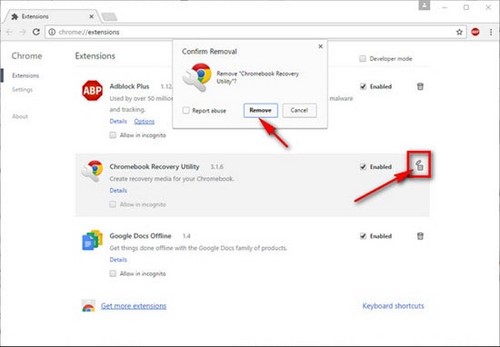
Sometimes extensions installed on the browser also take up many RAM, delete unnecessary extensions to save memory.
Step 4: On the Google Chrome browser window,select More (3 dots icon) > More tools > Extension.

Step 5: You will be redirected to the Google Chrome extensions management page. Here, if you see unnecessary extensions, delete them by clicking on the trash can next to the extension and then selecting Remove.
Method 2: Disable unnecessary services.
You will find many services on Windows that you don't use, disable those services.
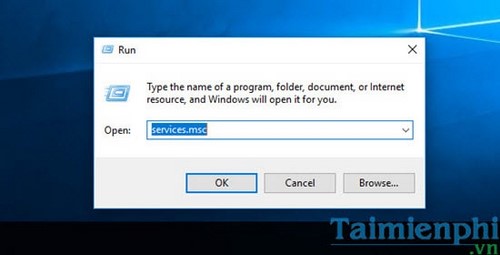
Step 1: Press Windows + R key combination to open Run dialog boxThen type services.msc and press Enter.
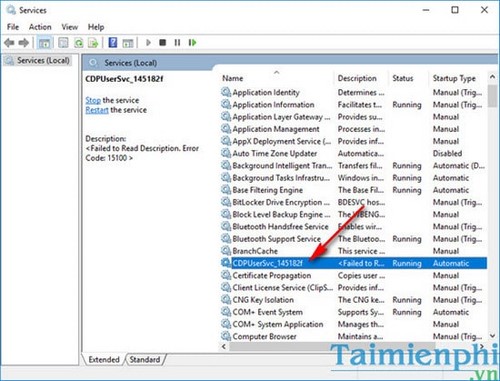
Step 2: On the Services window, you can find unnecessary services and double-select them to open Properties.
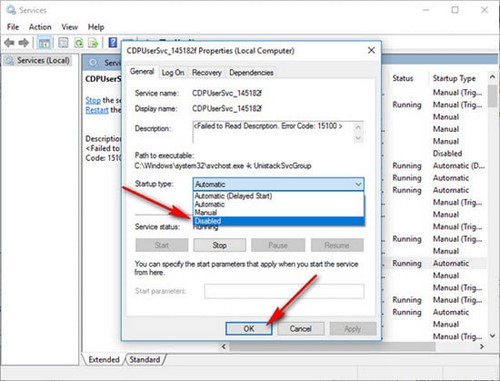
Step 3: Change the Startup Type to Disable to completely disable them on Windows then click OK. Those services will not be able to start unless you change the Startup Type to Automatic or Manual.
Right-select the service you want to stop and select Stop if you want to temporarily stop a service. The service will be temporarily stopped until you Start or restart your computer.
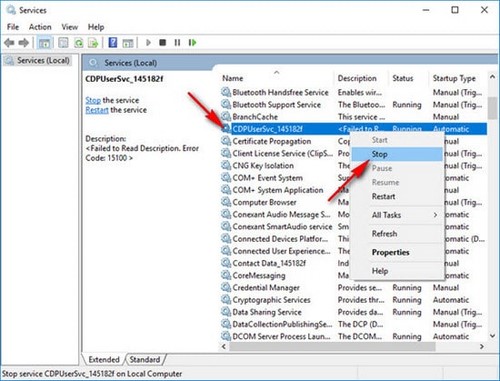
Only stop services that you really don't need, avoid confusion and stop system services.
Method 3: Reduce the amount of RAM occupied.
The RAM will be divided into a large amount to supply your VGA (from 512MB to 1GB) if you use Onboard VGA. To check, please follow the steps below.
Step 1: Press the Windows + R key combinationto open the Run window. Then type devmgmt.msc and press Enter.
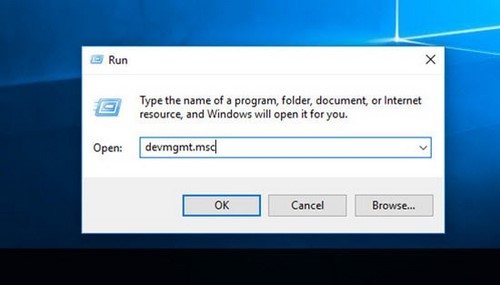
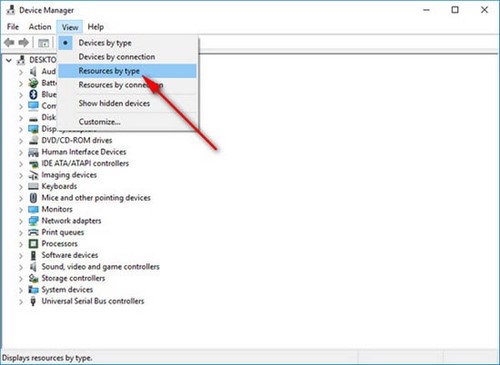
Step 2: On the Device Manager window, select menu View -> Resources by type.
Step 3: Click Memory to check the devices usingyour RAM.
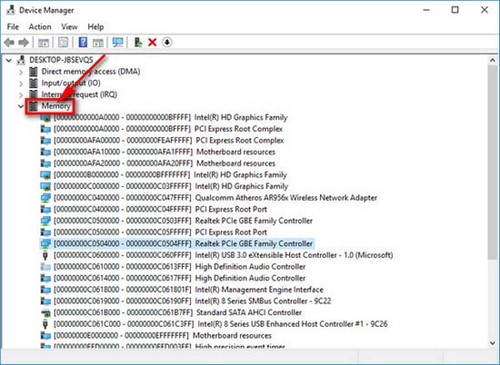
You can remove them to reduce the amount of RAM occupied if there are unnecessary card extensions. You can go into BIOS and open the Onboard Device Configuration or Integrated Peripherals menu to disable devices such as graphics cards, network cards, sound cards, etc.
Method 4: Turn off unnecessary features.
You should not use all the features on Windows if not necessary if your computer has a weak configuration. The Aero interface is quite RAM-consuming, so you can switch to the Classic interface to save maximum memory.
Method 5: Customize File Explorer.
If this tab is suspended, the remaining tabs can still operate smoothly, the same goes for File Explorer if Google Chrome is extremely RAM-consuming thanks to the feature that each tab is a separate process. Although this feature makes you quite comfortable when using File Explorer, it takes up more than 10MB of RAM for each File Explorer window. Turn this feature off to limit the memory occupied.
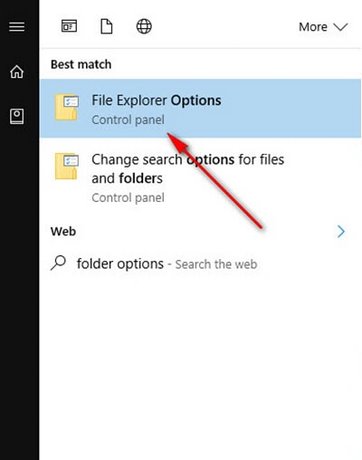
Step 1: On Windows 10, open the Start Menu and type Folder Options to open the Folder Options window. On lower Windows systems such as Windows 7, on the File Explorer window, select Tools -> Folder Options.
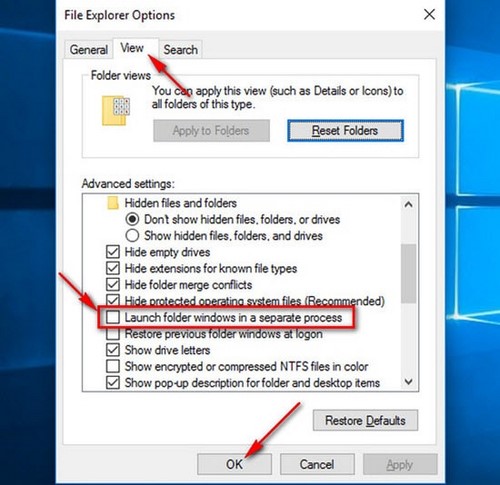
Step 2: On the Folder Options window, switch to the View tab and uncheck the box Launch folder windows in a separate process then click OK to complete.
Method 6: Limit hanging of inactive applications.
For instance, you are using Google Chrome and hanging up your Facebook account when you are running an application and then switch to another task. Google Chrome browser will still consume many your RAM for hanging up that account. So if you feel that it is unnecessary, close the excess tabs or close the application completely.
Method 7: Avoid installing unnecessary tools and software.
You will find many optimization tools on the advertising network to help you run smoother. But that is just advertising, if you install an additional application, that application will definitely take up your memory to install, sometimes there are software that even install programs running in the background on the computer. So don't trust the tools that help you free up RAM. In short, what you need to do is limit the installation and use of unnecessary applications.
Method 8: Track the programs that take up RAM on Task Manager.
You can launch task manager to check which applications are running and how much RAM they are taking up, and stop the application that is taking up the most memory.
Step 1: Right-select the Taskbar and select Task Manager.
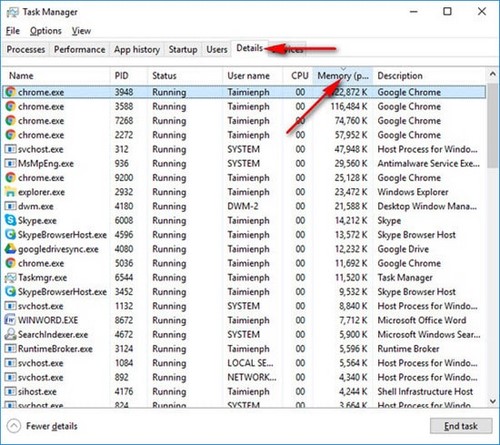
Step 2: On the task manager, switch to the Details tab, left-select the Memory column to sort the applications that use RAM from high to low or vice versa.
Step 3: If you see any unnecessary programs that are taking up RAM, turn them off by right-clicking on the program and selecting End process tree. All programs related to it will be turned off.
Your computer can become slow and unstable if your RAM is full. You should delete junk files, check for background processes, and use support tools like CCleaner. This helps you optimize performance. In addition, limiting the number of applications you open at the same time also helps free up memory more effectively. Consider upgrading to speed up your computer if your RAM is often overloaded.
Final Thoughts
The most reliable way to handle free up RAM to help your computer run smoother is to follow the process in order, verify each important setting, and test the result before moving on. Use the guidance above as a practical reference, then adjust the details for your device, software version, or specific goal.
FAQ
What should I check before I free up RAM to help your computer run smoother?
Use the latest available software, confirm that your device meets the requirements, and make sure you have the necessary permissions, account access, or backup before changing anything.
Why might I be unable to free up RAM to help your computer run smoother?
Common causes include outdated software, missing permissions, incompatible settings, incomplete setup steps, or a temporary network problem. Recheck the process from the beginning and restart the app or device if needed.
Is it safe to free up RAM to help your computer run smoother?
It is generally safe when you use official tools, review every permission, and back up important data before making system-level or account-level changes.
Related Articles
 How to Download and Play Free Fire Max on Computer, Laptop 20254 minutes read
 How to Set Virtual Ram for Win 10 to Make the Computer Run Faster and3 minutes read
 5 Customizations on Windows 10 Make the Game More 'Smooth'6 minutes read
 9 Simple Ways to Make Your Gaming Computer Run Smoother7 minutes read
 Immediately Turn Off These Services on Windows 10 to Play11 minutes read
 What Should I Do to Make My New Laptop Run Smoother?6 minutes read
Reader Comments 0
Sign in with email or Google to join the discussion.