Table of Contents
This guide explains how to create Folders in Outlook 2010, 2013, 2016, with clear steps, practical tips, and important checks before you begin.

Invite you to track how to create folders in Outlook 2010, 2013, 2016, and how to automatically move emails to folders in Outlook that the article shares below.
Create folders in Outlook
To add folders in Outlook you do the following:
Step 1 : First you need to open Outlook 2010, 2013 or 2016, below using Outlook 2016 with Outlook 2010, 2013 you do the same.

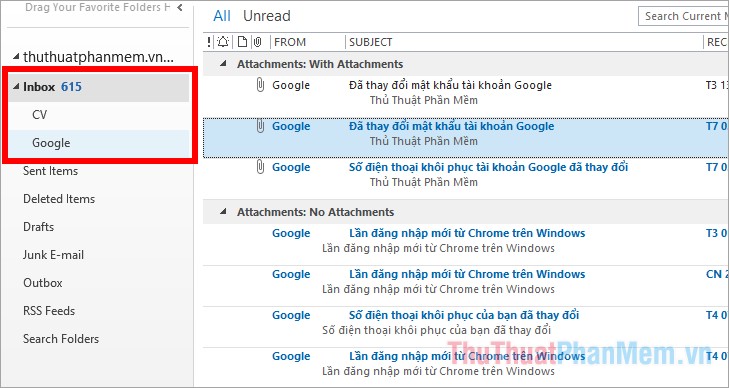
Step 2 : On the Outlook interface, right-click where you want to add the folder and select New folder .
For example, if you want to add a folder to the Inbox section, then right-click Inbox and select New folder .

Step 3: Enter the name for the folder and press Enter on the keyboard to save.

So you've created the folder in Outlook.
How to move mail to a folder using Rules
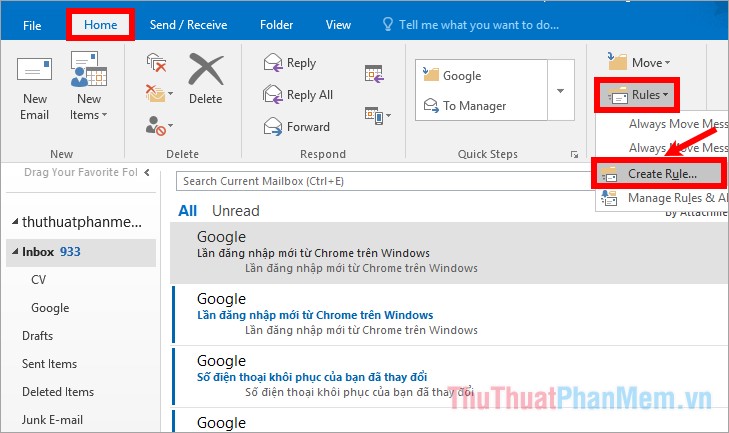
Step 1 : Click on the email you want to move to the newly created folder, then right-click and select Rules -> Create Rule.

Or you choose tab Home -> Rules -> Create Rule.
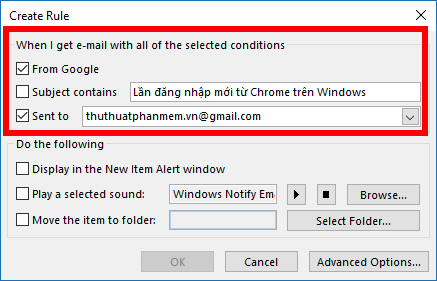
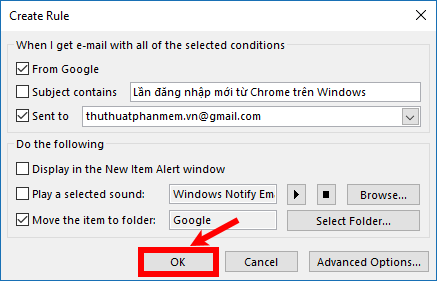
Step 2 : The Create Rule dialog box appears, in the When I get e-mail with all of the selected conditions is the conditions of the email to move into the folder, this time in the From (email sent from), Subject contains (subject of email), Sent to (email sent to you) has been filled with the information from the email you have just selected. You can also change the conditions as you like. If you need to specify the conditions for email to move into the folder, then tick the box before that condition.
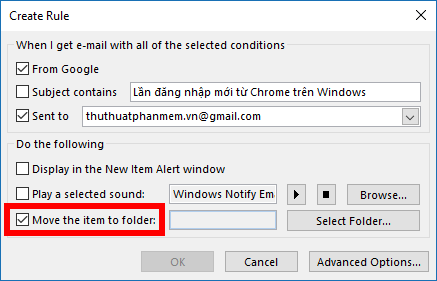
In Do the following section, you have 3 options:
- Display in the New Item Alert window: displays emails in the New Item Alert window on your computer.
- Play a selected sound: plays a sound when an incoming email meets the criteria set.
- Move the item to folder: Move the email to a folder of your choice.
If you want to select an option, then check the option first, and to move emails into folders, check the Move the item to folder box first.
The Rules and Alerts dialog box appears, select the folder you want to move to and click OK . You can also choose New to create a new folder.

After setup is complete you select OK .
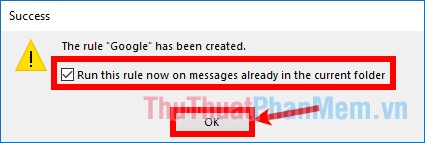
Appear notification laws have been created The rules 'Goole' has been created , you tick select the Run this rule now on messages already in the current folder (run this rule now on messages already in the directory current) and click OK to move the conditional emails into the folder.
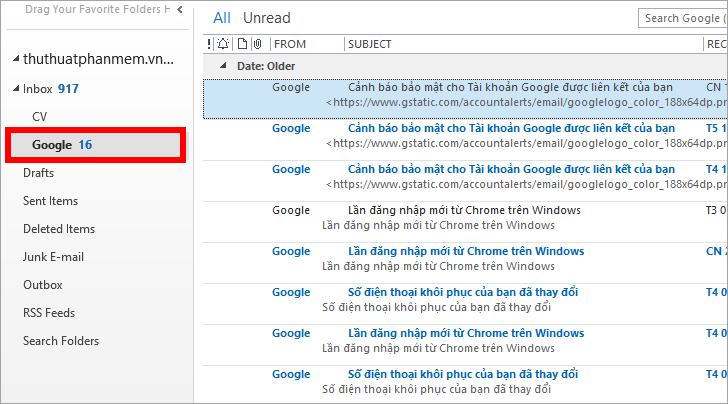
Thus all emails will be moved to the selected folder.
Above the article has shared to you how to create folders in Outlook and how to move emails to the folder you create. Hope this article will help you. I wish you the most effective use of Outlook.
FAQ
What should I know about Create Folders in Outlook 2010, 2013, 2016?
Focus on the key features, requirements, limitations, and practical use cases explained in this guide.
How do I get the best results with Create Folders in Outlook 2010, 2013, 2016?
Follow the recommended steps, use current software or information, confirm compatibility, and review settings before major changes.
Are there any risks or limitations?
Potential limitations depend on compatibility, data quality, cost, privacy, support, and how the product or method is used.
Related Articles
 How to Access Public Folders in Outlook 2016 on PC or Mac2 minutes read
 How to Use Rules in Outlook to Manage Your Inbox7 minutes read
 Steps to Create a New Folder in Microsoft Outlook4 minutes read
 How to Create AI Theme for Outlook3 minutes read
 How to Create a Signature in Outlook to Make Your Emails Look11 minutes read
 Add New, Delete, Edit Outlook Email Alias like?: Outlook Alias3 minutes read
Reader Comments 0
Sign in with email or Google to join the discussion.