Table of Contents
This updated guide explains how to create a monochrome color effect in photoshop with clear steps, practical tips, and useful context. This tutorial will show you a quick and easy way to add a monochrome color effect to your images using Adobe Photoshop. The term monochrome means that the colors in an image are limited to different shades of the same tone or the same primary color.


How to Convert Color Photo to Monochrome
Here's how to create a basic monochrome effect. Once you've got the hang of it, we'll show you how to combine a few steps to speed things up.
Step 1: Add a Solid Color Fill Layer Above the Image
The easiest way to convert a color photo to monochrome is to use a Solid Color fill layer.
In the Layers panel, the original image will appear on the Background layer. Add a Solid Color fill layer above the image by clicking the New Fill or Adjustment Layer icon:

And select Solid Color from the list:

Step 2: Select the Main Color from the Color Picker
The Color Picker opens and the image will be temporarily blocked by whatever color is currently selected.
By default it is black:
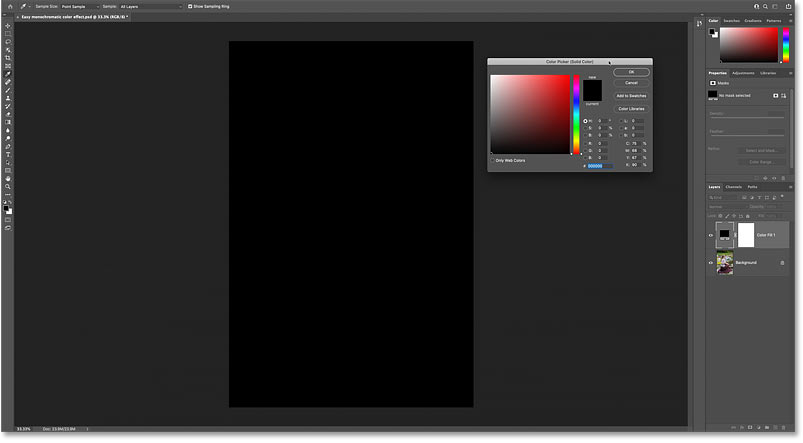
In the Color Picker, select the color you want to use. For now, we just want the hue (primary color). We'll come back and adjust the saturation and brightness in a moment.
for instance, choose pink red:
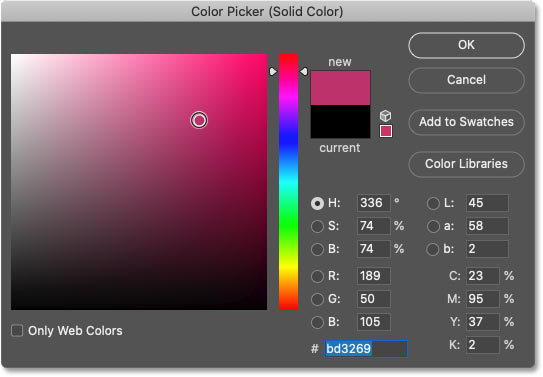
Click OK to close the Color Picker and now the new color blocks the image:
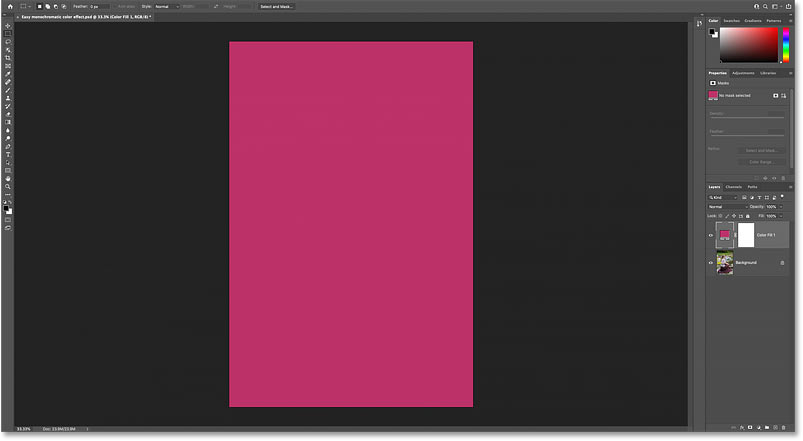
Step 3: Change the Blend Mode of the Fill Layer to Color
Back in the Layers panel, fill the Solid Color layer above the Background layer.
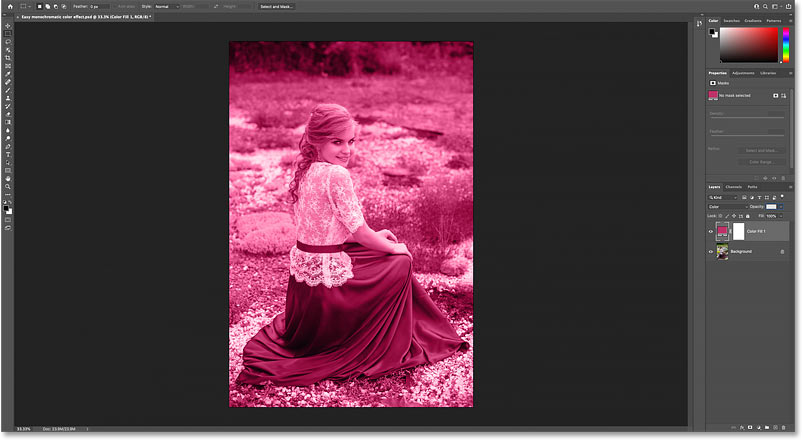
To blend the color from the fill layer with the image below, change the blend mode of the fill layer from Normal to Color :
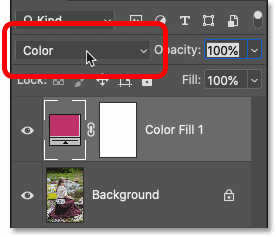
Blend mode Color keeps the tonal (brightness) values of the underlying image but replaces the original colors with colors from the fill layer, creating the original effect:
Step 4: Reopen Color Picker
The only problem, at least in the example case, is that the color saturation is too strong and also too bright.
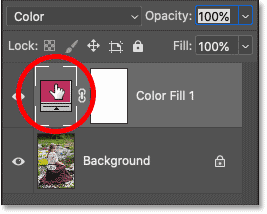
To fix that, reopen the Color Picker by double-clicking on the fill layer's color swatch in the Layers panel:
Step 5: Adjust the Color Saturation and Brightness
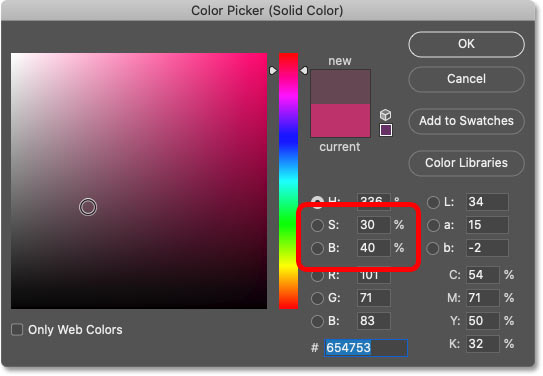
Then adjust the saturation and brightness as needed.
Reduce the Saturation (S value) to 30% and the Brightness (B value) to 40%. choose OK when you're done:
And when the saturation and brightness are reduced, the effect is much more subtle:
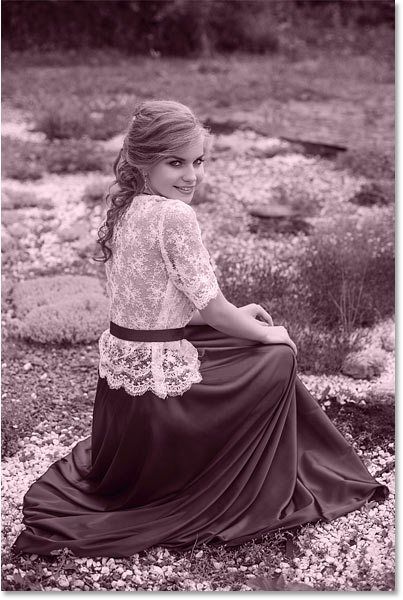
In the Layers panel, you can turn the effect on and off to compare it to the original image by clicking on the fill layer's visibility icon:
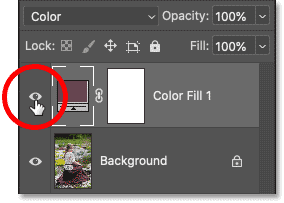
And that is the basics of how to convert a color image to monochrome using the Solid Color fill layer in Photoshop!
A Faster Way to Create a Monochrome Color Effect
Now that we know how to create a standard monochrome effect in Photoshop, here's how to combine a few steps and create a monochrome effect even faster!
Before continuing, delete the fill layer by dragging it to the trash:
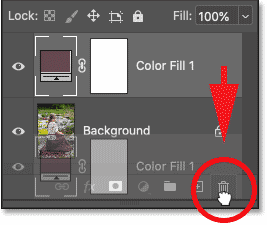
And now, back to the original image:
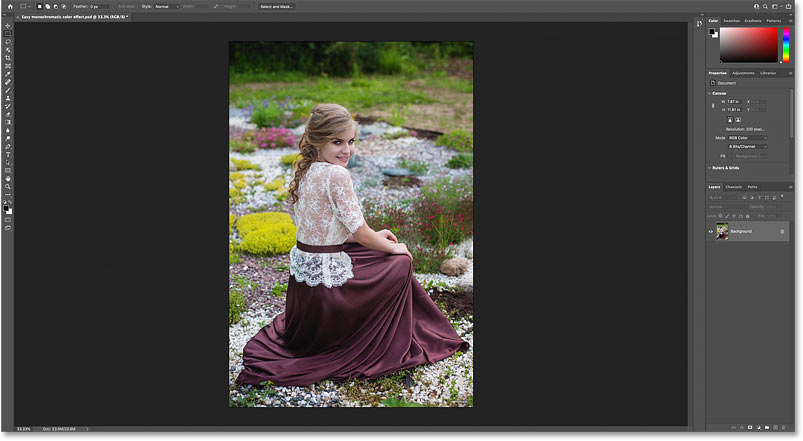
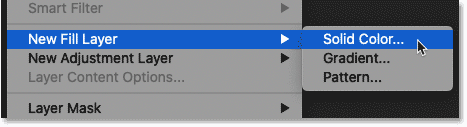
Step 1: Open Layer > New Fill Layer > Solid Color
Instead of adding a Solid Color fill layer from the Layers panel, a better way is to open the Layer menu in the menu bar, select New Fill Layer , and then select Solid Color :
Step 2: Set Mode to Color
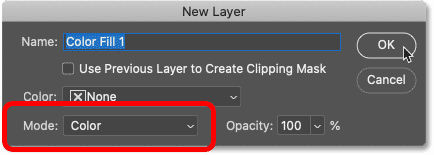
The reason it is better is because this time, Photoshop will open the New Layer dialog box first. And from here, we can change the blend mode of the fill layer before adding it.
Change the Mode (short for Blend Mode) option from Normal to Color :
Step 3: Select a Color from the Color Picker
Then choose OK to close the dialog box and the Solid Color fill layer appears above the image, just like before. But this time, because Photoshop automatically sets the blend mode to Color, the fill layer does not block the image from view. Instead, the color and image blend together.
Since the default color is black, the initial result is a black and white effect:
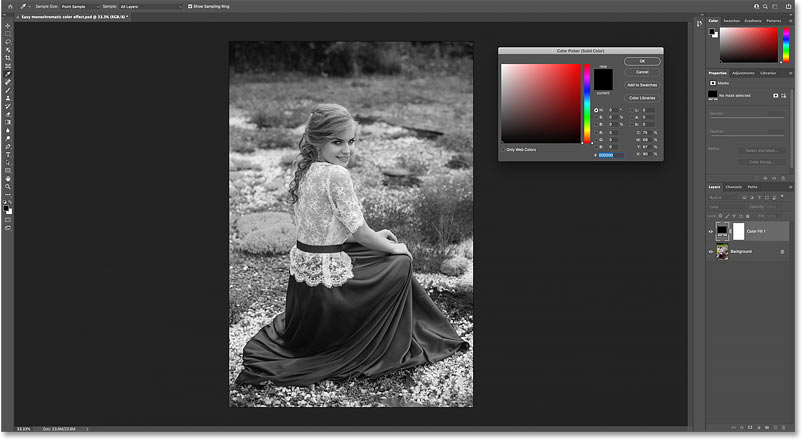
But you can choose any color you like from the Color Picker. This time we'll use a sepia tone by setting the Hue (H) to 30 °, Saturation (S) to 40% , and Brightness (B) to 45% :
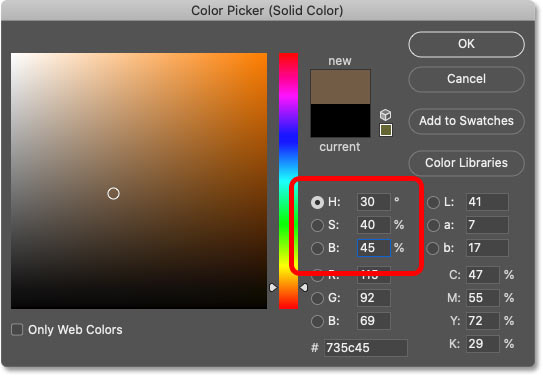
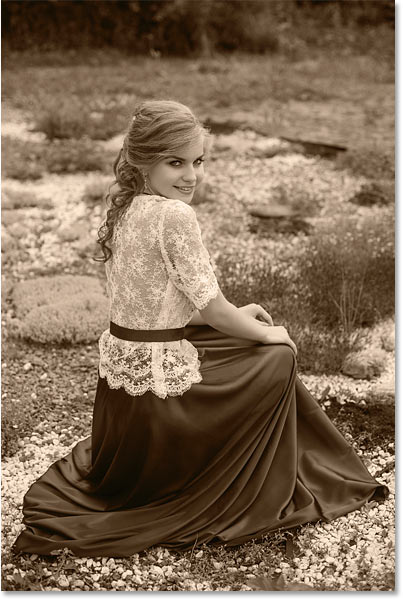
Click OK to close the Color Picker and here is the result:
FAQ
What should I prepare before I create a monochrome color effect in photoshop?
Review the requirements and options in the guide first. Having the correct device, app version, account access, or materials ready helps prevent avoidable errors.
How long does it take to create a monochrome color effect in photoshop?
The time depends on the task and your setup. Most basic steps can be completed quickly, while downloads, updates, scans, or troubleshooting may take longer.
What should I do if the steps do not work?
Repeat the instructions in order, confirm that your software or device is supported, and check permissions, connectivity, and available updates before trying again.
Related Articles
 minutes read
 How to Use the Gradient Tool in Photoshop: Step-by-Step4 minutes read
 How to Use Photoshop CS5 - Part 14: Create Motion Effects6 minutes read
 How to Create Whirlpool Effect on Photoshop: Photoshop Effects4 minutes read
 How to Create a 7-color Text Effect in Photoshop3 minutes read
 Learn How to Create a Fade Effect With Photoshop CS610 minutes read
Reader Comments 0
Sign in with email or Google to join the discussion.