Table of Contents
This updated guide examines How to Copy Files in Linux and organizes the essential facts, background, and practical takeaways in clear American English.
Method 1of 2:
Using the Command Line
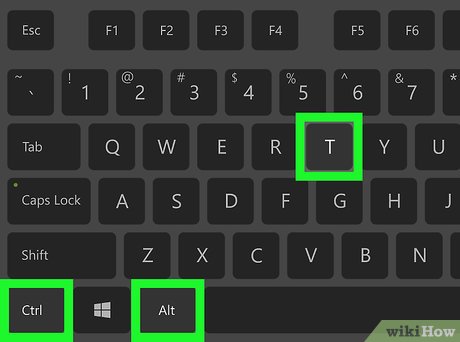 Open Terminal. Click or double-click the Terminal app icon, which usually resembles a black box with a white ">_" on it.
- You can also just pressAlt+Ctrl+Tto open Terminal on most Linux versions.
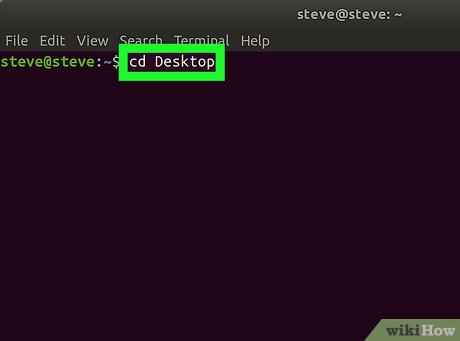 Go to the proper directory. Type incd pathwhere "path" is the address of the folder in which the file you want to copy is located, then press↵Enter.
- For example, to tell Terminal to look for your file in the Desktop folder, you would typecd Desktopinto Terminal.
- Make sure you capitalize the folder's name if necessary.
- If attempting to switch to a folder results in an error, you'll need to enter the folder's entire path (e.g.,/home/name/Desktop/folderinstead of justfolder) here.
 Type in the "copy" tag. This tag iscpwith a space after it.
 Enter a file's name. Type in the name and extension of the file you want to copy aftercpand the space, then add a space.
- For example, if you want to copy a file named "hello", you would typecp hellointo Terminal.
- If the file name has an extension on the end of it (e.g., ".desktop"), make sure you include the extension in the file's name when typing it into Terminal.
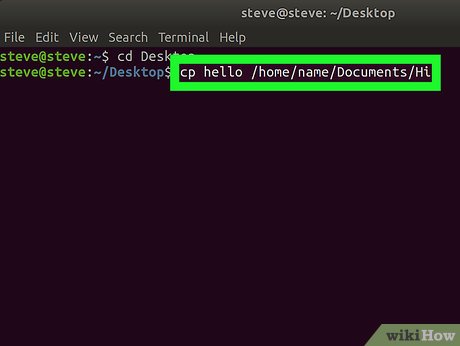 Enter the destination folder. Type in the path for the folder into which you want to copy the file.
- For example, if you want to copy "hello" into a folder named "Hi" that's stored in the Documents folder, you would havecp hello /home/name/Documents/Hi(where "name" is your username) typed into Terminal.
 Press↵Enter. Doing so will run your command. Your file will be pasted into the folder you specified.
Method 2of 2:
Using the Interface
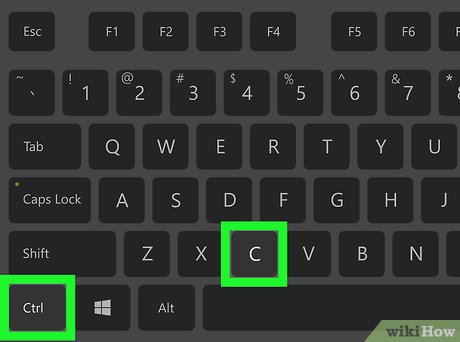 Consider using keyboard shortcuts. As with virtually all operating systems that have user interfaces, you can use keyboard shortcuts to copy and paste files on Linux:
- Click the file you want to copy to select it, or drag your mouse across multiple files to select them all.
- PressCtrl+Cto copy the files.
- Go to the folder into which you want to copy the files.
- PressCtrl+Vto paste in the files.
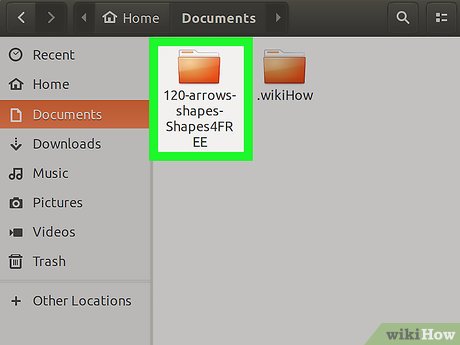 Find the file you want to copy. Go to the location in which the file is located.
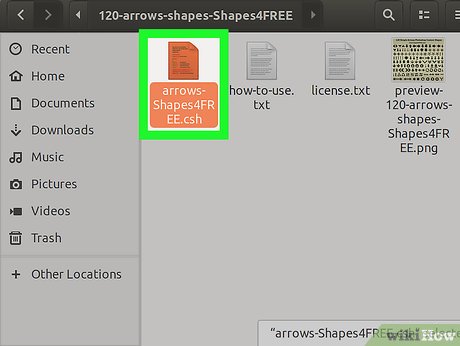 Select the file. Click once the file to do so.
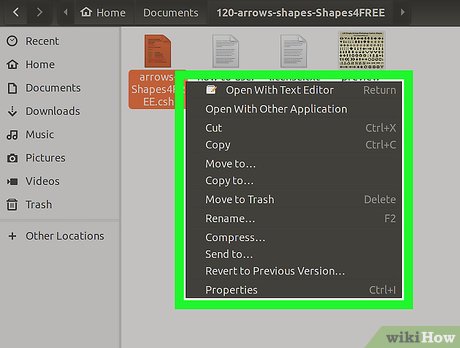 Right-click the file. Doing so will prompt a drop-down menu.
- Some Linux versions will also display a menu bar at the top of the screen. If so, you can click Edit instead of right-clicking the selected file.
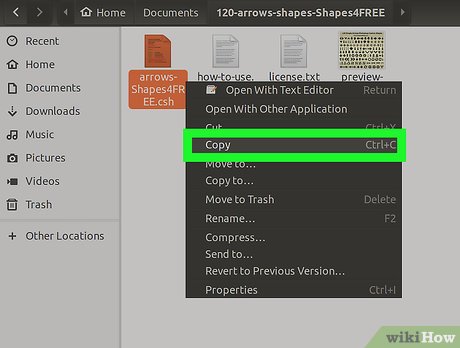 ClickCopy. It's in the drop-down menu. This copies the selected file.
- You may click Copy... or Copy File on some versions of Linux.
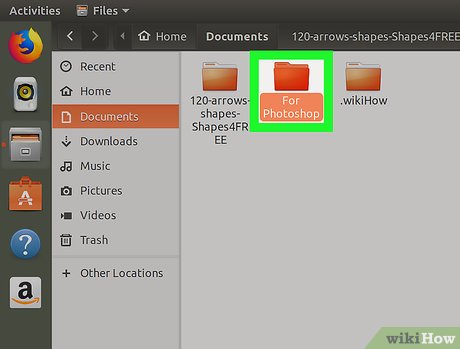 Go to the destination folder. Find the folder into which you want to paste the file.
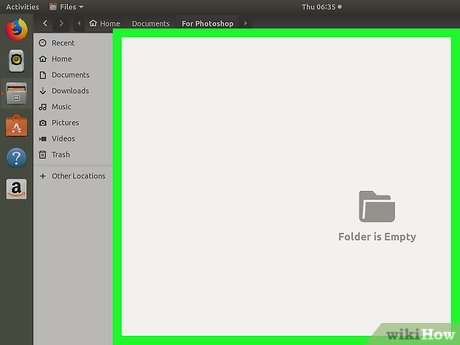 Right-click an empty space. This will create a drop-down menu in the folder.
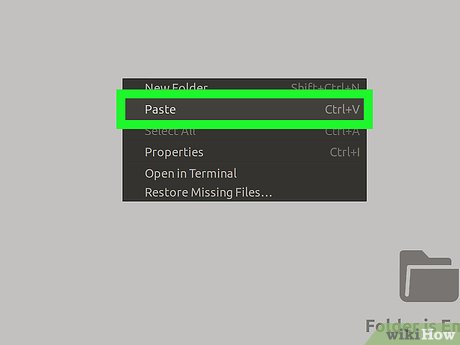 ClickPaste. It's in the drop-down menu. Doing so pastes in your copied file.
FAQ
What is How to Copy Files in Linux about?
It provides a structured overview of file, explains the main context, and highlights practical takeaways for readers.
Why does this topic matter?
Understanding the main concepts helps readers evaluate the issue, avoid common mistakes, and make better-informed decisions.
How should readers use this information?
Use the guidance as a practical starting point, confirm details that may have changed, and follow current product, safety, or security recommendations.
Related Articles
 How to Copy and Rename Files in Linux7 minutes read
 Moving Files Between Linux Systems with SCP11 minutes read
 How to Copy (and Paste) Files and Folders from the Linux Command5 minutes read
 How to Copy Files from Mac to USB3 minutes read
 How to Copy Files: 4 Ways to Copy Files Faster in Windows4 minutes read
 4 Methods to Copy Linux Hard Drive10 minutes read
Reader Comments 0
Sign in with email or Google to join the discussion.