Table of Contents
This updated guide examines How to Choose and Change Object Colors in Photoshop Fastest and organizes the essential facts, background, and practical takeaways in clear American English.

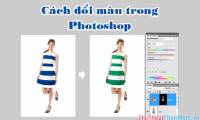
There are actually many ways to select and change the colors of objects in Photoshop, but the video below will guide you how to perform the most common and fastest but still highly effective to save time.
Select a color range
To select different colors, create a new layer -> click Select -> select Color Range -> use the Eyedropper tool to click on the color you want to sample.
For more accurate options, you can try the fuzziness tool.
To add or remove selections, you can use the Eyedroppers tool with plus and minus signs next to them.
Adjust the color
After selecting the color on the layer, you adjust or change the color for the selection -> select New Adjustment Layer -> Hue / Saturation -> then drag and drop Hue / Saturation parameters.
Refine Layer Masks
To remove small unwanted parts in a selection, you can use the Brush tool on the Layer Mask.
Visit the link below to download the image file for practice.
https://phlearn.com/wp-content/uploads/2018/03/Select-Color-Before.jpgFAQ
What is How to Choose and Change Object Colors in Photoshop Fastest about?
It provides a structured overview of change object colors in Photoshop, explains the main context, and highlights practical takeaways for readers.
Why does this topic matter?
Understanding the main concepts helps readers evaluate the issue, avoid common mistakes, and make better-informed decisions.
How should readers use this information?
Use the guidance as a practical starting point, confirm details that may have changed, and follow current product, safety, or security recommendations.
Related Articles
 How to Change Colors for Photos in Photoshop: How to Use Photoshop5 minutes read
 How to Change Colors in Photoshop Quickly and Accurately3 minutes read
 How to Choose All the Same Colors in Photoshop6 minutes read
 How to Change the Font Color in Photoshop3 minutes read
 Easy Guide to Changing Colors in Photoshop for Beginners4 minutes read
 How to Use the Gradient Tool in Photoshop: Step-by-Step4 minutes read
Reader Comments 0
Sign in with email or Google to join the discussion.