Table of Contents
How to Assign Permissions to Delete Any Folder or File on is easier to understand when the core ideas are paired with practical examples. The sections below explain the topic clearly, highlight useful steps, and point out details that can prevent common errors.
In some cases when you delete a folder or file on a Windows computer but cannot delete it and the error message appears on the screen " You need permission to perform this action ". To be able to delete folders and files, you must assign permission permissions to delete them.

To assign permissions to delete any folder or file on Windows, follow the steps below:
1. First navigate to the folder or file that you are trying to delete on Windows Explorer (such as C: Windowsaddins).
2. Right-click the folder, select Properties => tab Security => Advanced .
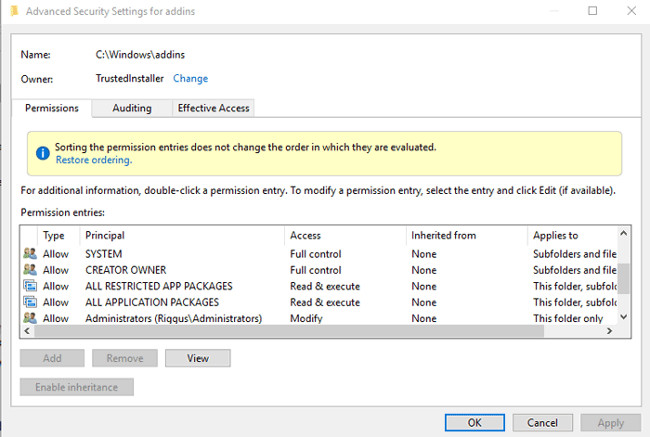
3. On the Advanced Security Settings window, click Change next to the Owner in the top corner.
4. At this time, on the screen, select the Select User or Group window, enter the Windows account email address into the box Enter the object name to select. If unsure, click Advanced on the new window and then click Find Now , then double-click on the Windows account name on the search results displayed on the screen.
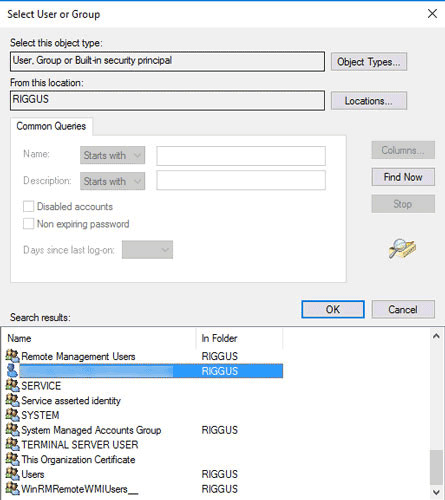
Go back to the previous window, enter your account name in the box Enter the object name to select and click OK .

You will return to the Advanced Security Settings window again. Here select ' Replace owner on subcontainers and objects ' to provide full permission to edit and delete all files contained in the folder you want to delete. Click OK.
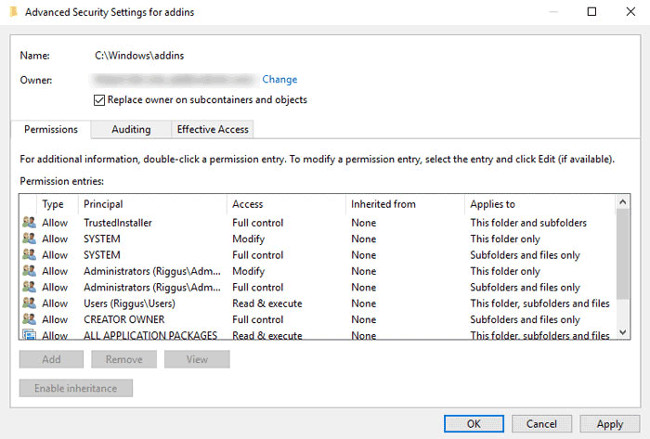
5. In the Windows Explorer window, right-click the folder you want to delete again, select Properties => Advanced => Add .
6. On the Permission Entry window, click Select a principal in the top corner, add the Windows user name to the frame 'Enter the object name to select like you did before and click OK .
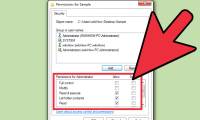
7. Return to the Permission Entry window and select Full Control and then click OK.
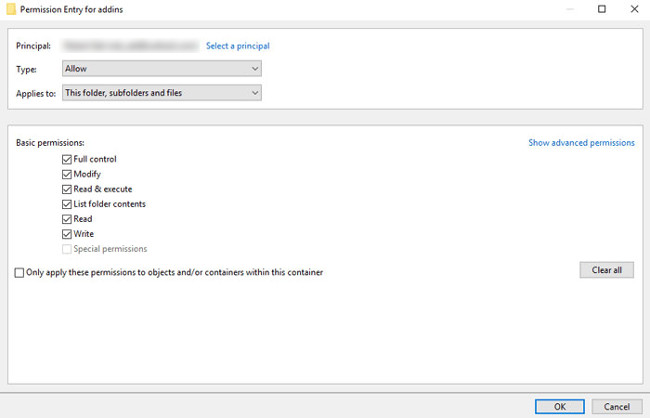
8. On the Advanced Security Settings window click OK to finish.
Refer to some of the following articles:
- Use CMD to create an 'undeleted' folder on Windows
- Guide to quickly fix "Inaccessible Boot Device" error on Windows 10/8/7 and Windows Vista
- Privacy control on Windows 10 computers with the following 5 tips
Good luck!
FAQ
What is How to Assign Permissions to Delete Any Folder or File on?
In some cases when you delete a folder or file on a Windows computer but cannot delete it and the error message appears on the screen " You need permission to perform this action ".
Why is How to Assign Permissions to Delete Any Folder or File on important?
A clear understanding of How to Assign Permissions to Delete Any Folder or File on helps you make informed decisions, avoid common mistakes, and use the relevant tools or techniques more effectively.
How should beginners approach How to Assign Permissions to Delete Any Folder or File on?
Start with the fundamental concepts, follow the examples step by step, and test each change in a safe environment before applying it to important systems or data.
Related Articles
 How to Change File Permissions on Windows 77 minutes read
 How to Assign Administrator Permissions on a Windows 7 Computer?4 minutes read
 How to Delete Read-Only Files on Linux9 minutes read
 Why Does USB Drive, Memory Card. .. Use FAT32 Format Instead of NFTS?7 minutes read
 How to Access Windowsapps Folder on Windows 10 and Windows 8?6 minutes read
 What Is the Windows.old Folder and How Do You Delete It?5 minutes read
Reader Comments 0
Sign in with email or Google to join the discussion.