Table of Contents
This updated guide examines Free Your Computer RAM with Just 4 Effective Commands and organizes the essential facts, background, and practical takeaways in clear American English.
Step 1:
First of all, download Empty Standby List by following the link below:
- Download the Empty Standby List tool for free
After completing the software download, please move or copy the tool to the C: Windows drive on the computer .
Step 2:
Press Windows + R key combination to open the Run window. Then enter the cmd keyword and click OK to run the command prompt command window.

Step 3:
After that, we will clean up RAM with the following 4 commands:
Note , you open CMD with Administrator rights on Windows. After entering the command press Enter to start.
1. EmptyStandbyList.exe workingsets:
This command will help clean up the memory used by applications and processes running on the machine.
Enter the EmptyStandbyList.exe command to workingsets to free up memory.

Once done, the system will transfer all the data on RAM to the paging files, the exchange files, the virtual memory on the hard drive. The performance of the device will sometimes decrease but not significantly, but the RAM is clean.
2. EmptyStandbyList.exe command modifiedpagelist:
On the system, modified page file is all content written to the storage drive for future use. And they will be switched to temporary standby when not in use, taking up some of the RAM memory.
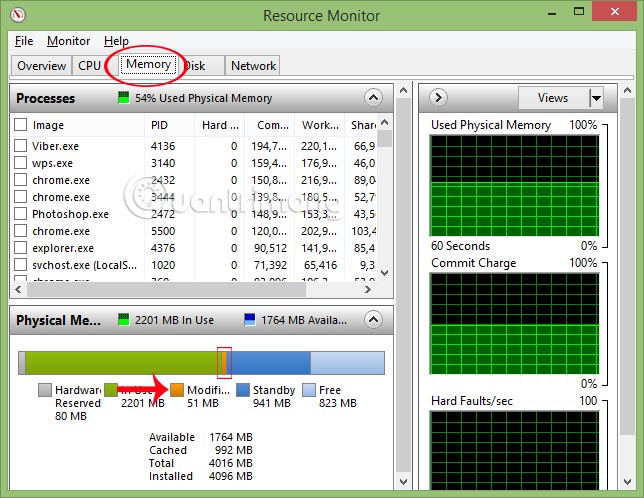
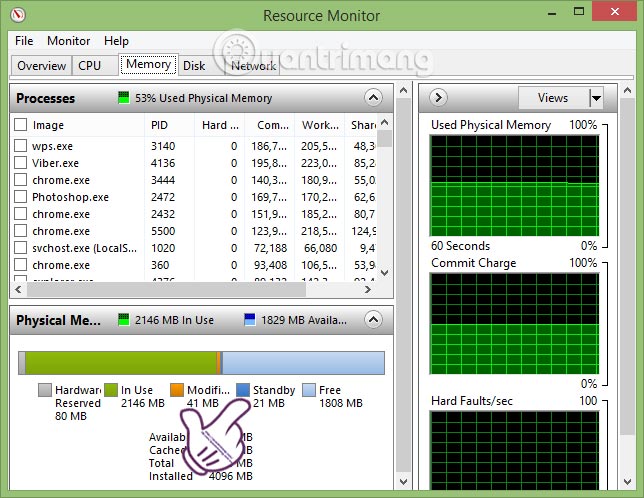
If you want to check how much the modified page file takes up on your computer, enter the keyword Resources Monitor into the Windows search engine.
Then click on the Memory tab and see the Modified item will have a yellow color along with the usage capacity.
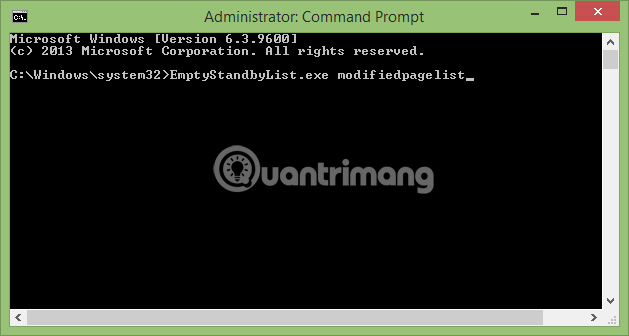
To clean the modified page file, type the EmptyStandbyList.exe command modifiedpagelist .
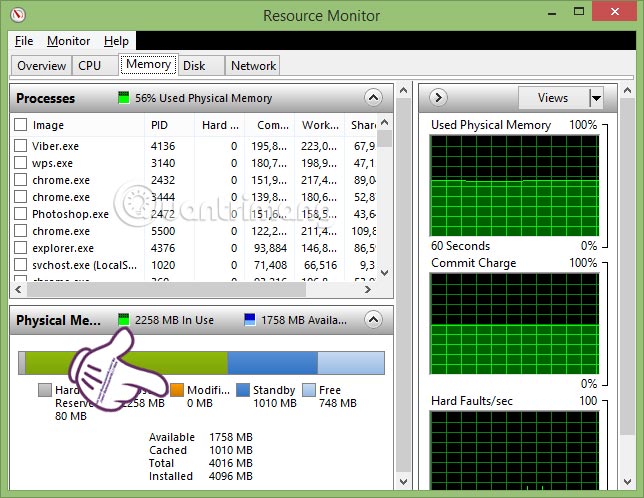
Shortly thereafter, when we re-examine the Resources Monitor window, the Memory section will see Modified shrinking to zero, meaning it has been cleaned up completely.
3. Standbylist EmptyStandbyList.exe command:
The main task of this command is that the entire Standby memory will be cleaned up quickly.
You type standbylist EmptyStandbyList.exe command :
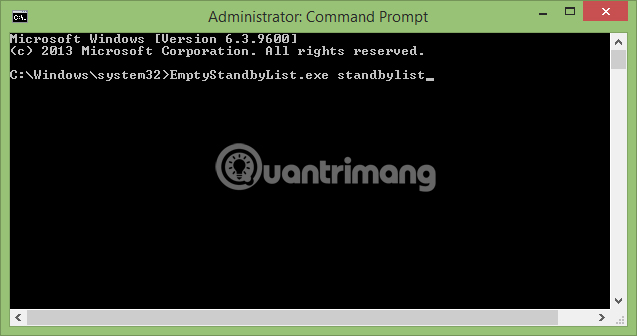
Checking Standby in the Memory tab of the Resources Monitor window will see the Standby section reduce the capacity pretty much. If we do not open too many applications, the site will find the computer works very smoothly and smoothly.
4. EmptyStandbyList.exe command priority0standbylist:
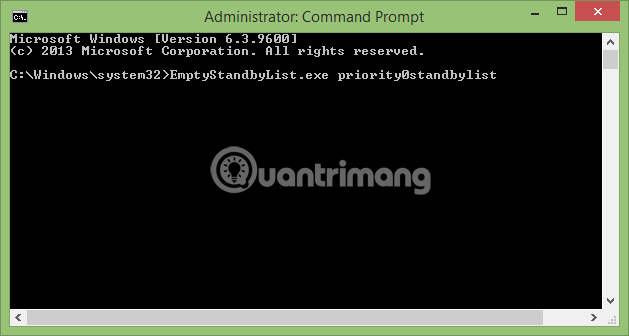
We can clean up unused content but still exist in memory with this command.
Type EmptyStandbyList.exe command priority0standbylist :
Step 4:
The above 4 commands will help your computer work smoothly, when cleaning up RAM quickly. And to be able to use these four commands immediately when needed, you can create shortcuts for each command.
Step 1:
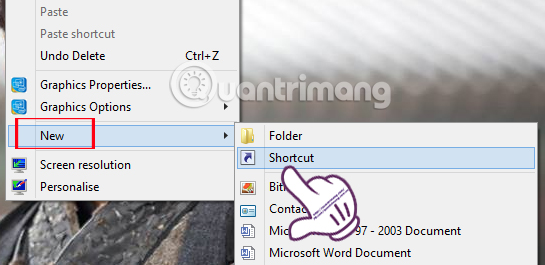
At the computer screen, right-click and choose New> Shortcuts .
Step 2:
Immediately after, the Creator window interface appears. At the path pane, enter the following path: C: WindowsSystem32cmd.exe / c Command.
For example, I want to create a shortcut for the first command, which will enter the path C: WindowsSystem32cmd.exe / c EmptyStandbyList.exe workingsets.
Then click Next .

Step 3:
Switch to the new window interface, Type a name for this shortcut , we can rename the command to be easy to remember. Finally click Finish to complete.
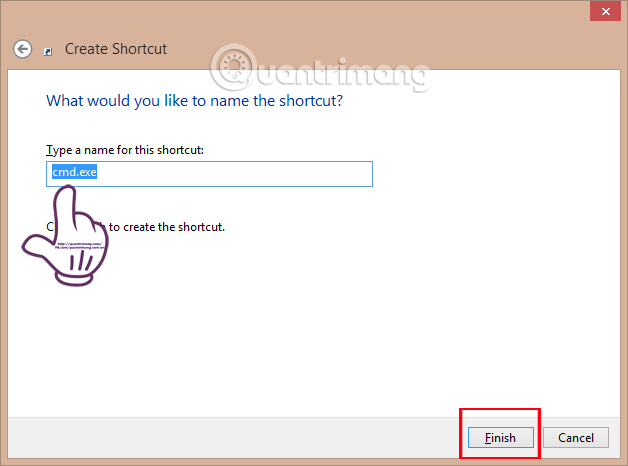
Going back to the screen, the shortcut of the command appears on the screen.

Above is a tutorial on how to clean up RAM on your computer with just 4 simple commands using the Empty Standby List tool. No need to install, just download it and then enter the command line on CMD that you can use immediately the RAM cleaning function of the tool already. Pretty convenient right?!
Refer to the following articles:
- 8 easy ways to free RAM make the machine run faster
- Summary of tips to fix computer errors Windows 10/8 / 8.1 / 7 and Windows XP running slowly
- How to use CCleaner software effectively
I wish you all success!
FAQ
What is Free Your Computer RAM with Just 4 Effective Commands about?
It provides a structured overview of Empty Standby List frees RAM, explains the main context, and highlights practical takeaways for readers.
Why does this topic matter?
Understanding the main concepts helps readers evaluate the issue, avoid common mistakes, and make better-informed decisions.
How should readers use this information?
Use the guidance as a practical starting point, confirm details that may have changed, and follow current product, safety, or security recommendations.
Related Articles
 Command Prompt: Summary of the Common Run CMD Commands8 minutes read
 999+ AI Commands for Learning21 minutes read
 10 Most Effective Antivirus Software for Windows 201910 minutes read
 15 Common Command Prompt Commands You Should Know on Your Computer12 minutes read
 Commonly Used CMD Commands on Windows6 minutes read
 The Most Complete Logo Commands 20267 minutes read
Reader Comments 0
Sign in with email or Google to join the discussion.