Table of Contents
This updated guide explains how to Change the Default Audio Player in Windows 10 through clear steps, practical examples, and important checks that help prevent common errors.
This guide will show you various ways to change the default audio output (output) device in Windows 10.
Change the Default Media Player from the Volume Icon on the Taskbar
1. Click the Volume icon in the notification area of the Taskbar.
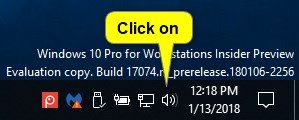
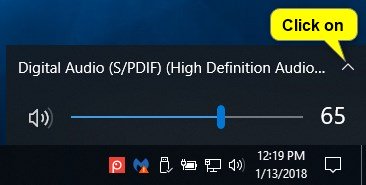
2. Click the expand arrow above the volume control.
Note : You will not see an extended arrow if there are not many audio players.
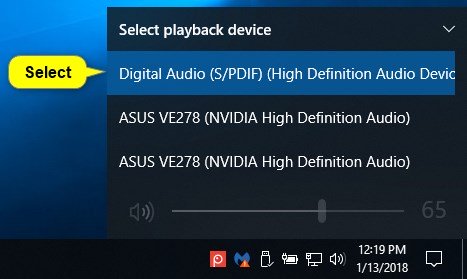
3. Click the transmitter you may need to use from the menu. Windows will switch to it.
Change the Default Audio Device from Settings
Note : This option is only available starting from Windows 10 build 17035.
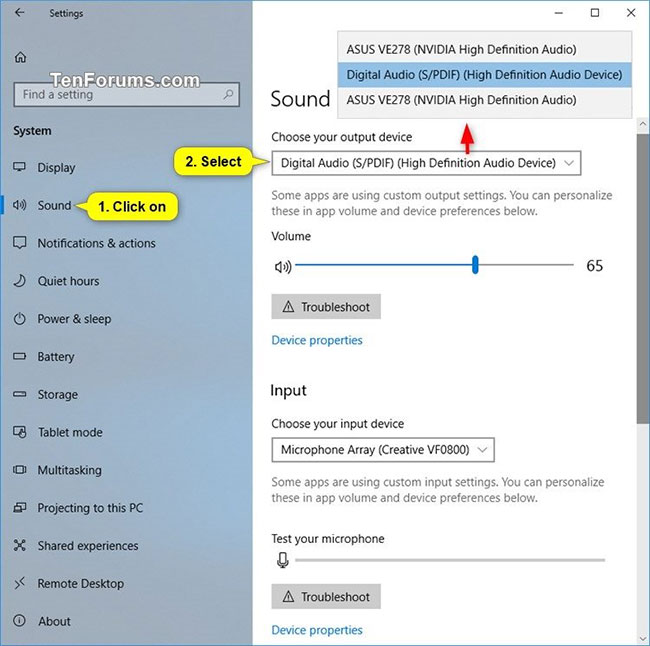
1. Open Settings and click the System icon .
2. Click Sound on the left side and select the desired output device from the Choose your output device drop-down menu on the right.
Note : You will not be able to choose if there is only one audio player.
3. When done, you can close the Settings if desired.
Change the Default Audio Device from Control Panel
1. Open Control Panel (icon view) and click the Sound icon .
If you like, you can open Run ( Win + R ), copy and paste the below command into Run , then click OK to directly open "Playback" devices in the Sound control panel .
rundll32.exe shell32.dll,Control_RunDLL mmsys.cpl,,0
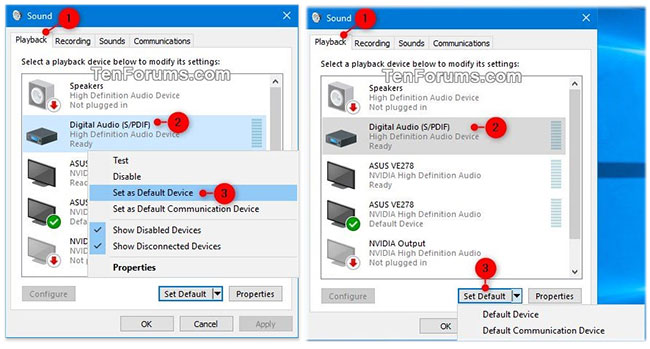
2. Click the Playback tab and perform one of the actions you may need to use below to set the default player.
- Right-click or hold and hold on the transmitter, and then select Set a Default Device .
- Select a transmitter and:
- Click Set Default to set both "Default Device" and "Default Communications Device".
- Click the arrow to the right of the Set Default drop-down menu and click Default Device.
- Click the arrow to the right of the Set Default drop-down menu and click Default Communication Device . This is not "Default Device".
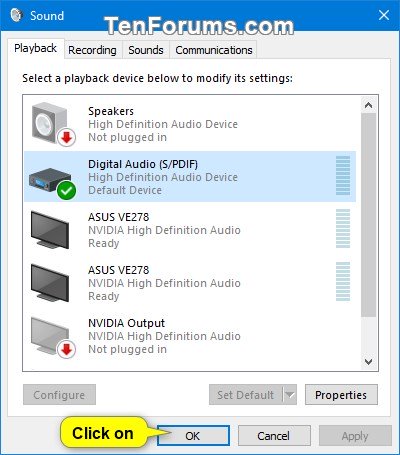
3. Click OK when done.
Change the Default Audio Device from Game Bar
Note : This option is only available when starting from Windows 10 build 17692.
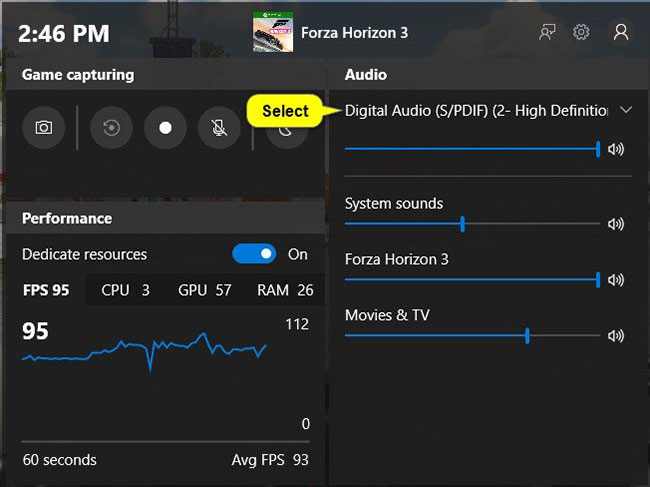
1. Open the Game Bar ( Win + G ).
2. Select the default audio output device you want.
Note : You will not be able to select if there is only one audio output device.
3. When done, close the Game Bar if you like.
FAQ
What is the easiest way to Change the Default Audio Player in Windows 10?
Start with the requirements in this guide, then follow each step in order. Check the result after every major change so problems are easier to identify.
Can beginners follow these instructions?
Yes. The process is organized into practical steps, and you can repeat any step before moving forward.
What should I check if the method does not work?
Confirm your software or device version, permissions, settings, file format, and internet connection when the task depends on online services.
Related Articles
 How to Set Default Video Player Windows 113 minutes read
 Set Up VLC Media Player as the Default Multimedia Player on4 minutes read
 Download GOM Audio: a Free, Lightweight and Easy-to-use4 minutes read
 3 Best Free Codec Media Packages for Windows 74 minutes read
 How to Customize the Soundcloud Audio Player5 minutes read
 Change the Look of VLC Program: VLC Player6 minutes read
Reader Comments 0
Sign in with email or Google to join the discussion.