Table of Contents
A VPN adds encryption and sends traffic through another server, so some increase in latency and some loss of throughput are normal. The safest way to improve performance is to shorten or simplify that path, choose an efficient supported protocol, and remove local bottlenecks—not disable encryption.
Measure the slowdown before changing settings
- Connect by Ethernet or use strong Wi-Fi near the router.
- Pause backups, downloads, streaming, and updates.
- Run three tests without the VPN and record the median download, upload, and latency.
- Connect to the VPN and repeat with the same device and test service.
- Also test the actual application that feels slow; a speed-test server may use a different route.
TipsMake's guide to accurate internet speed testing explains how to keep results comparable. If the baseline is already poor, fix the ISP, router, Wi-Fi, or device before blaming the VPN.
1. Choose a nearby, lightly loaded server
Start with the VPN application's recommended or geographically nearby server. A shorter path often reduces latency, but geography is only a clue: peering and server load can make a slightly more distant location faster. Test two or three nearby options rather than assuming one country is always best.
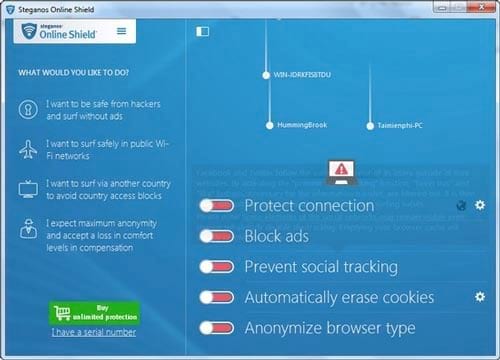
- Use a local server for general browsing and calls.
- Use a required corporate gateway when accessing work resources; do not substitute an unapproved endpoint.
- Avoid double VPN, Tor over VPN, and multi-hop modes unless the additional privacy benefit is necessary.
2. Try another secure protocol
Use the protocol options built into the official VPN app. Modern choices such as WireGuard or a provider's audited WireGuard-based protocol are often efficient. IKEv2 can perform well on mobile devices that move between Wi-Fi and cellular networks. OpenVPN remains widely compatible.
When OpenVPN offers both transports, UDP is normally the performance-oriented choice; OpenVPN documents UDP for optimal performance and TCP for restrictive networks. TCP is useful when UDP is blocked, but tunneling TCP traffic inside a TCP VPN can amplify retransmission and congestion problems.
WireGuard's design uses a compact protocol and modern cryptography, but actual speed still depends on the provider's implementation, server, device, and route. Choose only protocols supported by the service or administrator; never downgrade to obsolete PPTP for speed.
3. Run the VPN on suitable hardware
A VPN on one computer or phone uses that device's CPU and protects only that device. A VPN on the router covers many clients, but consumer routers may have limited encryption throughput. Check the router manufacturer's measured VPN-client performance rather than its ordinary routing or Wi-Fi headline speed.
- If only one or two devices need the VPN, the official device app may be faster and simpler.
- If every device must use a site-to-site or full-home tunnel, choose router hardware designed for the required encrypted throughput.
- Update router firmware and the official VPN client.
Do not remove a required corporate VPN from the router or gateway without authorization.
4. Fix the underlying network
A VPN cannot compensate for weak Wi-Fi, packet loss, or upload saturation. Compare Ethernet and Wi-Fi, move closer to the router, select an appropriate band, and stop competing transfers. Follow TipsMake's slow Wi-Fi diagnostic workflow if the direct connection is inconsistent.
Wired Ethernet is especially useful for high-throughput transfers and stable video calls. It does not make the VPN server faster, but it removes wireless interference from the path.
5. Use split tunneling only when the traffic model allows it
Split tunneling sends selected apps or destinations outside the VPN. It can reduce load and improve performance for traffic that does not need the tunnel, but it also exposes that traffic to the local network and ISP and may bypass organizational controls.
- Use only the VPN app's supported split-tunnel feature.
- Keep banking, work, or other sensitive traffic inside the tunnel when required by policy.
- Do not split internal corporate resources unless IT explicitly approves it.
- Test DNS and IP behavior afterward to confirm traffic follows the intended path.
Other checks that often help
- Change networks: compare home Wi-Fi, Ethernet, and an authorized mobile hotspot. One network may block or degrade a VPN protocol.
- Check the kill switch: if internet stops after a disconnect, reconnect or exit the VPN cleanly; do not disable the kill switch permanently without understanding the privacy impact.
- Review MTU only for a specific symptom: stalls on certain sites or large transfers can indicate fragmentation. Use the provider's support instructions instead of guessing a value.
- Disable conflicting tools: do not run multiple VPNs, proxy clients, or packet filters at the same time unless the configuration is intentional.
- Reinstall the official app: export or record required profiles first, then use the vendor's current installer.
What not to do
- Do not disable encryption or certificate verification.
- Do not install “VPN booster” utilities or registry cleaners.
- Do not choose an unknown free proxy solely for a faster result.
- Do not assume UDP is inherently unreliable for streaming or gaming; many real-time applications use UDP deliberately.
- Do not reset all Windows networking until you have ruled out the server, protocol, and base connection.
When the provider is the bottleneck
If several nearby servers and secure protocols remain slow while the direct connection is healthy, contact the VPN provider with the app version, protocol, server, device, ISP, test times, and comparative results. A reputable service should be able to identify server load, routing problems, or a client issue.
When choosing a replacement, compare current protocol support, independent security audits, privacy policy, server transparency, support quality, and trial or refund terms—not marketing speed alone. TipsMake's VPN selection guide explains the major criteria.
Related Articles
 How to Check If Your ISP Is Throttling Your Internet Speed9 minutes read
 5 Great Ways to Increase the Speed of 3G Internet5 minutes read
 How to Speed up Internet Win 10 Thoroughly4 minutes read
 Tell You 5 Ways to Increase Network Speed Extremely Fast and Effective4 minutes read
 How to Speed Up Internet on Windows 106 minutes read
 Speed up Internet Connection on Windows 10 Computers5 minutes read
Reader Comments 0
Sign in with email or Google to join the discussion.