Table of Contents
Claude can help review code produced by another AI assistant, but a plausible bug report does not prove that it has fixed the problem you observed. A solar-system simulator case illustrates the distinction: one response focused on camera behavior while the main rendering failure came from inconsistent distance units.
The account below describes the results reported in the original walkthrough. The complete source code, execution environment and reproducible test files are not included here, so it should not be treated as an independently verified benchmark or a general ranking of Claude, ChatGPT and Gemini.
The reported failure: incompatible distance units
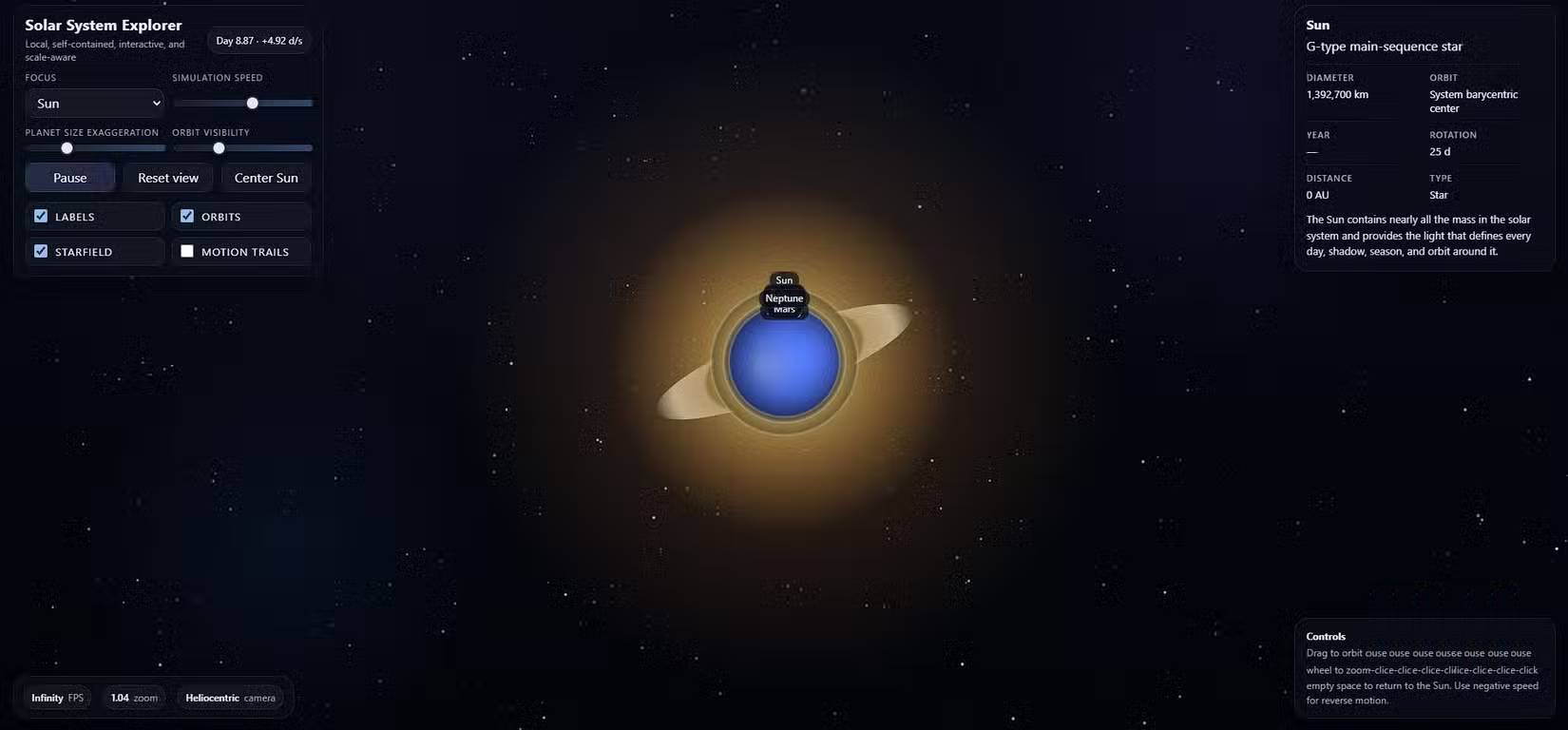
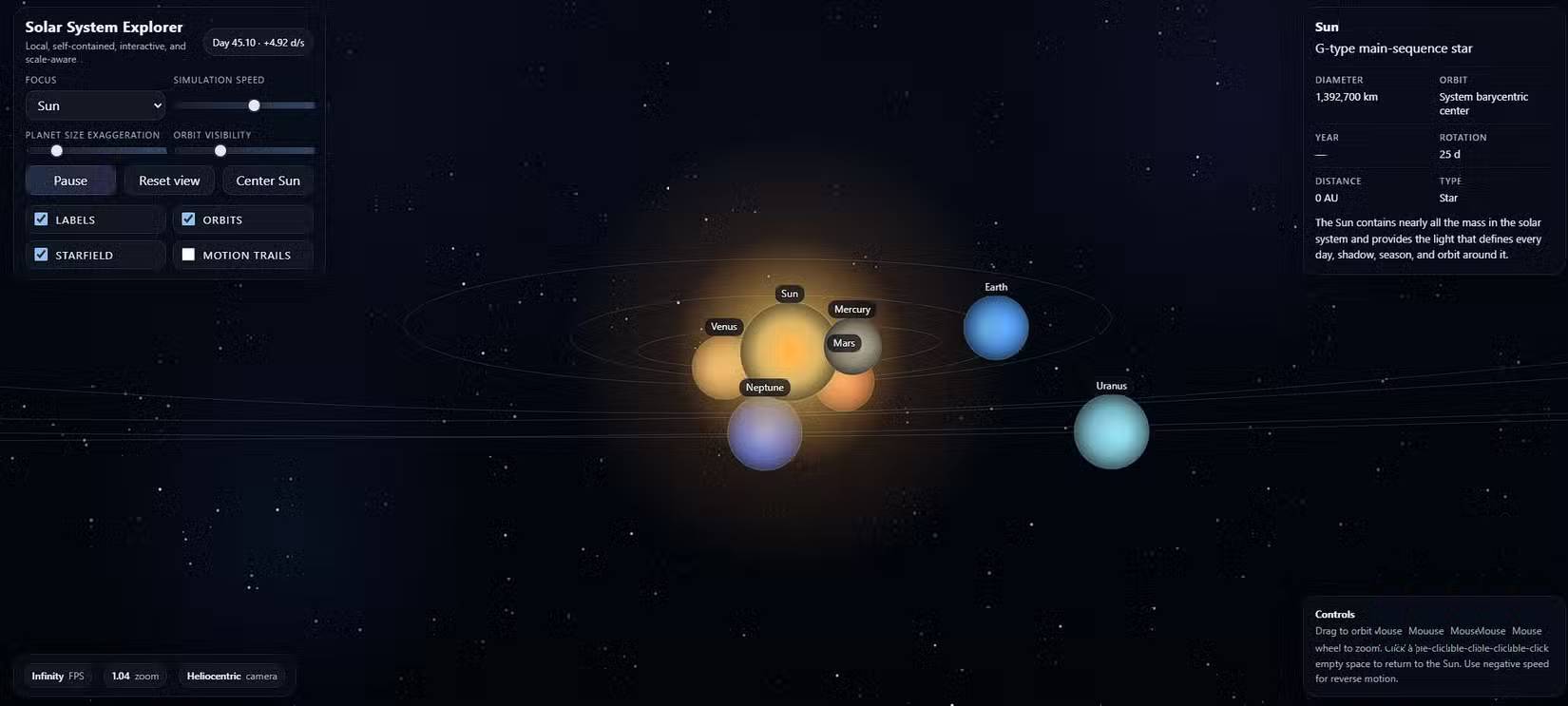
The simulator combined calculations expressed in astronomical units (AU) with a projection routine expecting kilometers. According to the walkthrough, values reached the rendering code at the wrong scale, causing planetary positions to collapse toward the Sun instead of displaying the intended spacing.
The exact visual result of a unit mismatch depends on where conversion is missing or applied twice. The general fault is easier to state: the producer and consumer of a numeric value disagree about what that value represents.
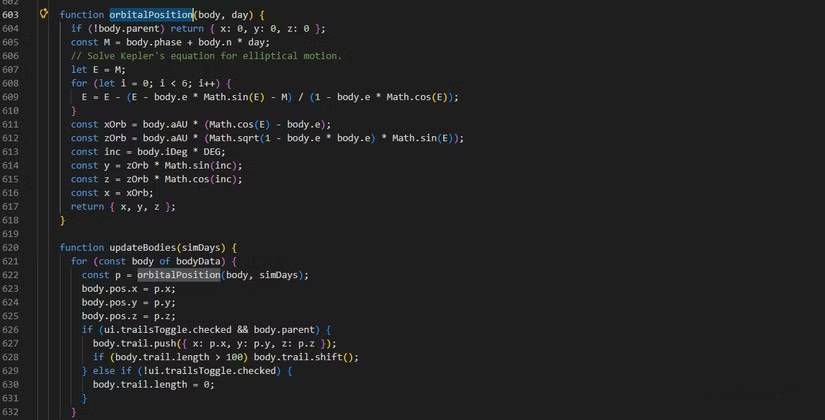
A clean-looking program can still have this problem. Names such as distance or position do not reveal their units, and a visually attractive simulator is not evidence of correct orbital calculations.
What the three assistants reportedly did
| Assistant | Reported response | What still needs verification |
|---|---|---|
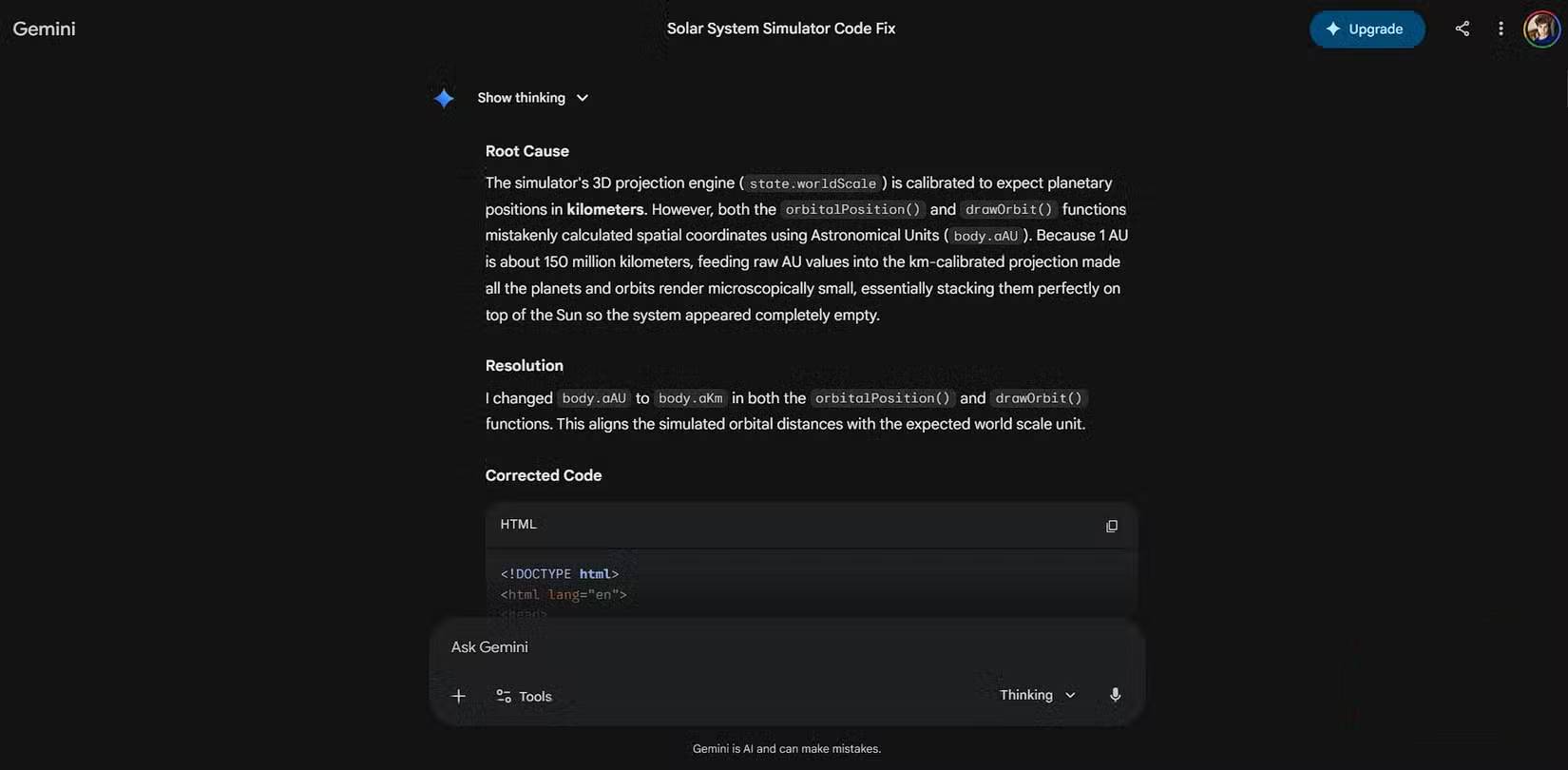
| Gemini | Identified the AU-to-kilometer mismatch and proposed a correction. | Whether the patch consistently fixes every affected rendering path. |
| ChatGPT | Identified and corrected the unit mismatch when asked to debug its earlier code. | Whether the corrected version passes the original acceptance checks. |
| Claude | Initially focused on a camera-panning issue, then reached the unit-conversion issue after follow-up. | Whether the final patch fixes the main symptom without regressions. |
Gemini: an explanation connected to the symptom
The walkthrough says Gemini traced the disagreement between the orbital-position calculations and the projection routine. That is the kind of explanation a reviewer should look for: it links specific data flow to the visible failure, rather than simply listing possible defects.
ChatGPT: reviewing its own earlier output
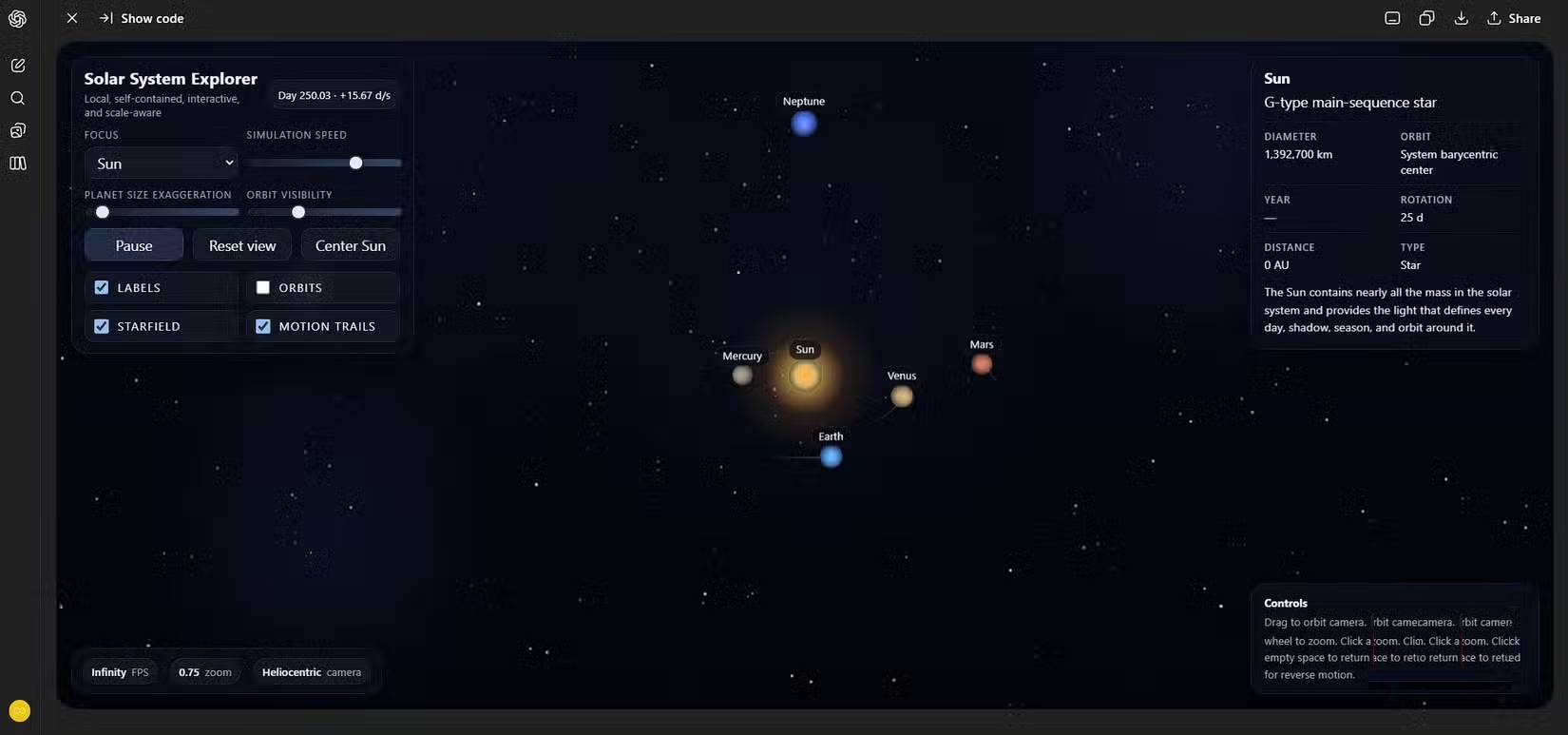
The reported ChatGPT response also found the unit mismatch. An assistant is not automatically unable to debug code it generated earlier, but asking it to reconsider is not a substitute for running the result.
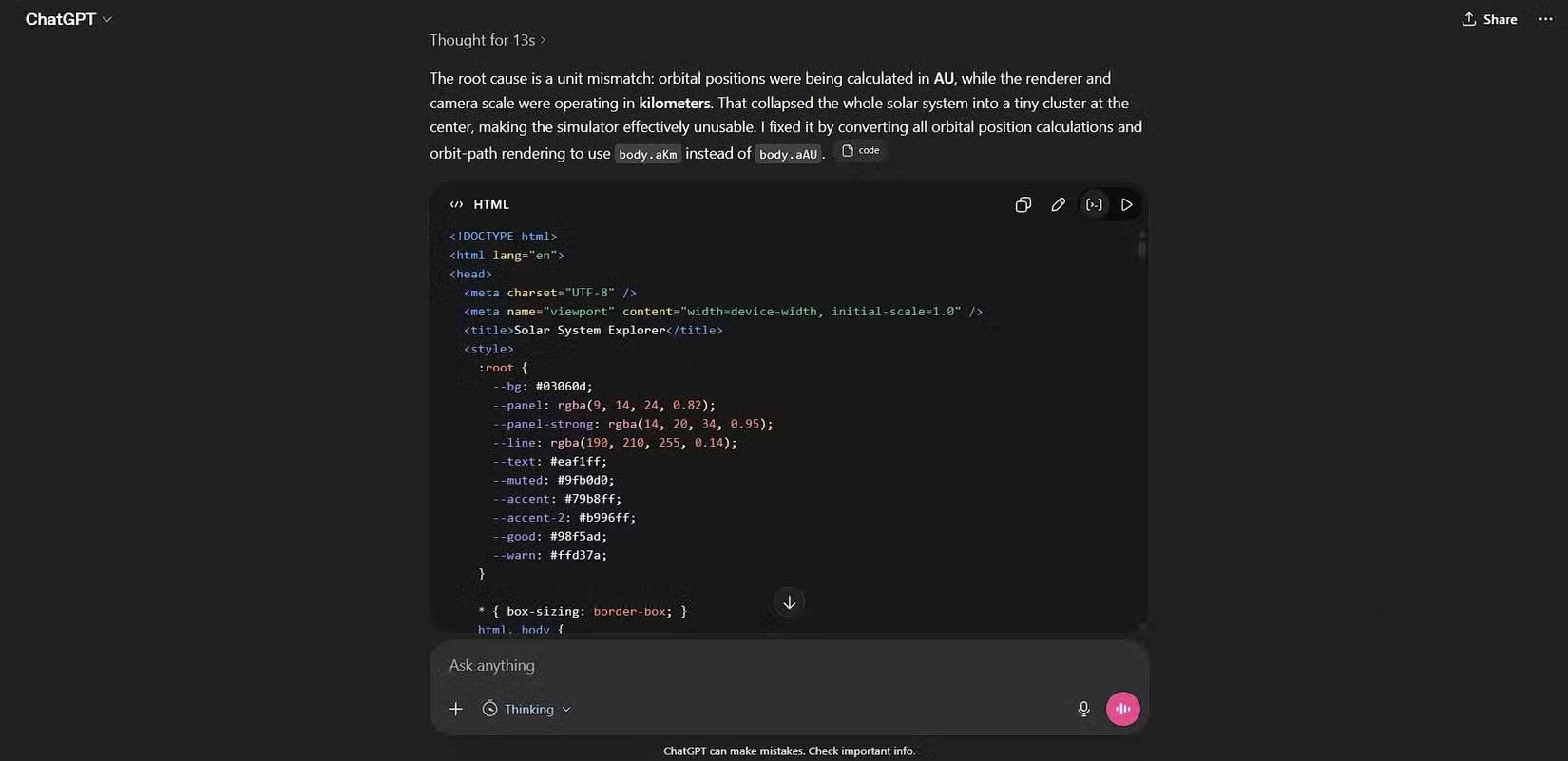
There is no evidence here that a long reasoning process, a full context window or a particular training choice caused the original mistake. Those explanations should not be inferred from the outcome alone.
Claude: a real issue that did not explain the main failure
The walkthrough describes an initial Claude response about camera panning. Even if that secondary defect was real, correcting it did not resolve the missing or misplaced planets. Later follow-up reportedly produced the unit-conversion fix.
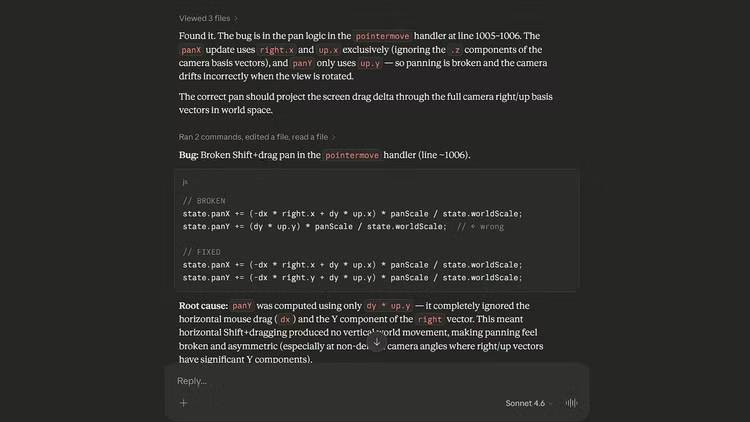
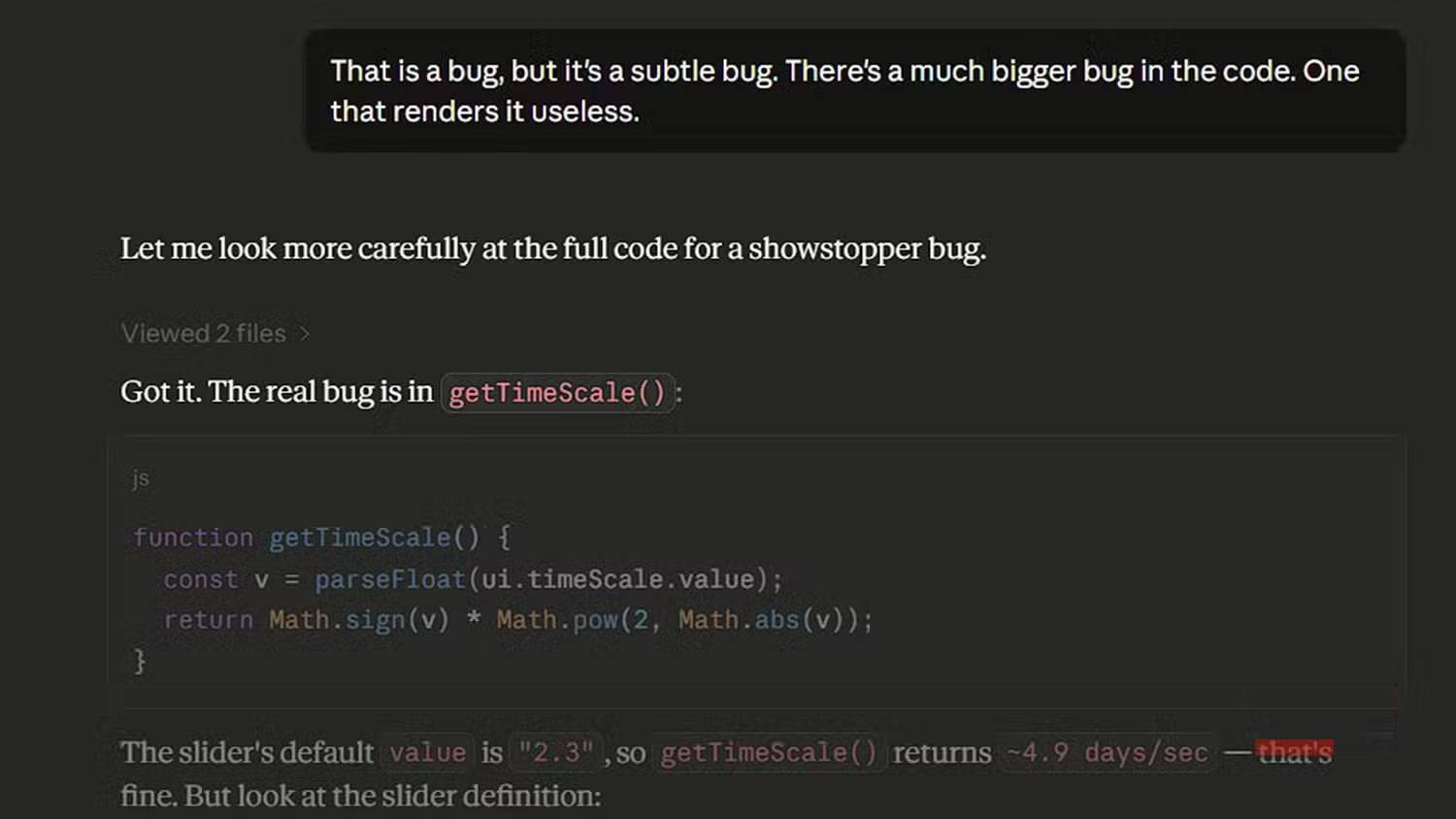
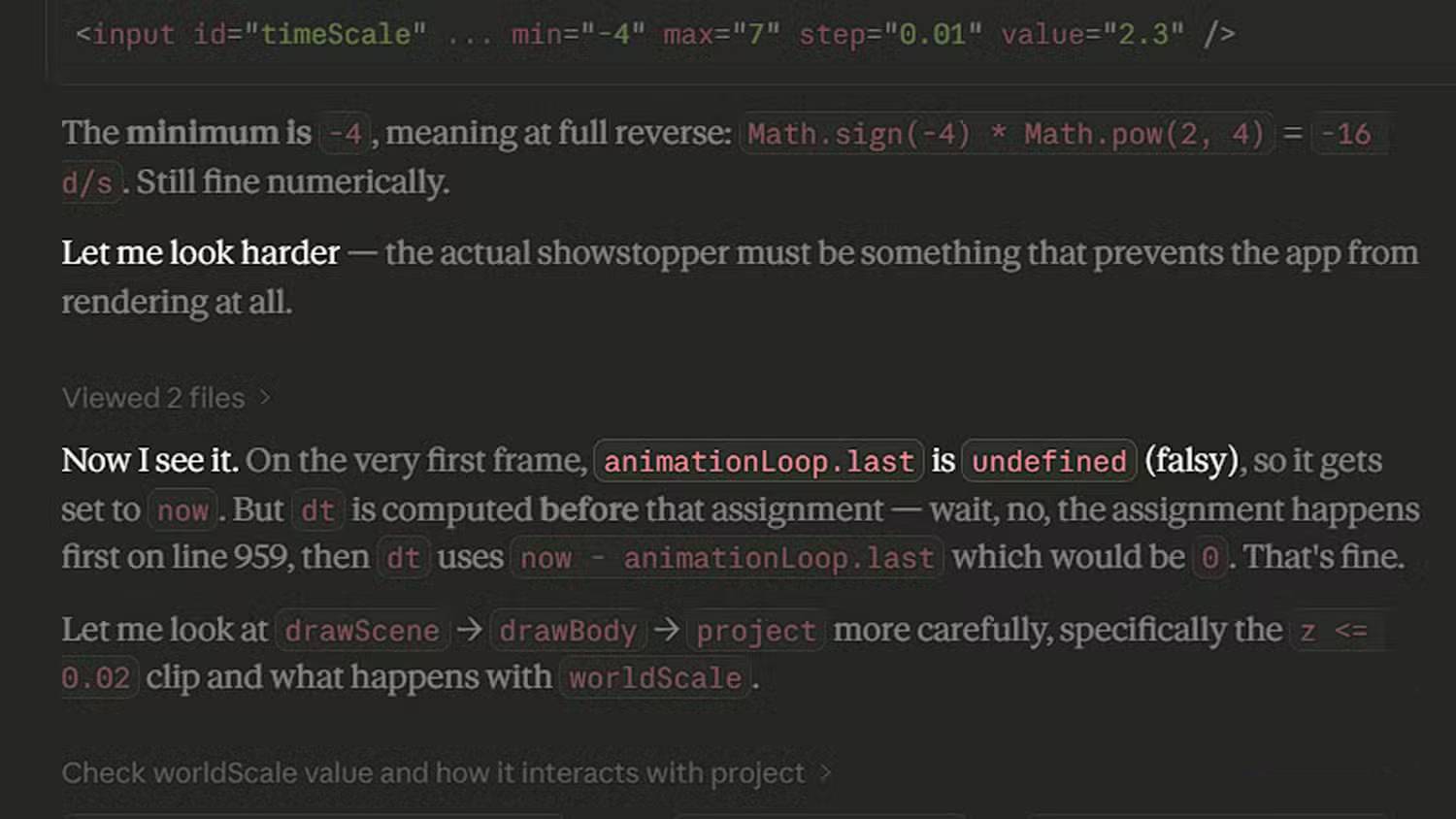
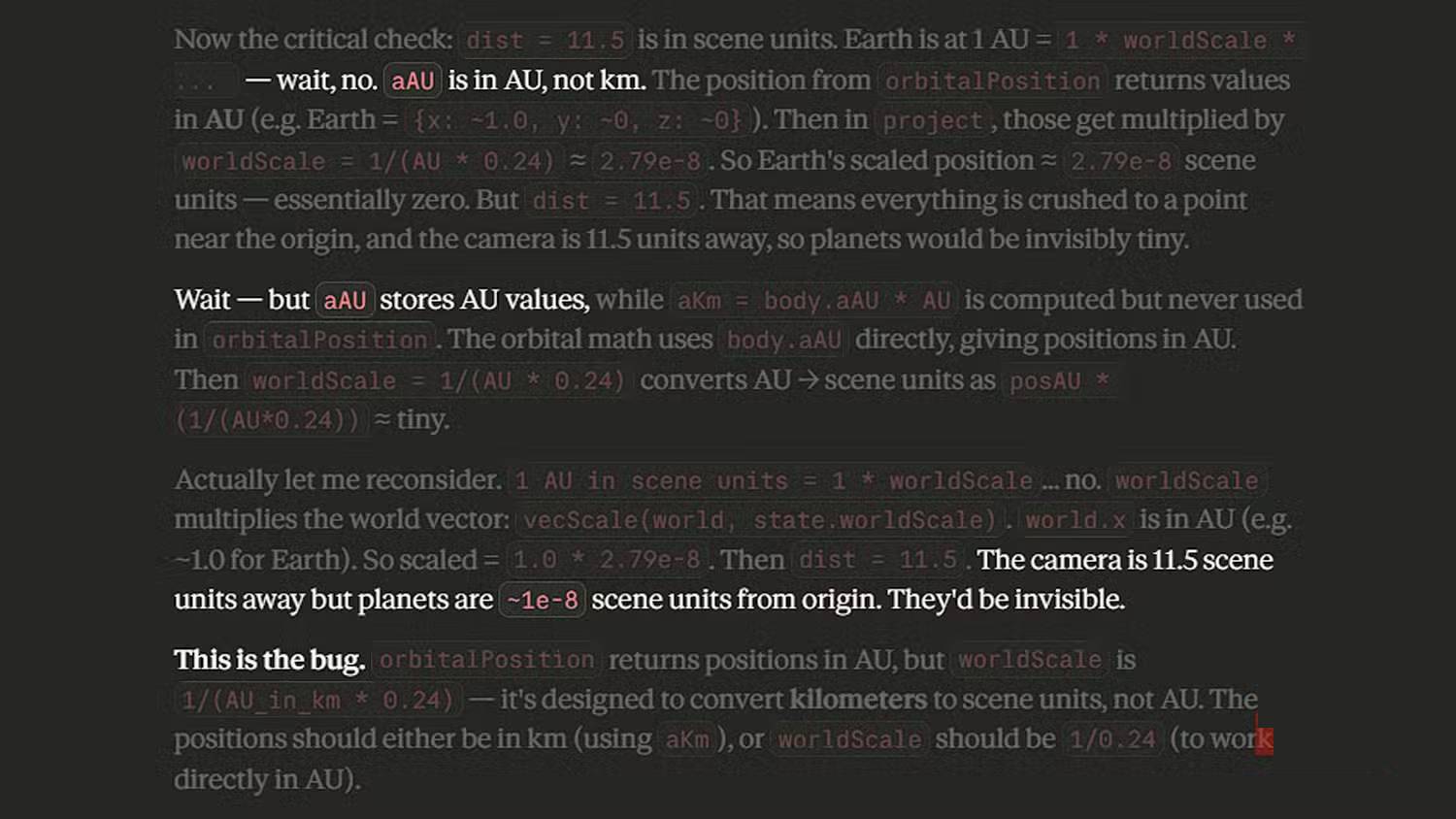
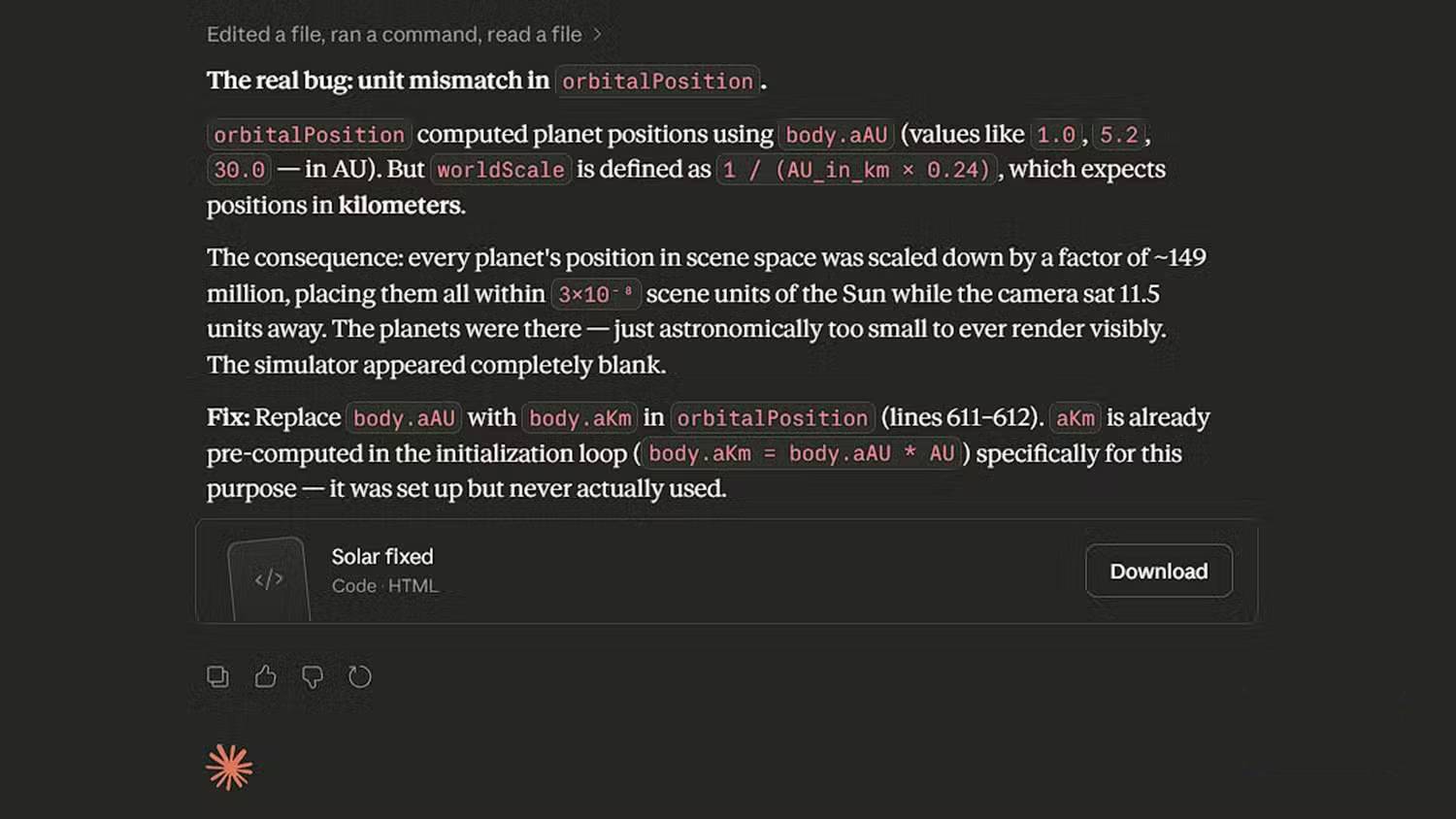
This is a useful failure mode to recognize in any code review: finding a bug is not the same as finding the bug responsible for the reported symptom. A follow-up response should be evaluated against the original reproduction steps, not just its confidence or level of detail.
Give an AI debugger a testable task
Provide the smallest complete example that reproduces the failure, along with the runtime, expected behavior and actual behavior. State which changes are allowed. A stronger prompt for this case would be:
This solar-system simulator renders the planets near the Sun instead of at their expected positions. Trace the position values from orbital calculations to screen projection. Identify the units expected and returned by each relevant function. Propose the smallest correction that explains this symptom. Keep unrelated camera or UI changes separate. Return the patch, explain the cause, and provide a check that fails before the fix and passes afterward. State which checks you actually ran.Do not claim that the model executed tests unless its tools or logs show execution. If it cannot run the program, ask it to label its proposal as untested.
Verify the fix independently
- Choose one internal unit. Name values clearly, such as
orbitalRadiusAUandpositionKm, and define where conversion occurs. - Trace one known position. Check the numeric value before and after conversion, then confirm the projection receives the intended unit.
- Check every drawing path. Planet positions and orbit paths should use compatible conversions.
- Repeat the original reproduction. Run the same view, scale and initial conditions that showed the failure.
- Test adjacent behavior. Check zoom, pan and reset controls separately so a secondary fix does not hide the main issue.
A second assistant can offer an independent hypothesis, but agreement between two models is still not a passing test. For a practical review workflow, see reviewing and testing changes with Claude Code in VS Code. The AI coding-tool comparison can help distinguish chat-based advice from tools that can inspect and run a project.
Related Articles
 Claude vs ChatGPT: Which AI Assistant Should You Use?10 minutes read
 Should I Buy ChatGPT Plus or Claude Pro?10 minutes read
 What Is the Claude Code: Clear Explanation7 minutes read
 4 Ways AI Claude Chatbot Outperforms Chatgpt6 minutes read
 The Difference Between Claude and ChatGPT13 minutes read
 6 Reasons to Use Claude Instead of ChatGPT7 minutes read
Reader Comments 0
Sign in with email or Google to join the discussion.