Table of Contents
This practical guide walks through ways to adjust system volume on Windows 11, explains the main requirements, and highlights common issues that may appear along the way.
Change system volume using Quick Settings menu
The quickest and easiest way to adjust the volume in Windows 11 is to use the Quick Settings menu.
First, access the Quick Settings menu by tapping the area containing the WiFi, speaker, and/or Battery icons in the bottom-right corner of the screen.
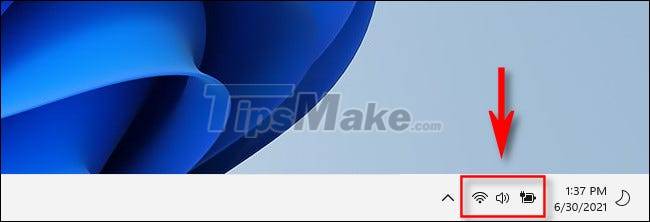
As soon as you click on this area, the Quick Settings menu will immediately appear. Look for the slider to adjust the system volume (with the speaker icon on the left).
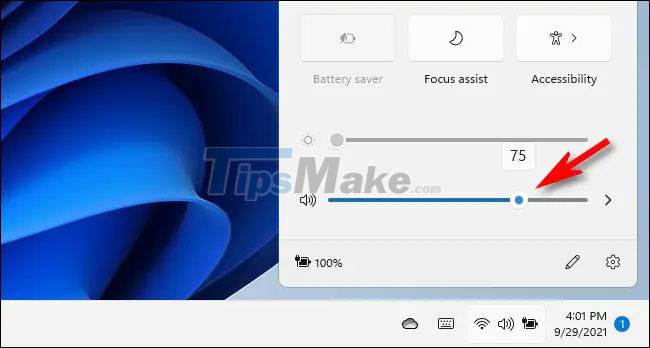
To change the current volume level on the system, simply tap the circle on the slider and drag right or left to increase or decrease the volume respectively, with conversion values starting from 0 to 100. As you move the circle on the slider, notice that the number of waves on the pcs icon changes accordingly.
You can also quickly 'mute' the audio output entirely on your Windows 11 PC by clicking directly on the speaker icon next to the volume slider. When muted, there will be a small "X" next to the speaker icon. To unmute, click it again.

After you have adjusted the volume level to your liking, close the Quick Settings menu by clicking any area outside the menu interface.
Change the system volume using the Settings app
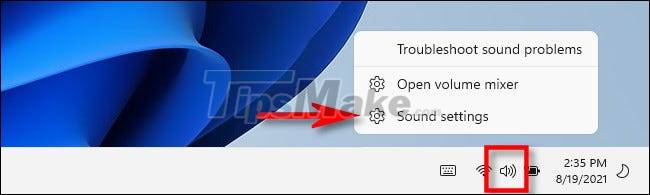
You can also change the volume of your Windows 11 PC through the Settings app. Access this application by pressing Windows + i key combination, and navigate to System > Sound. Or you can also right click on the speaker icon on the taskbar and select 'Sound Settings'.
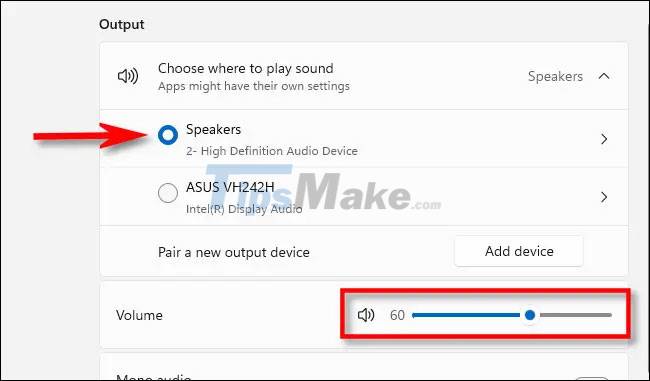
On the sound settings screen, find the 'Output' section and select the device for which you want to change the volume level by clicking the circle next to it. Then adjust the bottom 'Volume' slider to suit your desired volume level. You can also click the speaker icon to turn off the system volume completely.
When you're done, close the Settings app.
Change system volume with physical buttons
On many Windows tablet models (such as the Surface line) there are often physical volume up and down buttons somewhere on the device — usually on one of the side edges. Click it to adjust the volume in specific steps. When adjusting, you'll see a small pop-up in the upper-left corner of the screen, showing the current system volume.
In addition, on some keyboards (including those that come with laptops) there is a volume up, down and mute button, Even on some high-end keyboard models, there is a scroll wheel. volume adjustment.
Wish you have a good experience with Windows 11!
Key Takeaways
Use the information above as a practical reference for ways to adjust system volume on Windows 11. Review each step carefully, confirm any requirements, and choose the option that best fits your situation.
FAQ
What does this guide explain about Adjust System Volume on Windows 11?
It explains the main concepts, practical considerations, and useful steps related to adjust system volume on Windows 11 without requiring advanced knowledge.
Who can benefit from learning about Adjust System Volume on Windows 11?
This information is useful for readers who want a clear overview, practical guidance, and reliable steps related to adjust system volume on Windows 11.
What should I check before applying this information?
Review the requirements, confirm that your device, software, or situation matches the instructions, and back up important data before making major changes.
Related Articles
 Button: How to Adjust the Master Volume in Windows 72 minutes read
 How to Turn on / Off Volume in Windows 10: Step-by-Step5 minutes read
 7 Ways to Fix Low Volume in Windows 108 minutes read
 How to Change the Volume of Siri on the Homepod3 minutes read
 How to Set the Default Volume Level for Each Application5 minutes read
 3 Ways to Increase, Decrease the Volume for Video5 minutes read
Reader Comments 0
Sign in with email or Google to join the discussion.