Table of Contents
Adding RAM can help a computer handle more apps and larger workloads at once, but it will not fix every slowdown. Before buying memory or opening the computer, confirm that the exact model is upgradeable and that the new modules are compatible.

Check whether the computer can be upgraded
Look up the computer or motherboard model and read its service manual or memory compatibility guide. Confirm:
- Whether the memory is replaceable or soldered to the board.
- The supported memory generation and form factor, such as desktop DIMM or laptop SO-DIMM.
- The maximum capacity and supported module sizes for each slot.
- How many slots are present and which are already occupied.
- Whether the system requires particular module types, such as non-ECC or ECC memory.
Do not choose a module based only on its advertised speed or the current stick’s label. The motherboard, processor, and firmware determine which configurations work and at what speed. If the manufacturer provides a compatibility list, use it.
Prepare before opening the computer
Back up important data and shut the computer down fully. Disconnect the power cable and peripherals. For a laptop, follow the manufacturer’s service instructions for disconnecting the internal battery; do not open a sealed or non-serviceable device. Opening a computer may affect warranty coverage, so check the terms first.
Work on a clean, stable surface and follow the service manual’s electrostatic-discharge precautions. Avoid touching the module’s contacts or forcing parts. If you are unsure how to open the case or safely disconnect power, have a technician install the memory.
Install compatible memory
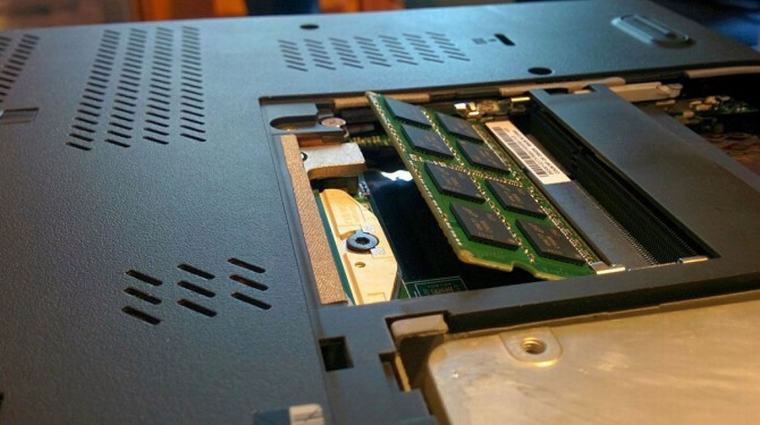
- Open the case only as described in the service manual and locate the memory slots.
- Use the manual to identify the correct slot order for one or more modules.
- Align the module’s notch with the slot and insert it evenly. Press only as directed until the retaining clips engage.
- Close the computer, reconnect power, and start it. If it does not boot, power down and check the seating against the manual before trying again.
Confirm that Windows recognizes the memory
Open Task Manager with Ctrl + Shift + Esc, choose Performance > Memory, and check the total shown. The amount available to Windows may be lower than the installed capacity because hardware reserves some memory. If the capacity is not as expected, check that the modules are fully seated and installed in the recommended slots, then consult the computer maker’s troubleshooting guidance.
Buy memory from a reputable seller and keep the model number and receipt. If the computer still crashes or reports memory errors after installation, remove the new modules only if the service instructions permit it, then seek technical support.
Related Articles
 Ways to upgrade desktop computers to optimize usage according to needs
 How to Upgrade Windows 10 Home or Single Language to Pro
 Instructions on how to build a computer at home simply and quickly
 How to upgrade Windows 11 without losing data quickly
 How to share the printer via LAN simply and quickly
 How to Upgrade Computer RAM Quickly and Effectively
Reader Comments 0
Sign in with email or Google to join the discussion.